
By Estea Rademeyer.
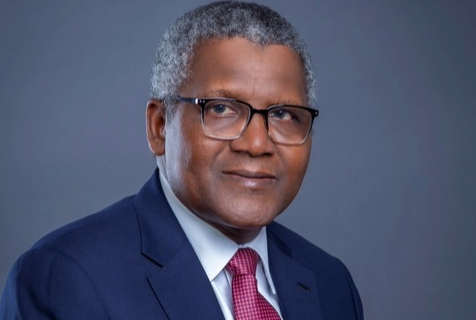
Cape Town, South Africa | As Africa looks to translate its vast natural resources into lasting industrial growth, the question of who has the capacity, capital and institutional strength to deliver that ambition is coming into sharper focus. Aliko Dangote, President & CEO of Dangote Group, will bring that conversation to the forefront of Investing in African Mining Indaba 2027, headlining its high-level programme.
Over several decades, Dangote Group has expanded across African markets, steadily building the experience and industrial capacity to undertake increasingly complex projects. The latest milestone came on 30 September 2026, when Mr Dangote broke ground alongside President William Ruto on the US$16 billion, 700,000 barrels-per-day Dangote East Africa Petroleum Refinery in Lamu, Kenya, targeted for completion by 2030. It builds on the US$20 billion Dangote Petroleum Refinery in Lagos, the world’s largest single-train refinery, which now processes 700,000 barrels per day and plans to expand to about 1.4 million barrels per day by 2028.
The project builds on the US$20 billion Dangote Petroleum Refinery in Lagos, the world’s largest single-train refinery at 700,000 barrels per day, with an expansion to approximately 1.4 million barrels per day planned by 2029.
Beyond the scale of these investments, the projects raise a broader question for Africa: what does it take to build businesses and institutions capable of delivering industrial ventures once thought beyond the continent’s reach?
Africa’s mineral wealth offers a foundation for industries spanning infrastructure, energy, manufacturing and agriculture. But turning that resource endowment into sustained economic value requires more than extraction. It depends on businesses capable of executing projects at scale, capital willing to support long-term investments, infrastructure that connects production to markets, and institutions equipped to manage increasingly complex industrial undertakings.
As African businesses accumulate experience, capital and operational expertise, their capacity to pursue more ambitious opportunities grows. Stronger domestic businesses and financial institutions can also give the continent greater influence over where investment flows, which industries are developed and how economic value is retained from its natural resources.
Mr Dangote’s participation will bring the perspective of an African industrialist who has spent decades building businesses at scale across the continent, with interests spanning sectors closely linked to Africa’s broader industrial development. His businesses are among the continent’s largest users of mined and extracted resources, from limestone used in cement production to the oil and gas that underpin refining, petrochemicals and fertiliser manufacturing.
Building the institutions behind Africa’s industrial ambitions
Mining Indaba 2027 will take place under the theme Stronger Together: Partnerships in Practice, reflecting the event’s growing focus on the connections between mining, infrastructure, capital and industrial development.
Mining occupies a critical position in Africa’s economic value chain. Its outputs provide the raw materials for cities, transport networks, energy systems, manufacturing industries and food production. The wider economic contribution of those resources, however, depends on the businesses and institutions capable of developing industries around them.
Mr Dangote will contribute to Mining Indaba’s exploration of nation-building through institution-building, examining how businesses develop the scale and resilience to undertake increasingly ambitious projects, how African capital can support that growth, and what becomes possible when strong institutions collaborate across sectors and national borders.
Aliko Dangote said:
“No nation has achieved lasting prosperity by exporting raw materials and importing finished goods. Africa must process what it extracts and build the industries that turn its mineral wealth into jobs, infrastructure and manufacturing at home. That requires businesses with the scale to execute, and long-term African capital prepared to stay the course. We look forward to deepening our partnership with leading African institutions that are fully aligned on Africa’s industrialisation. When African industry and African capital build together, projects that once appeared beyond reach become achievable. That is the conversation I look forward to leading at Mining Indaba.”
Zeinab El-Sayed, Director of Government & Institutional Partnerships, said:
“We spend a lot of time talking about the projects Africa needs. We spend less time talking about the institutions capable of delivering them. Aliko Dangote has spent decades building one of those institutions. His experience gives us an opportunity to look at what sits behind projects of enormous scale: the capability built over time, the capital required to take long-term decisions, and the confidence to pursue opportunities that can initially appear beyond reach. That is a particularly important conversation for mining. If Africa wants its resources to support broader industrial development, we need businesses and institutions with the capacity to build around them.”
Mining Indaba 2027 will bring together leaders from governments, mining companies, investors, financial institutions and industries across the mining value chain in Cape Town from 8–11 February 2027.