
By Lehlohonolo Lehana.
Kwazulu-Natal (KZN) is ready to host delegates from around the world and the continent to attend the Africa’s Travel Indaba at the Durban International Convention Centre from May 11 to 14.
Africa’s Travel Indaba is a powerful celebration of the continent’s extraordinary potential to drive economic growth through tourism. This is where travel industry professionals gather, including tour operators, hotels, airlines, and tourism boards, to showcase products, network, negotiate deals and form partnerships with buyers.
This year Africa’s Travel Indaba will bring together more than 1,100 exhibitors, over 927 confirmed buyers, tourism ministers, media, airlines, and strategic stakeholders from across Africa and key international markets.
President Cyril Ramaphosa will officially open Africa’s Travel Indaba 2026 on the 12 May 2026.
The event will be held under the theme, “Unlimited Africa: Growing Africa’s Tourism Economy”.
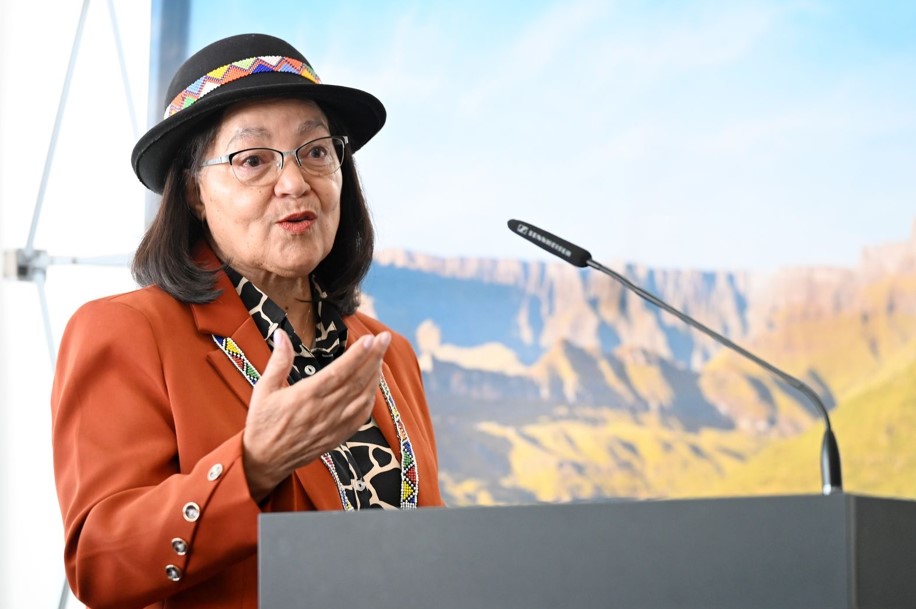
Minister of Tourism Patricia De Lille officially launched the event today at the MSC Nelson Mandela Cruise Terminal in Durban.
“The purpose of the Africa Travel Indaba is to put the continent on the world map and try and get more tourists and travellers to come to the continent and, of course, showcase what we’ve got on the continent, and it’s a great way to celebrate Africa Month, said De Lille.”
South Africa has recently seen protests over illegal migration, with some incidents turning confrontational and even violent.
She says the government is working to strengthen ties across the continent through tourism trade fairs, but admits issues around xenophobia cannot be overlooked.
“The whole perception of xenophobia and all of that, that is something that the cabinet must announce on as to what the official position of South Africa is. We respect the rights of people to protest. That is part of our constitution, and do so peacefully.”
“It’s all about finding that balance and addressing the grievances of the protesters, added the minister.”
UN Secretary-General Antonio Guterres condemned what he called “criminal acts perpetrated by individuals inciting violence and exploiting socio-economic conditions”.
South Africa is home to about 2.4 million migrants, just less than 4% of the population, according to official figures. Most come from neighbouring countries such as Lesotho, Zimbabwe and Mozambique, which have a history of providing migrant labour to their wealthy neighbour.
Xenophobia has long been an issue in South Africa which has been accompanied by occasional outbursts of deadly violence.
When it comes to addressing youth unemployment and participation in the tourism industry, the Minister noted that the ATI platform, through the National Department of Tourism and the provincial governments, has sponsored businesses to participate.
“We are going to have a sustainability village where more than 400 SMMEs will be able to display their products to the rest of the world. It’s providing them market access, and by providing them market access, they are also able to grow their businesses.”
According to Statistics South Africa’s Tourism Satellite Account for South Africa report, in 2024, the tourism sector accounted for 953,981 direct jobs. This means 1 in 18 workers was directly employed in tourism.
The report further states that, in 2024 the tourism sector’s 4,9% contribution to GDP, surpasses the contribution of construction, agriculture and utilities.
South African Tourism (SAT) also hosted a sustainability village, providing free exhibition space to small businesses promoting arts and crafts.
Africa’s Travel Indaba 2025 generated R246.8 million in direct expenditure, with broader economic activity contributing R610.6 million to South Africa’s GDP. In addition, the event delivered R45.54 million in tax revenue, supporting public services and infrastructure development.