
By Lehlohonolo Lehana.
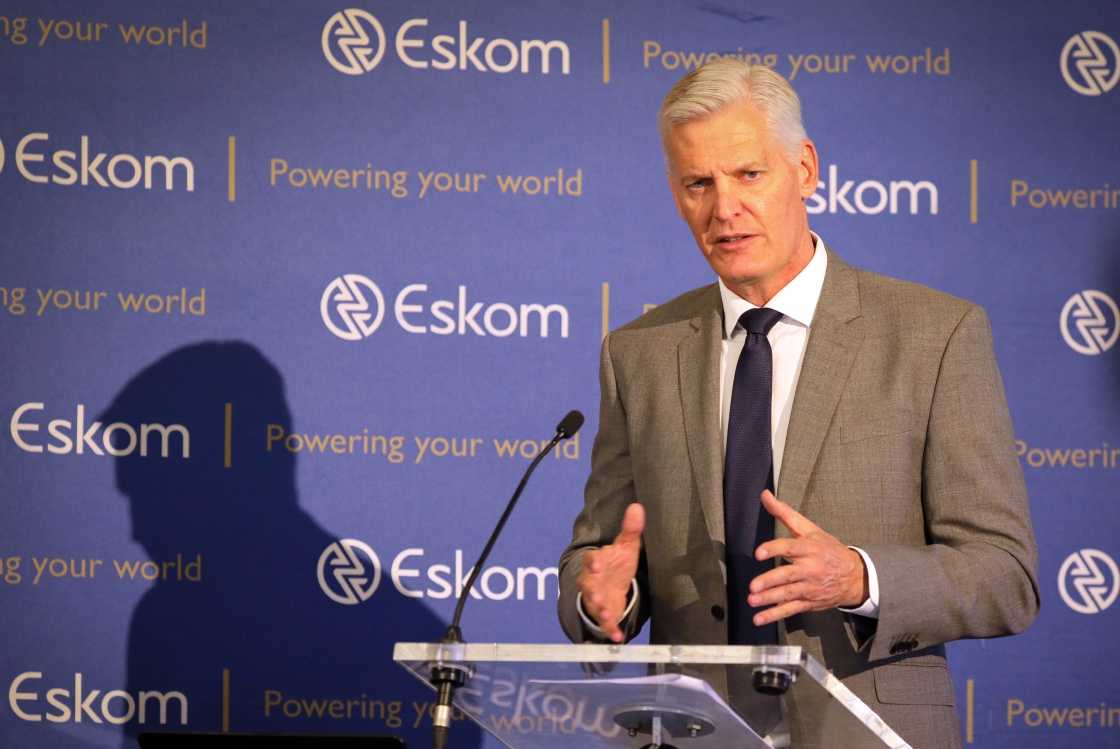
Outgoing Eskom CEO Andre de Ruyter says the power utility is a feeding trough for the Anfrican National Congress (ANC) and that the party is stuck in outdated communist ideologies.
In an explosive interview with journalist Annika Larsen on Tuesday evening (21 February), De Ruyter admitted to failing to prevent load shedding in South Africa, and touched on what he sees as entrenched corruption within government and governance around Eskom.
De Ruyter admitted that load shedding is the one critical measurement he failed on.
“I think I failed regarding the readily measurable objectives – load shedding. That’s the big elephant in the room,” he said. However, he said that he believes he successfully defined a strategy for Eskom to get out of the crisis – something that is now “irrevocably set”.
When asked by Larsen whether he believes those in the ANC see Eskom as a “feeding trough”, de Ruyter said that evidence would indicate this is the case.
“I expressed my concern to a senior government minister about attempts – in my view – to water down governance around the $8.5 billion US dollars that, by and large through Eskom intervention, we got at COP26.
“The response was essentially, ‘you know, you have to be pragmatic – in order to pursue the greater good, you have to enable some people to eat a little bit’. So yes, I think it is entrenched.”
He did not mention which minister he approached, but confirmed that they were still in government. He also revealed that the attitude of ministers towards reports of alleged corruption was blasé.
“When we pointed out that there was one particular high-level politician that was involved in this, the minister in question looked at the senior officials and said, ‘I guess it was inevitable that this would come out anyway’. Which suggests that this wasn’t news (to them),” he said.
State security monitoring De Ruyter
Eskom is under siege by high-level criminality, from syndicates that steal coal, diesel and infrastructure to dodgy contracts and procurement irregularities. He said that criminality is closely tied to politics and feeds into significant initiatives, placing them at risk.
“There is very little explanation for the vociferous opposition to the Just Energy Transition,” he said. One explanation for the pushback is that there is no clear path “showing a way for the comrades to eat”.
“There are so many vested interests in the coal value chain that the threat of decarbonisation – even though we’re talking about a multi-decade move away from coal – that is why it is so eagerly opposed,” he said.
De Ruyter has placed much of his focus and energy during his time at Eskom on tackling criminality and promoting a move towards renewable energy, making him an enemy of the powers that be.
The CEO’s focus on going after the criminal elements within and around Eskom resulted in minister resources and energy minister Gwede Mantashe calling him a ‘policeman’ who was more focused on ‘chasing criminals’ than ending the load shedding crisis.
Mantashe and other senior ANC officials in government have taken an alarmingly antagonistic approach to de Ruyter, with the energy minister even going as far as accusing him of treason. Mantashe – who is also a big proponent of coal – said that Eskom’s management was trying to overthrow the state by not resolving load shedding.
Following these remarks, no government officials came to de Ruyter’s defence. The DPE, which had expressed confidence in him before, sat silent – and even president Cyril Ramaphosa had nothing to say. This lack of support and outright hostility towards him led to him tendering his resignation late last year.
Despite the widespread theft and criminal activity, state security was “missing in action”. “However, they did see fit to send one of their agents to COP 27 to keep an eye on me,” the Eskom CEO said.
“When one of my friends asked him what he was doing there, he said he was keeping an eye on the big guy.”
“Clearly, I am under suspicion of treasonous activity, but the real culprits can act with impunity. These things are Kafkaesque.”
The ANC not interested in fixing Eskom
De Ruyter said, “they want what will win them the next election, not what will keep the country going for the next two decades”.
“That balance has been disturbed by turning Eskom into a state-owned entity under the direct control of the Department of Public Enterprises (DPE).”
He said the DPE, under the leadership of minister Pravin Gordhan, played an interventionist role at Eskom and micromanaged the company.
“There is a narrative that the state should control everything,” De Ruyter said. “The ghosts of Marx and Lenin still haunt the halls of Luthuli House. People are still firmly committed to a 1980s style ideology.”
“They still address one another as comrades – which is, frankly, embarrassing. They use words like Lumpenproletariat [the underclass devoid of class consciousness], which is ridiculous.”
When individuals talk to foreign diplomats and investors, the bemusement and confusion with which they leave those meetings create a big problem for South Africa’s credibility.
“People say we have not heard this language since the fall of the Berlin Wall. What do these people think,” he said.