
By Lehlohonolo Lehana.
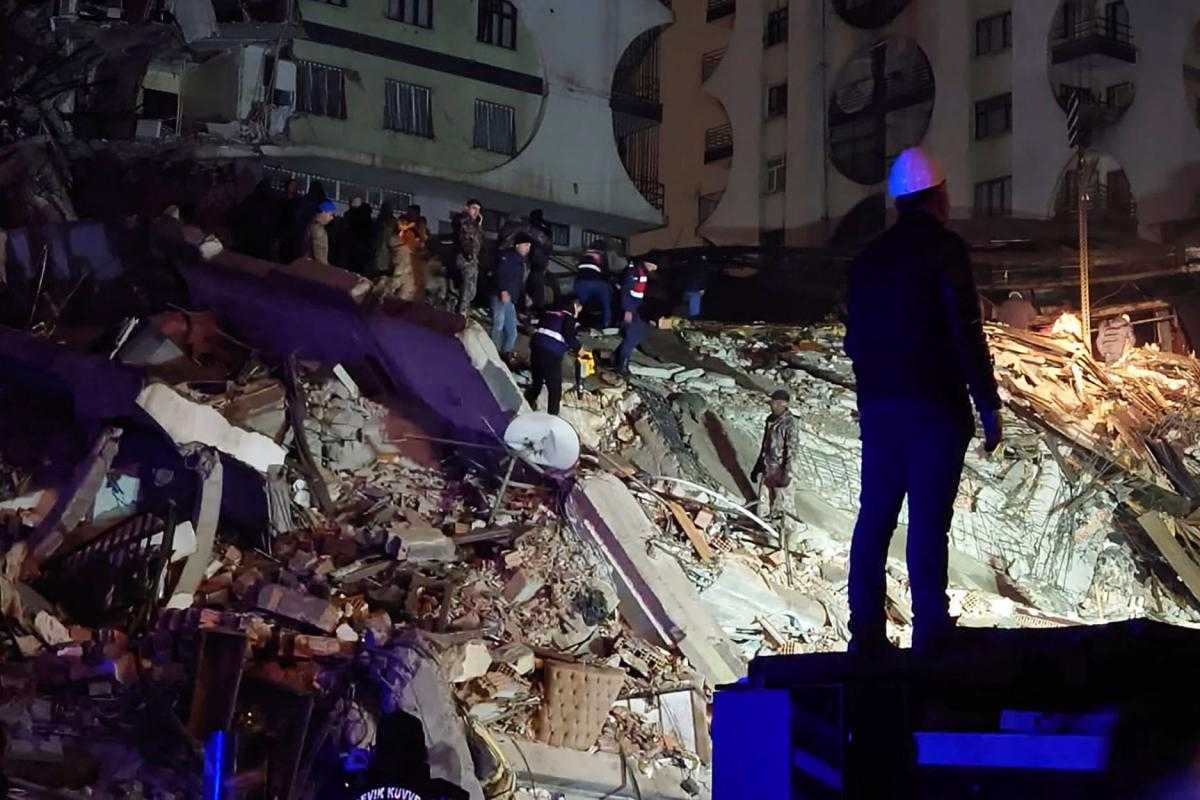
The number of people who have died in the earthquakes in Turkey and Syria has surpassed 8,700.
In Turkey 6,234 people died, the country’s Disaster Management Authority said. At least 37,011 were injured, the agency added.
At least 1,280 people were killed in opposition-held northwest Syria, the White Helmet rescue service said, adding that “the number is expected to rise significantly due to the presence of hundreds of families under the rubble”.
In areas under the Syrian government’s control authorities said at least 1,250 died.
Turkish President Tayyip Erdogan has declared a state of emergency in 10 provinces. But residents in several damaged Turkish cities have voiced anger and despair at what they said was a slow and inadequate response by the authorities.
The initial quake struck just after 4 a.m. on Monday, the dead of night in the dead of winter, giving the sleeping population little chance to react.
Erdogan, facing a tight election in May, is expected to visit some of the affected areas on Wednesday.
Turkish authorities say some 13.5 million people were affected in an area spanning roughly 450 km (280 miles) from Adana in the west to Diyarbakir in the east – broader than that between Boston and Philadelphia, or Amsterdam and Paris.
The survivors in need of shelter would have really felt the colder weather on Tuesday night. It was freezing in Gaziantep, the epicentre of the first quake in Turkey, with the temperature getting down to -1C.
It was even colder further north near the mountainous regions where the thermometer went down to -5C.
And it’s going to get even colder across southern Turkey and northern Syria.
Through the rest of the week the overnight temperatures will be down to -7C in Gaziantep. Even lower toward the mountains.
Turkey’s deadliest earthquake in a generation has handed Erdogan a huge rescue and reconstruction challenge, which will overshadow the run-up to the May elections already set to be the toughest of his two decades in power.
The vote, too-close-to-call according to polls before the quake, will determine how Turkey is governed, where its economy is headed and what role the regional power and NATO member may play to ease conflict in Ukraine and the Middle East.