
By Lehlohonolo Lehana.
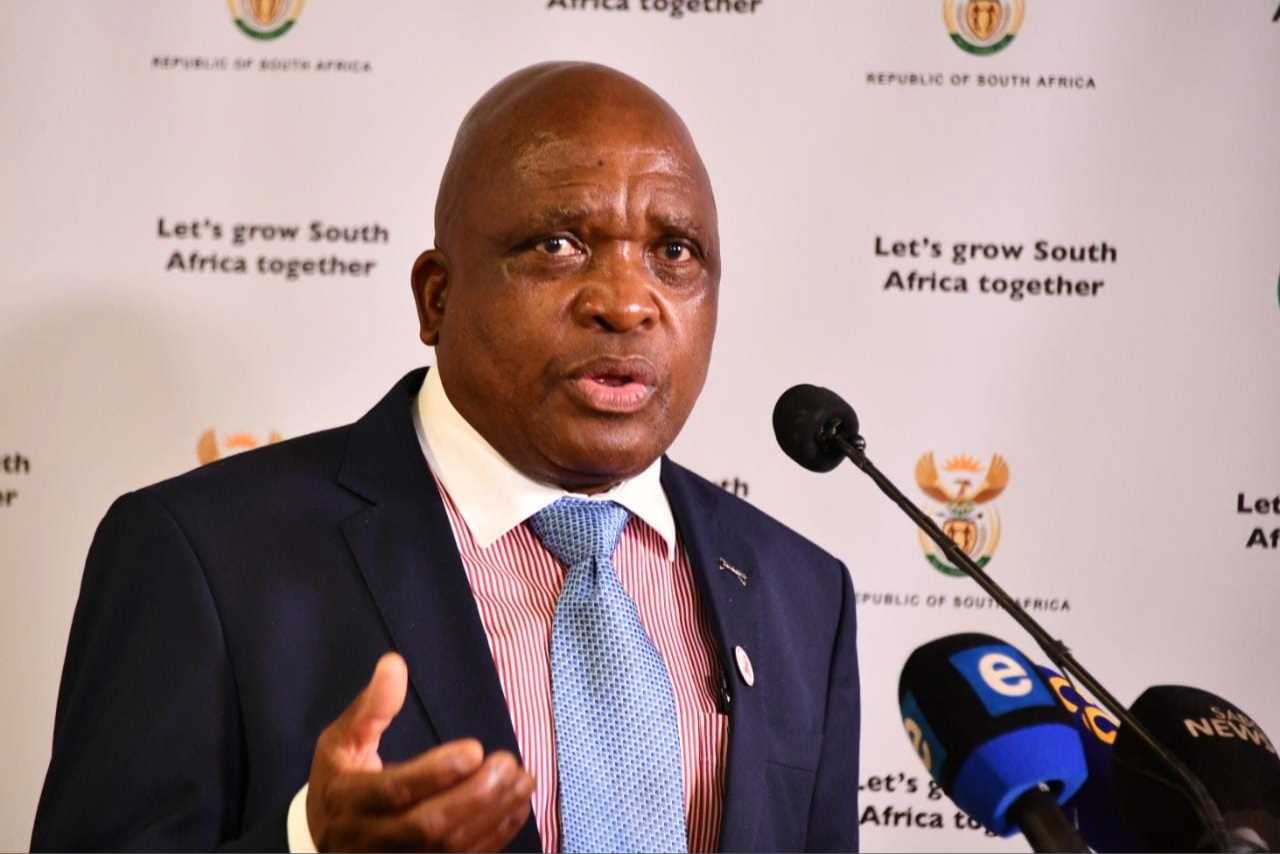
Health Minister Dr Joe Phaahla has announced that a review of their approach to employing medical doctors and specialists would be conducted, in the wake of mounting concerns over the rising numbers of unemployed doctors in the country.
This follows an ongoing public outcry over doctors who completed statutory community service programme but remain unemployed.
Phaahla briefied the media on Monday morning in Pretoria.
As the department, and as part of this government, we really wish a situation where all graduates who have completed the statutory requirements of internship and community service, can get immediate employment in the public health sector.
“But there are a number of challenges in that regard. However, the opportunities are also there,” he said.
The minister mentioned budgetary restraints as the first obstacle, limiting the department from taking on new hires.
“Provinces face challenges due to budgetary constraints, with increasing pressure on healthcare budgets. The rising cost of employment, including salaries, poses a significant challenge, making it difficult for provinces to allocate funds for new positions,” he explained.
He also said that the healthcare sector had complex salary structures, including overtime benefits, which contribute to a high salary bill.
“Overtime is often considered an essential part of a doctor’s responsibilities, adding to the overall cost of employment. Anomalies in salary categorisation further complicate matters,” he said.
He also said that the influx of qualified doctors seeking employment puts pressure on the available positions, making it challenging to accommodate everyone.
He explained that while there were 1470 interns in 2018, there were 2365 interns at the start of 2023.
But he said that since the protests, they have managed to identify posts to fill.
“We have been working with all the provincial departments who are also engaging their own provincial treasuries in terms of making sure that there are opportunities.”
The health sector also faced a challenge with the 7.5% salary adjustment agreement at the Public Service Bargaining Council, which according to Phaahla was not budgeted for, and along with benefits, would increase the salary bill.
“The intention is to check if there are areas where existing monies can be reassigned to enable the employment of more health professionals in the public health facilities,” said Phaahla.
Based on health department guidelines, all medical graduates have to do a two-year internship training in designated health facilities accredited by the Health Professions Council of South Africa.
Once they have completed their internship, they have to do one-year community service in facilities selected by the National Department of Health in consultation with the Provincial Departments of Health.
For community service, rural and township hospitals or marginalised areas are prioritised.
Meanwhile, the health ministry has recorded 46 suspected cholera cases and five laboratory-confirmed cases between the 1 January and 1 February 2024.
Three of the cases were imported from Zimbabwe, which is currently battling the outbreak of the diarrheal disease. The other two cases are siblings with no travel history to cholera outbreak areas.
Four cases were detected in Limpopo hospitals in Musina and Helene Frans Hospital, while another case was confirmed at Helen Joseph Hospital, Gauteng.
“The local outbreak response teams have been activated to strengthen the investigation to conduct active case finding and contact tracing, to determine the source of infection where there is no travel history,” said Phaahla.
The ministry has called for vigilance and added that the country remains on high alert for a possible surge in cases at a community level.