
By Lehlohonolo Lehana.
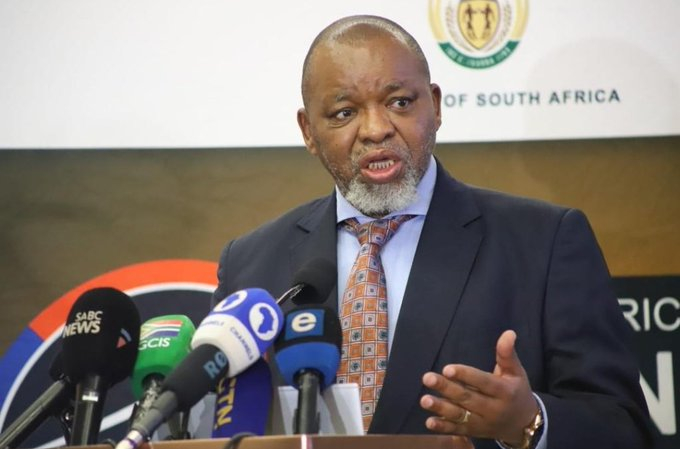
Minister of Mineral Resources and Energy, Gwede Mantashe, says the Council for Geoscience (CGS) has a critical role to play to help catapult South Africa to the forefront of the green hydrogen economy.
The minister was speaking at the summit of the CGS held in Durban on Tuesday.
Mantashe cited the CGS’s lead role in the pilot carbon capture, utilisation and storage project in Leandra, Mpumalanga. The project, which is expected to become operational in early 2024, will test the feasibility of injecting between 10 000 t to 50 000 t of carbon dioxide a year, to a depth of at least 1 km.
He described the project as one that “gives [ . . .] hope that our Just Energy Transition programme can be attained [using] one of our most valuable commodities. One that has provided baseload for the country.”
Mantashe has long pushed back against being rushed into a just transition, arguing the economic cost of a rapid shift from coal.
But He said an energy transition was the future for SA, and that the world’s economic trajectory had demanded a shift.
He added, however, that coal capture and storage might still be an important power source to consider.
“Our transition from high-to low-carbon emission might be achieved with coal as part of the solution, if the hypothesis of clean coal is proven,” he said.
Carbon-capture technologies involve capturing carbon emissions from industrial activity, including power generation, and then transporting it to be kept underground.
It is a form of carbon sequestration, which generally involves the removal of CO2 from the atmosphere.
He was largely positive about the transition of power before a packed room of scientists, politicians and other stakeholders, saying the Geoscience Act empowered the Council for Geoscience to undertake geological exploration.
“I am expecting them to work with the private sector to re-catalyse the exploration activities in the country, in line with the geological potential.”
The Minister added that the CGS needs to play a “more preeminent role” in addressing some societal challenges.
“These challenges include… energy security, just energy transition, sustainable food supply, economic growth, climate change [and] disaster management that arises from national phenomenon such as floods and earthquakes.
“All those incidents and developments in society… only when they happen do we really appreciate fully the value of geosciences. KZN recently experienced the most devastating disaster that demolished houses and infrastructure…[the CGS] came here and applied science to the disaster,” he said.
Furthermore, Mantashe said the CGS is also expected to play a major role in the country’s drive towards infrastructure development.
“The government’s multibillion Rand infrastructure build programme will require CGS and geotechnical community to play an active role in safeguarding critical infrastructure investment. It is essential that infrastructural development is accompanied by sound geotechnical investigations and information.
“It has never been more important for any infrastructure development to consider geotechnical conditions appropriately prior to affecting such development. It is precisely in this context that the amendment of the Geosciences Act empowered the CGS to review all geotechnical reports and provide appropriate advice to local authorities in consideration of the infrastructure development programme, “he said.