
By Lehlohonolo Lehana.
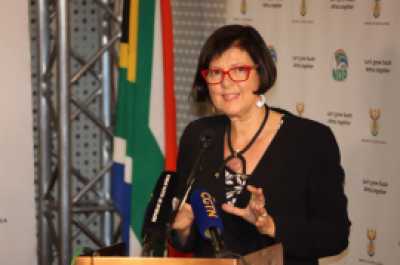
Forestry, Fisheries and Environment Minister Barbara Creecy says environmental laws will not be swept aside because of the state of disaster that has been declared to address the energy crisis.
Creecy was speaking on Friday at a briefing on the national state of disaster on energy.
Earlier this week, the regulations for the state of disaster were issued. It indicated that environmental authorisation decision-making processes could be streamlined.
“Whether all environmental law will be swept aside, and I think the answer is no,” Creecy said in response to questions about the implications of the regulations. The minister explained the regulations do not promote exemptions from environmental law. “And it is not our intention to start producing blanket exemptions from those provisions,” Creecy added.
Creecy explained that the primary approach of her department is to expedite decision-making around environmental applications, licences and permissions.
According to Creecy, the department will make provision for her to issue directions related to the streamlining of applications and decision-making processes for environmental authorisations, waste management licenses and atmospheric emission licenses.
“What we are currently doing is that we are looking at developing directions that would enable expedited procedural requirements for requiring environmental authorisation,” she explained.
“So for example, allowing a process to be followed that is similar to the current basic assessment process, even for activities that may otherwise require the full scoping Environmental Impact Assessment (EIA) process.”
The department is also looking at shorter periods between the submission of an application and the submission of reports for decision-making and public participation, for example, 14 days as opposed to the existing 30 days.
“I think it’s important to say that the regulations do not provide for exemptions from environmental law,” she stressed.
“It’s not our intention to start producing blanket exemptions from those provisions. I think we recognise that there may be certain instances where this is required, and on a case-by-case basis.”
However, the department will be advised by its legal practitioners on how best to deal with the situation.