
By Lehlohonolo Lehana.
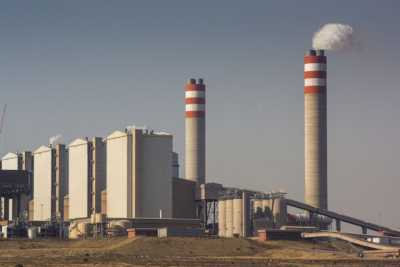
State owned power utility Eskom has announced that the full load rejection test of the refurbished Unit 1 at Koeberg Power Station on Saturday, 30 December 2023, was a success.
The utility said this was the final test that needed to be performed following the installation of the unit’s new steam generators, in accordance with the South African Grid Code (SAGC) requirements.
“The successful completion of the test serves as an encouragement as Eskom plans to undertake similar steam generator replacement activities on Unit 2,” the utility said.
The test was used to “verify and demonstrate” the unit’s ability to supply its auxiliary load and return to steady state conditions following a sudden disconnection from the national grid.
“As part of the steam generator replacement project, significant changes were made on numerous plant components, including control systems,” Eskom explained in its previous announcement of the test.
“Therefore, in line with SAGC, the response of the unit to a full load rejection incident needs to be tested and verified.”
Koeberg Unit 1 was offline for nearly a year — from December 2022 until early November 2023 — for its steam generator replacement and long-term refuelling.
Its unavailability has cost the grid roughly 980MW of generating capacity.
The unit was initially supposed to be back online by June 2023, but the project team encountered several unexpected and unexplained issues, resulting in multiple delays.
Meanwhile South Africans have entered 2024 with load shedding still very much a fixture in their lives, with Eskom announcing the return to stage 2/3 load shedding from Tuesday (2 January).
The return of load shedding follows an 18-day streak of zero rotational blackouts, which many hoped would persist into the new year.
2023 proved to be an incredibly damaging year for South Africa’s power situation, with year-end data by independent energy analyst Pieter Jordaan showing that the average citizen ultimately spent 19.9% of the year with zero power.
Cumulatively, South Africans spent 72.6 days or 1,742 hours with no power in 2023 (aka blackout hours), more than double the amount experienced in 2022 and almost ten times as much as 2021.
The accumulated blackout hours in 2023 were more than all the hours counted between 2014 and 2022 combined, making up 56% of the 129.5 days of total blackout hours between 2014 and 2023.