
By Lehlohonolo Lehana.
Eskom is forecasting a de-escalation in the intensity of rotational power cuts for the coming week following the traumatic return of Stage 6 on Friday, November 24.
The utility announced that loadshedding would be reduced to Stage 4 from 12:00 on Sunday, November 26, until 5:00 on Monday, November 27, when Stage 3 cuts would be implemented.
It was then planning to sustain Stage 3 during the day for the rest of the working week, while ramping up to Stage 4 during the late afternoons to navigate the evening peak and replenish emergency reserves overnight.
Some 2 500 MW of capacity was anticipated to return to service by Tuesday evening.
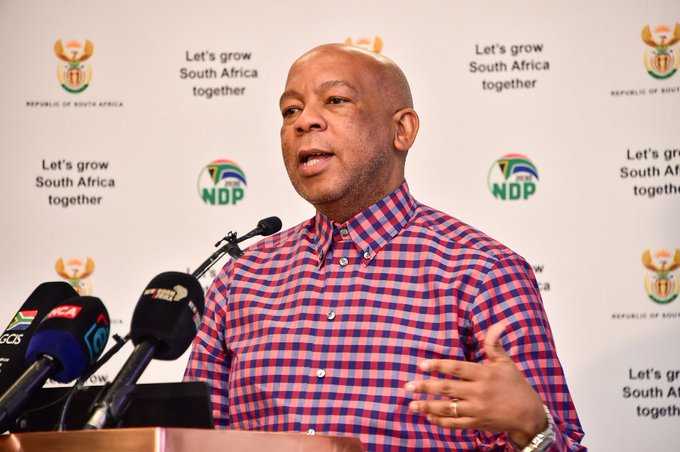
Electricity Minister Kgosientsho Ramokgopa repeated that the latest bout of Stage 6 had been implemented because of a depletion of emergency reserves on the back of the failure of several large coal units earlier in the week and a 1 500 MW spike in demand, attributed to the heat-wave conditions affecting parts of the country.
The Minister said that, by November 24, diesel stocks had fallen precipitously to only 28% at the Ankerlig open-cycle gas turbine, but had since been rebuilt to about 55%. Likewise, the upper dams at Eskom’s pumped hydro schemes had declined to levels described as “critically low” on Friday, but had also been recovered to acceptable levels by Sunday.
Unplanned outages remained elevated at 15 386 MW on Sunday, while capacity unavailable for planned maintenance was 5 617 MW. However, Ramokgopa stressed that this lack of plant availability had not been the main trigger for the Stage 6 declaration.
He also insisted that Eskom had not breached Stage 6 during the weekend, amid numerous complaints by residents, especially in Johannesburg, that their experience over the period had been more reflective of a Stage 8-type intensity.
He noted that Eskom had handed responsibility for loadshedding in Johannesburg to City Power and that the city’s distribution entity would, thus, be in a better position to explain its approach to implementation.
In a statement, City Power said that it was no longer implementing four consecutive hours of loadshedding and had instead spread out those hours to provide customers with two hours of relief in between. As a consequence, more loadshedding episodes were taking place at short intervals, with some areas being cut up to five times in a 24-hour cycle.
“We are aware that these frequent outages are very inconvenient, and some might even prefer to be loadshed for four-hours straight if it means they will not be off again in the next two hours, “City Power said.
It added that an announcement on further changes to the loadshedding schedule would be made in the coming two weeks.
Meanwhile Karpowership South Africa (SA), the local entity of Turkish company Karpowership, has welcomed the granting of an enviromental authorisation (EA) for its Saldanha Bay project by the Department of Forestry, Fisheries and the Enviroment (DFFE).
It says this is another step forward for the company to supply power to the South African grid through the Risk Mitigation Independent Power Producer Procurement Programme.
Following the recent EA from the DFFE for the 450 MW Richards Bay project, this decision will enable Karpowership SA to provide an additional 320 MW from Saldanha Bay.
This is the second time Karpowership SA has resubmitted environmental applications, having failed to meet the requirements previously. The company is also contending with opposition from environmental groups.
Karpowership is aiming to undertake the floating gas-to-power projects at the ports of Richards Bay, Saldanha Bay and Ngqura, using imported liquified natural gas (LNG) as a fuel source.
Powerships are ship- or barge-mounted, fully integrated, floating power plants.
Karpowership SA avers in a statement that these LNG-to-power projects will help address South Africa’s energy supply crisis, while enabling a smooth transition to renewable energy in line with the country’s net-zero emission targets.
The DFFE has also issued a provisional atmospheric emission licence for Karpowership SA’s project in Richards Bay, in terms of Section 41(1) of the National Enviromental Management Air Quality Act 2004.
Watch Live in the video below:
Video Courtesy of GCIS.