
By Lehlohonolo Lehana.
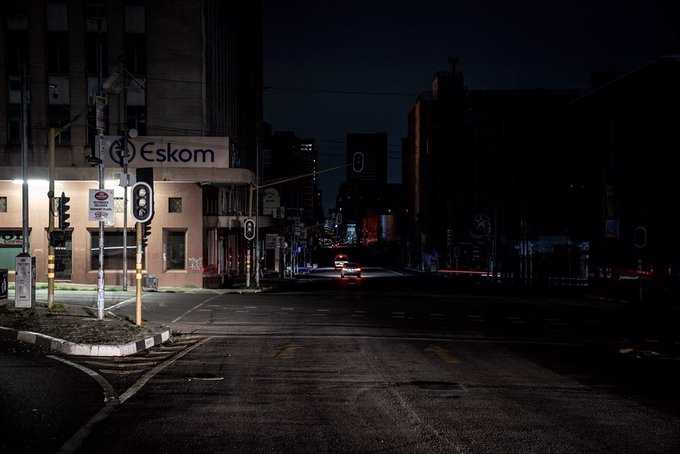
South Africans are enjoying one of the longest load shedding-free periods in years as the state-owned electricity utility says it has sufficient generating capacity and emergency reserves to meet demand.
“This follows a period of 21 consecutive days, and as of midday today, 535 hours without load shedding,” said spokesperson Daphne Mokwena. “This is a result of sustained generation capacity, adequate emergency reserves, and reduced electricity demand from the grid.
“The last time Eskom achieved a similar milestone was in June 2022, with 20 consecutive days without load shedding.”
It would give a further update on Sunday, the power utility said, adding that there were nonetheless 14 264MW of unplanned outages, while 5 370 MW were out for planned maintenance – totalling 19 634MW of unavailable capacity. Eskom’s evening peak demand for Wednesday is expected to be 28 655MW.
Mokwena added: “While Eskom acknowledges this milestone, it remains committed to the continued implementation of its Generation Operational Recovery Plan to reduce and ultimately eliminate load shedding…Eskom Power Station General Managers and their teams are working diligently to ensure the recovery of additional generating capacity by bringing units from unplanned outages and planned maintenance back into service as soon as possible.”
Data published by Eskom tracking the performance of its fleet for the first quarter of the year shows that while the group has improved breakdowns and slightly boosted energy supply, tanking demand has given South Africa some breathing room.
Detailed analysis of Eskom’s data by independent energy analyst Pieter Jordaan shows that first quarter power demand in 2024 was 5.7% lower than the same period in the previous year, dropping from 25.95 to 24.47 GW/hr.
For the same period, power supply only increased by a marginal 0.4% from 23.24 GW/hr in 2023 to 23.33 GW/hr in 2024.
Notably, Compared to 2023, power supply remained stagnant, posting near-identical output for 10 out of the first 13 weeks of the year.
Thanks to the drop in demand, the deficit – or supply gap – narrowed by 58% from 2.703 GW/hr in 2023Q1 to 1.134 GW/hr in 2024Q1, Jordaan said.
“The improved outlook caused the blackout rate to halve from 25.8% in 2023Q1 to 13.2% in 2024Q1. The dramatic change in demand is primarily due to rooftop solar installations driven by unreliable supply and extreme tariff increases,” he said.