
By Lehlohonolo Lehana.
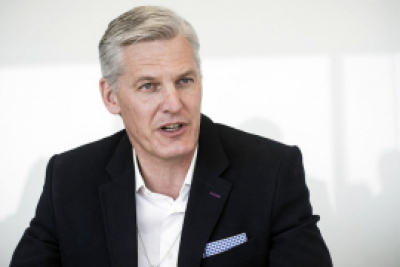
Eskom CEO Andre de Ruyter says the power utility has decreased its debt by at least 15% over the past financial year and predicts that it will half its net loss from R18 billion last year to some R9.1 billion this year.
The power utility has incurred debt of at least R392 billion.
Speaking at a meeting of Parliament’s Portfolio Committee on Public Enterprises, de Ruyter explained that Eskom’s results were borne out of stronger financial controls, higher electricity tariffs and reduced costs.
“Our net profit after tax has increased to R9.2 billion for the first half on the back of some strong sales values increases that we saw as we emerged from COVID-19 lockdown. Cost control remains a very strong focus area of this management team and those results are coming through in a very pleasing way also aided by an increase in the tariffs.
“We’ve been able to reduce our debt by some 15% and although our balance sheet remains stressed, we are making good progress in steadily working down the debt within parameters that we have at our disposal,” he said.
The Chief Executive added that Eskom is cautiously predicting a substantial reduction in its losses for the financial year.
“The R9.1 billion that we’re forecasting, I think we can signal that there is some upside on that. We don’t want to…prior to the end of the financial year give you a number that deals with that. But thanks to improved operational performance from a revenue collection point of view as well as some very good cost control, there is an upside to this number, “he said.
De Ruyter said the enterprise is working with government and National Treasury to finding more ways to cut its debt.
Up to now, Eskom has received at least R136 billion from government to pay its debt and is expected to receive at least R88 billion in further assistance until the 2025/2026 financial year.
“We’re very grateful for government’s support to the tune of R31.7 billion that we have received and this remains an essential part of the sustainability of Eskom going forward.
“There is definitely no intention on the part of Eskom management to take advantage of government, that’s not the plan at all. We do engage regularly with National Treasury and…they part with the money with great difficulty so there’s definitely no free flow of money into Eskom’s pockets [and] we have to put up a very compelling case.
“We do have a very constructive and collaborative relationship with National Treasury and I must thank the colleagues there for working with us to find solutions to the very large debt that Eskom carries, “de Ruyter said.
Finance Minister Enoch Godongwana acknowledged that a portion of Eskom’s debt was “distressed” but said that further support would be contingent on the utility demonstrating turnaround progress and taking self-help measures.
“We expect Eskom to take steps towards cost containment, conclude the sale of assets and implement operational improvements to enhance the reliability of electricity supply,” the Minister said, while describing the utility’s current performance as being worse than it was when the electricity crisis first emerged in 2008.
He also argued that more attention needed to be given to fixing the electricity supply industry than to fixing Eskom alone, adding that more private investment was required to do so.
“The National Treasury is working on a sustainable solution to deal with Eskom’s debt in a manner that is equitable and fair to all stakeholders.”
Meanwhile the National Treasury confirmed that Eskom’s guarantee exposure increased by R29.6-billion to R327.9 billion in 2021/22 owing to additional drawdowns.
Government’s total amount for approved guarantees is expected to decrease by R21.5-billion to R560.1-billion by the end of March 2022, with associated exposure estimated to increase by R32.1-billion to R416.8-billion.