
By Lehlohonolo Lehana.
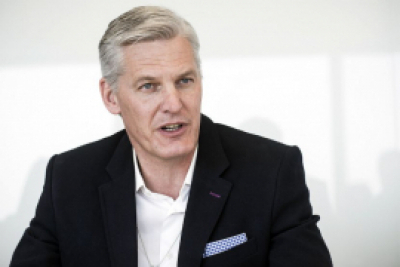
Eskom CEO André de Ruyter says the rolling power cuts in South Africa should come to an end by the end of next week.
De Ruyter made the announcement on Saturday during President Cyril Ramaphosa’s oversight visit to Eskom’s Tutuka Power Station in Mpumalanga.
The president was accompanied by Public Enterprises Minister Pravin Gordhan, Mineral Resources and Energy Minister Gwede Mantashe, Police Minister Bheki Cele and Mpumalanga Premier Refilwe Mtsweni-Tsipane.
De Ruyter said big units were returning to the grid, which was “positive news”.
“Towards the end of July the risk of load-shedding will be significantly diminished with the return of Koeberg 2, “he said.
Since June, South Africans have been without electricity for hours on a daily basis, with Eskom’s load shedding schedule bouncing between the various stages of state-imposed power cuts. The highest stage of load shedding implemented by the embattled power utility was stage 6.
Eskom announced on Friday that it would move the country to stage 2 load shedding on Saturday and Sunday from 4 pm until 10 pm.
De Ruyter added that in order for Eskom to stop load shedding, it needed additional generation capacity.
“Ultimately, to put load shedding to bed, what we need is the additional capacity because the system as it is at the moment is unreliable and unpredictable,” he said.
Ramaphosa said corruption and fraud were among the challenges faced by Eskom’s Tutuka Power Station.
“Corruption and fraud are very pervasive in the power station with a number of people who are involved in fraudulent activities and theft, to a point where the theft and the fraud make it very challenging for the power station to be able to operate optimally when there are shortages of spares when they’re stolen,” he said.
Ramaphosa said he’d meet other managers at another power station this afternoon to get a closer insight of some of the problems and challenges they are facing.
“Having done so we’ll be able to come up with a number of proposals that can effectively deal with the challenges that the country faces when it comes to load shedding,” he also told reporters.
South Africa meanwhile is considering more than doubling the amount private power producers can generate without requiring a license in a bid to reduce blackouts that are hobbling the economy.
Ramaphosa is racing to make an announcement as soon as Sunday. South Africa last year removed a license requirement for private investors to build their own power plants of up to 100 megawatts under a plan to reduce excessive bureaucracy and add generation capacity.
Ramaphosa, who faces party elections in December, is under pressure to end rationing of electricity that’s plagued Africa’s most-industrialised economy for more than a decade. Still, the new measures are unlikely to alleviate the power shortfall soon. A litany of woes, including breakdowns at its coal-fired plants and labor strife, prompted Eskom to cut 6 000 megawatts of supply — enough to light up 4 million South African homes — during the latest crisis.
South Africa has faced intermittent power cuts for more than a decade that have hindered economic growth.