
By Lehlohonolo Lehana.
State owned power utility Eskom board chairperson Mpho Makwana announced that they were closing in on its decision on who to appoint as the new CEO.
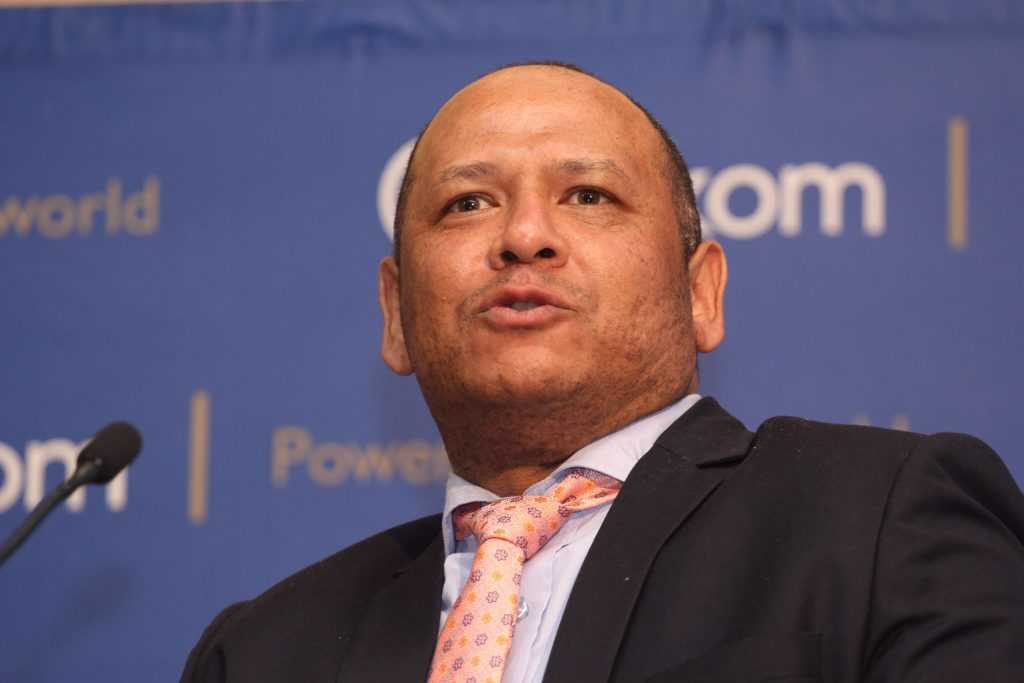
Delivering a keynote address at the National Demand Side Management Indaba in Johannesburg on Monday, Eskom board chairperson Mpho Makwana said the utility is progressing in its search for a new CEO.
“We’ve been quite advanced in the shortlisting process for the next new chief executive of Eskom, such that we now have a small shortlist of five candidates,” Makwana said, noting that he would attend a meeting later on Monday related to the appointment.
Former Eskom CEO André de Ruyter departed from his post earlier than anticipated.
De Ruyter joined the utility in late 2019 and resigned in December last year, after he claimed to be poisoned in the Eskom office. De Ruyter was supposed to stay on until April, but left the utility abruptly in February. This followed an explosive interview, in which De Ruyter accused a “senior politician” of being involved in corruption at Eskom.
Eskom has been sitting with an interim CEO in Calib Cassim, the group’s former chief financial officer, since de Ruyter vacated the position early in February.
The former CEO soon went to ground and has not made any public appearances since the interview, but is expected to appear before the Standing Committee on Public Accounts this week.
After 30 years of service at the utility, Eskom Chief Operating Officer Jan Oberholzer will also leave the company when he retires this month.
In the interim, Cassim has been filling the role, with Bheki Nxumalo appointed as the new Group Executive for Generation, effective 14 April 2023.
During his keynote presentation at the Indaba, Cassim said the power utility has launched a national demand side management initiative which could save some 1,500MW of energy for the grid.
On Sunday evening alone, demand exceeded Eskom’s capacity availability by at least 3,885MW. The deficit can reach more than 5,000MW during afternoon peaks.
Demand side management is seen as a tool that can help the power utility to potentially reduce load shedding.
“Eskom needs to focus on the supply in terms of our own plants, as well as getting the DMRE more capacity from an IPP [Independent Power Producers] perspective. But while we are looking at supply let’s not forget the importance of demand side management to close that gap in terms of that capacity shortfall.
“Eskom has launched its national demand management initiative. We are aiming to achieve a capacity from this initiative of just under 1,500MW…we think, and we know that the potential is much greater.
“At the end of the day, there’s only one objective for South Africa – stop load shedding as quickly as possible. But we need to do it in a way that ensures that we don’t compromise the integrity of the grid,” Cassim said.
Delving deeper into the initiative, Eskom’s head of Distribution, Monde Bala said the power utility has identified several opportunities which may make the 1,500MW aim a reality.
“We believe that there are quite a significant footprint of the traditional geysers that present an opportunity for further savings at a residential level.
“We believe that in terms of public lighting and street lighting there’s further opportunity to do public lighting in a manner that is energy efficient. The building and buildings codes…we are trying to press the process so that when…you do get approved, you get approved with energy efficiency in mind.
“Over and above that, we are aware that there’s a significant number of rooftop solar PVs that have already been installed which we could potentially tap into. So we’re looking at that as opportunity.
“We’ve got applications that we are currently processing totalling in excess of 100MW. That 100MW is one machine of the open cycle gas turbine so if we can get that, it would make a difference, “he said.
Bala emphasised that although Eskom takes responsibility for load shedding, it is “a problem that affects all of us”.