
By Lehlohonolo Lehana.
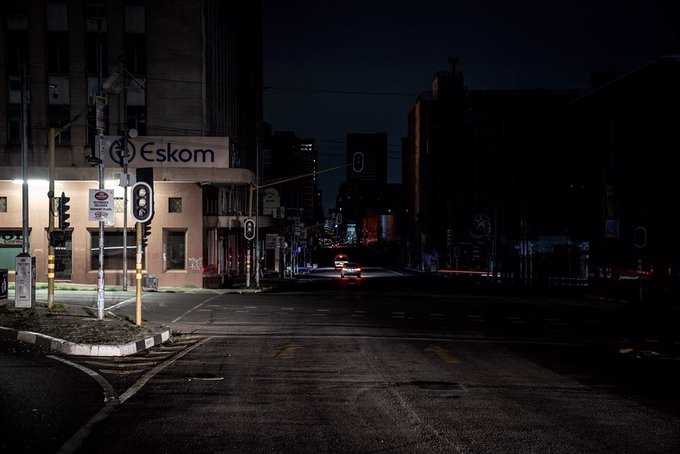
Eskom suspends load shedding over the long weekend, due to the sustained improved performance of generation availability as well as the anticipated lower demand.
The group said, load shedding will be suspended from 05h00 on Saturday and outages will only resume again on Tuesday (26 September). Load shedding will resume at Stage 1 from 05:00 on Tuesday.
During the long weekend, Eskom will address minor defects on some generating units by performing planned maintenance. Eskom will closely monitor the power system and communicate any changes to load shedding should it be required,” it said.
Eskom warned that demand is being closely monitored and urged South Africans to be conginsant of their energy usage to ensure that load shedding is not required.
Eskom’s load forecast for the evening peak demand is 27,406MW.
“We appeal to the members of the public to continue reducing demand by switching off non-essential appliances,” it said.
Other constraints are also still present.
Breakdowns are currently at 14,364MW of generating capacity while the capacity out of service for planned maintenance is 5,731MW.
Over the past 24 hours, a generating unit each at Arnot and Kendal power stations was taken offline for repairs.
The anticipated return to service of a generating unit at Kendal Power Station has been delayed, further contributing to the current capacity constraints.
Eskom has changed tack this week by adjusting load shedding on the fly – stepping away from previous strategies of announcing and sticking to a recurring schedule.
With this in mind, South Africans are cautioned that load shedding changes may occur at short notice.
If Eskom managed to keep load shedding at bay for the full long weekend, however, it will be the first time since March 2023 that the country experiences a solid 24 hours of uninterrupted power.
It would also be the first time since September 2022 that the country sees consecutive days of power.
Meanwhile today marks the last day that South Africans and other stakeholders can submit comments on the new proposed load shedding stages for the country.
The national energy regulator Nersa published the consultation document on the restructuring of load shedding on 11 August.
Once the comment window has closed, responses will be collated and taken into consideration for the final decision on the proposals. Once finalised, the new rules will ultimately be known as the NRS 048-9 Code of Practice Edition 3.
The NRS 048-9 Code of Practice is primarily an electricity utility-driven and executed document that derives its mandate and authority, once approved by the National Energy Regulator of South Africa (Nersa), as part of the Electricity Regulations Act.
When the first edition of the NRS048-9 code was established in 2010, load shedding stages were capped at Stage 4 – representing 25% of the base load – requiring utilities to “find” electricity load under emergency conditions.
The key change in the document comes in extending load shedding stages to stage 16 – but the structure of the new stages may be unfamiliar to what most South Africans have become accustomed to.
At present, most South Africans understand each stage of load shedding to reflect 1,000MW of power that is removed from the grid.
However, under the proposed structure, this is rather expressed as the percentage of demand assumed by the System Operator at the time the stage is called. The percentages range from 5% of demand at stage 1 to 80% at stage 16.