
By Lehlohonolo Lehana.
The Minister in the Presidency responsible for Electricity, Dr Kgosientsho expressed confidence that the loadshedding corner had been turned, which he attributed to more stable production from the coal fleet and the relief on the system being provided by both large-scale renewables and surging rooftop solar installations.
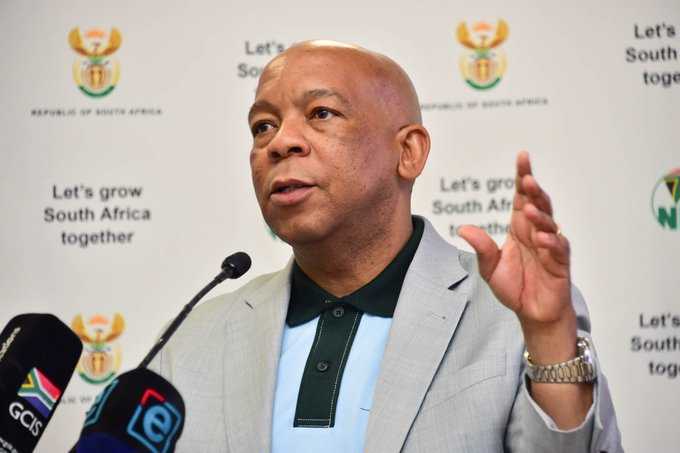
Ramokgopa briefed the media on the implementation of the Energy Action Plan.
Last year about 2 500 MW of rooftop solar was added, much of which was coupled to battery storage, increasing the overall installed base to above 5 000 MW.
The installations had decreased daytime demand, which provided space for the replenishment of pumped storage reserves.
The combination of improved coal stability, renewables, batteries and lower demand meant that Eskom was expecting to operate the open cycle gas turbines (OCGTs) it owned, as well as those operated by IPPs, at a far reduced capacity factor than was the case in its 2023/24 financial year.
The utility confirmed that it exceeded its R30-billion diesel budget for the period by R3-billion.
Ramokgopa said that, since December, Eskom had been using OCGTs less than the 17% average that had been the case for the financial year as a whole, with load factors ranging from 6% in December to 17% in March.
He said that for the April month-to-date, the average load factor had been 5.97%.
Eskom would provide its winter outlook on April 26, where it would provide three loadshedding scenarios for the period to the end of August, including a base case whereby unplanned breakdowns were kept below 14 000 MW and planned maintenance at about 3 500 MW.
Under such a scenario only limited loadshedding was expected, which would rise, however, if breakdowns breached the 14 000 MW level.
Ramokgopa also described surplus electricity arising from existing renewable energy facilities as “low hanging fruit” in improving the supply-demand balance and reports that discussions are under way to assess ways to make this energy available to the grid.
He confirmed that the issue, which had been under consideration for years, had again been raised with him by the leadership of Scatec during his recent visit to the group’s Kenhardt solar-battery facility in the Northern Cape.
The hybrid Kenhardt plant comprises 540 MW of solar photovoltaic capacity and 225 MW/1.1 GWh of battery storage to provide 150 MW of dispatchable electricity daily.
However, it is restricted, owing to the design of the much-criticised risk-mitigation procurement programme, from delivering any surplus solar electricity into the grid.
It is understood that this results in up to 30% of the plant’s solar generation being lost to the system. This despite the threat of daily loadshedding, which has eased somewhat in recent weeks, with Eskom having refrained from implementing rotational cuts for 26 days at the time of the briefing.
Ramokgopa said finding a way to absorb the surplus being generated by Kenhardt and other renewables independent power producers (IPPs) required a “three-way conversation” between Eskom, the IPPs and government’s IPP Office regarding a fair contractual model.
It would also be feasible, he added, only if there was sufficient grid capacity to absorb the electricity.
That said, discussions regarding the surplus available from existing IPPs have been under way for years, and even predate the 2022 establishment of the National Energy Crisis Committee, which initially indicated there to be some 70 MW of such surplus capacity available, which was before Kenhardt entered commercial operations.
It is not clear why the negotiations have not progressed, with Ramokgopa indicating that several IPPs had approached him directly about the surplus that they “essentially throw away” because it exceeded their contractual limits.
“We have initiated discussions with Eskom and the IPP Office to see how best we can design an intervention that makes it possible for us to benefit from that excess generation, without undermining what was a public procurement process to contract the megawatts,” the Minister said.
The outcome, he added, should not lead to questions about the credibility of the procurement processes or the resulting contracts, as the business case of the IPPs would be improved should the surplus electricity above the initial contracted amount be purchased.
Meanwhile Eskom board chair Mteto Nyati has rebuffed suggestions that the current abatement of load shedding – South Africans haven’t had to deal with rolling blackouts for nearly a month – has to do with political pressure being applied to the power utility ahead of the 29 May election.
Nyati said, that Eskom’s ability to keep the lights on is the result of progress made in its maintenance strategy that it began implementing over a year ago – and certainly not because it is running its power stations too hard.
“That is not true,” Nyati said. “We started around March last year to implement strong planned maintenance across selected power stations within Eskom. That required us to take the pain in the short term, where we ended up having higher stages of load shedding because we had taken some this equipment [offline].”
Now, having done a significant number of these power stations, we are starting to see that benefit of that [maintenance work].”
According to Nyati, the maintenance initiative – it is now in the second of its two-year plan – has led to a significant reduction in the need for unplanned maintenance. As a result, unplanned outages have reduced from 19GW to 13GW. The utility is working hard to reduce unplanned outages to below 10GW, he said.
Nyati said Eskom is aware of “theories” as to why Eskom has improved generation capacity, although he believes that these lack evidence to support them. He made particular reference to an opinion piece by Democratic Alliance leader John Steenhuisen, which suggested that Eskom was running its open-cycle gas turbines (OCGTs) hard to ramp up energy production, and thereby burning more diesel as a consequence.