
By Lehlohonolo Lehana.
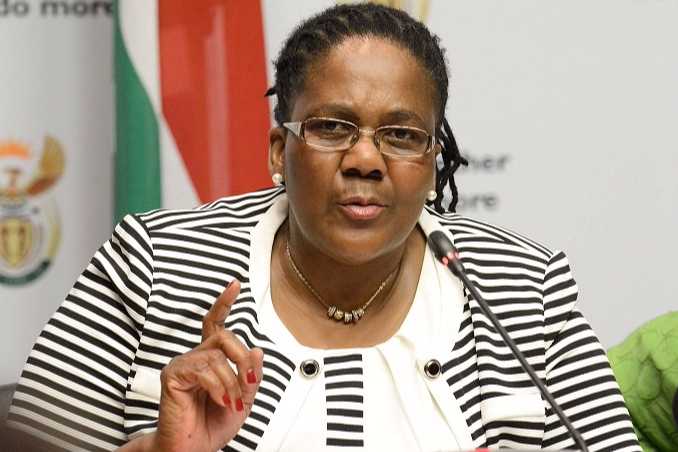
Former transport minister Dipuo Peters joins fellow ANC MPs Mosebenzi Zwane and Joe Maswanganyi in being found guilty of breaching Parliament’s code of conduct.
Peters was hauled before the Parliament’s Joint Committee on Ethics and Members’ Interests following three complaints laid against her.
The complaints, one of which was filed by non-profit organisation (NPO) #UniteBehind related to Peters’ failure to appoint a group CEO of the Passenger Rail Agency of South Africa (Prasa).
Her actions resulted in a financial loss of R1.7 million for Prasa which was paid to a recruitment company.
Another complaint related to her dismissal of Prasa board led by former chairperson Popo Molefe, seemingly because it had uncovered R14 billion of irregular expenditure and instituted investigations into corruption at the railway agency.
In 2017, the Gauteng High Court in Pretoria ruled Peters’ conduct in getting rid of the board and attempting to stop the investigations into Prasa corruption was irrational, unreasonable and unlawful.
The African National Congress (ANC) MP was also accused of failing to investigate claims of “R79-million of Prasa money paid by Swifambo to other people for alleged distribution” to the governing party, despite her duty to root out corruption.
Another allegation was that Peters approved the use of Prasa buses for ANC events during 2014 and 2015 without ensuring payment from the ANC.
The Ethics Committee sanctioned the former Transport Minister on three breaches of the ethics code.
“The member failed to act on all occasions in accordance with the public trust placed in her, and discharge her obligations, in terms of the Constitution, to Parliament and the public at large, by placing the public interest above her own interests,” the committee’s statement reads.
The committee, therefore, recommended that Peters be suspended from her seat in all parliamentary debates and sittings, and committee meetings for one term.
“Also, the committee will recommend that the suspension in respect of all three breaches run concurrently during a term of the parliamentary programme, as determined by the House.”
Peters lost her job in 2017 in one of the umpteenth Cabinet reshuffles by then president Jacob Zuma.
The question now is whether the proposed sanction lapses, given that it’s already late into October – effectively undermining the joint ethics committee’s findings.
Meanwhile Chief Justice Raymond Zondo believes the Public Procurement Bill being considered by Parliament is insufficient to address corruption concerns he raised in the state capture report.
Zondo said his report, released in four parts over several months, had made over 10 recommendations for changes to public procurement.
It is clear that the tender process can be easily abused as a vehicle for patronage and corruption. Zondo recognised this, dedicating an entire chapter to procurement in his State Capture Report.
The Public Procurement Bill has been in development for a decade, reflecting a longstanding recognition that our existing system is not fit for purpose. This system is fragmented – relying upon numerous pieces of legislation, regulations and National Treasury instructions; clunky – designed for an era of manual bids; and opaque – making effective monitoring and accountability almost impossible.
In the wake of the State Capture Commission is a recognition that our procurement system needs to be resilient against corruption. We need a system that is both difficult to abuse and which creates strong oversight and accountability mechanisms. The Constitution obliges all government entities to contract for goods and services through a system which is fair, equitable, transparent, competitive and cost-effective. A system characterised more by corruption than by its ability to provide goods and services hampers the achievement of these objectives.