
By Lehlohonolo Lehana.
The Expropriation Bill was adopted by the National Assembly late on Wednesday evening after the opposition parties put their objections on record.
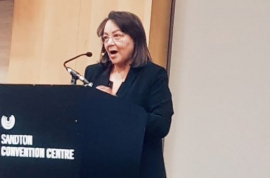
Introducing the bill, Public Works and Infrastructure Minister Patricia de Lille said expropriation wasn’t unique to South Africa and has moved to assure South Africans that government has no intention of using the Expropriation Bill to arbitrarily seize land from private owners.
She was speaking during a National Assembly debate on the bill on Wednesday evening.
The bill was passed in the house on Wednesday, 14 years after it was first introduced and is aimed at replacing the Apartheid era Expropriation Act of 1975.
“I am certain we can agree [arbitrary expropriation] is not the kind of pain and injustice that democratically elected representatives will subject South Africans to again. It is our responsibility to correct the historic injustice of land ownership patterns in South Africa.
“It is extremely dangerous to suggest that government will arbitrarily take people’s property such as their homes. [Land] is an emotive issue. Across the country, there is still great pain being felt by people of colour who were stripped of their homes and denied the right to own property under the Apartheid regime.
“We can debate our points but what is wrong is to instil fear mongering and distort the facts in a debate about land and this is done all too often. Many times, those against the Expropriation Bill have been people who were never subjected to laws that stripped people of their property or rights to own property,” de Lille said.
De Lille, however, emphasised that the “injustices of the past” must be corrected in democratic South Africa.
“We must remember that still, today, mainly people of colour live on the outskirts of our towns and cities, far away from economic opportunities and do not own any land, thanks to the apartheid regime’s draconian laws.
“It is our responsibility to correct this historic injustice. These are the wrongs of our past that we have been working to remedy since the advent of South Africa’s democracy in 1994,” she said.
She explained that the new bill has been drafted in order to ensure that legislation is in line with Section 25 of the Constitution.
“The 1975 Act is inconsistent with the Constitution in many respects. The current bill proposes to bring the law in line with the Constitution.
“The Constitution provides that compensation for expropriation must be “just and equitable” having regard to all relevant circumstances.
“The bill outlines circumstances when it may be just and equitable for nil compensation to be paid. It does not prescribe that nil compensation will be paid in these circumstances. The bill provides that the amount of compensation will be determined by the courts,” she said.
ANC MP Nolitha Ntobongwana, the chairperson of the Portfolio Committee on Public Works and Infrastructure, said they received legal opinions on the bill.
“The committee is of the view that the bill passes constitutional muster. There is no need for panic among members of the opposition on the constitutionality of the bill.”
DA MP Samantha Graham-Maré pointed out that Parliament last year failed to pass an amendment to Section 25 of the Constitution to allow expropriation without compensation.
“In spite of this, the ANC have insisted that the exact clause that they failed to pass be retained in the Expropriation Bill. It is our contention that this [is] a brazen attempt by the governing party to amend the Constitution through the back door using ordinary legislation,” said Graham-Maré.
“It cannot be countenanced that a clause that was deemed so pivotal as to require a constitutional amendment should now just be adopted in the House by a simple majority.”
She said Section 12(3) of the Expropriation Bill “clearly contravenes” the Constitution by providing specific instances where nil compensation was already deemed to be just and equitable.
“Our proposed amendment to Section 12(3) of the Expropriation Bill stipulates that nil compensation should only be the starting point in two instances – where land is owned by the state and is no longer needed by the department or organ of state, and where state property that was previously expropriated and paid for, is needed for another purpose.