
By Lehlohonolo Lehana.
South Africa’s Government of National Unity (GNU) is seemingly facing collapse, after Democratic Alliance (DA) ministers voted against the fiscal framework – a key part of the budget – in Parliament.
DA rejected an increase in VAT, and demanding a cut in spending across all government departments.
The African National Congress (ANC) have slammed the DA’s defiance, warning that the GNU can’t survive if partners oppose fiscal framework.
The ANC, which positions itself as a centre-left party, refused to bow to what it called the DA’s demand for an “austerity budget”.
It demonstrated its political acumen by winning the support of a slew of smaller parties – both inside and outside government – to get the fiscal framework through parliament by 194 votes to 182.
The ANC argued that a VAT increase – set at 0.5% this year and a further 0.5% next year – was necessary to raise revenue, and to offer public services such as health and education.
Crucially, the Inkatha Freedom Party (IFP) voted with the ANC, signalling the end of the alliance it formed with the DA in the build-up to the election in a failed bid to keep ANC out of power.
ActionSA – a small opposition party which broke away from the DA – helped the ANC clinch the vote.
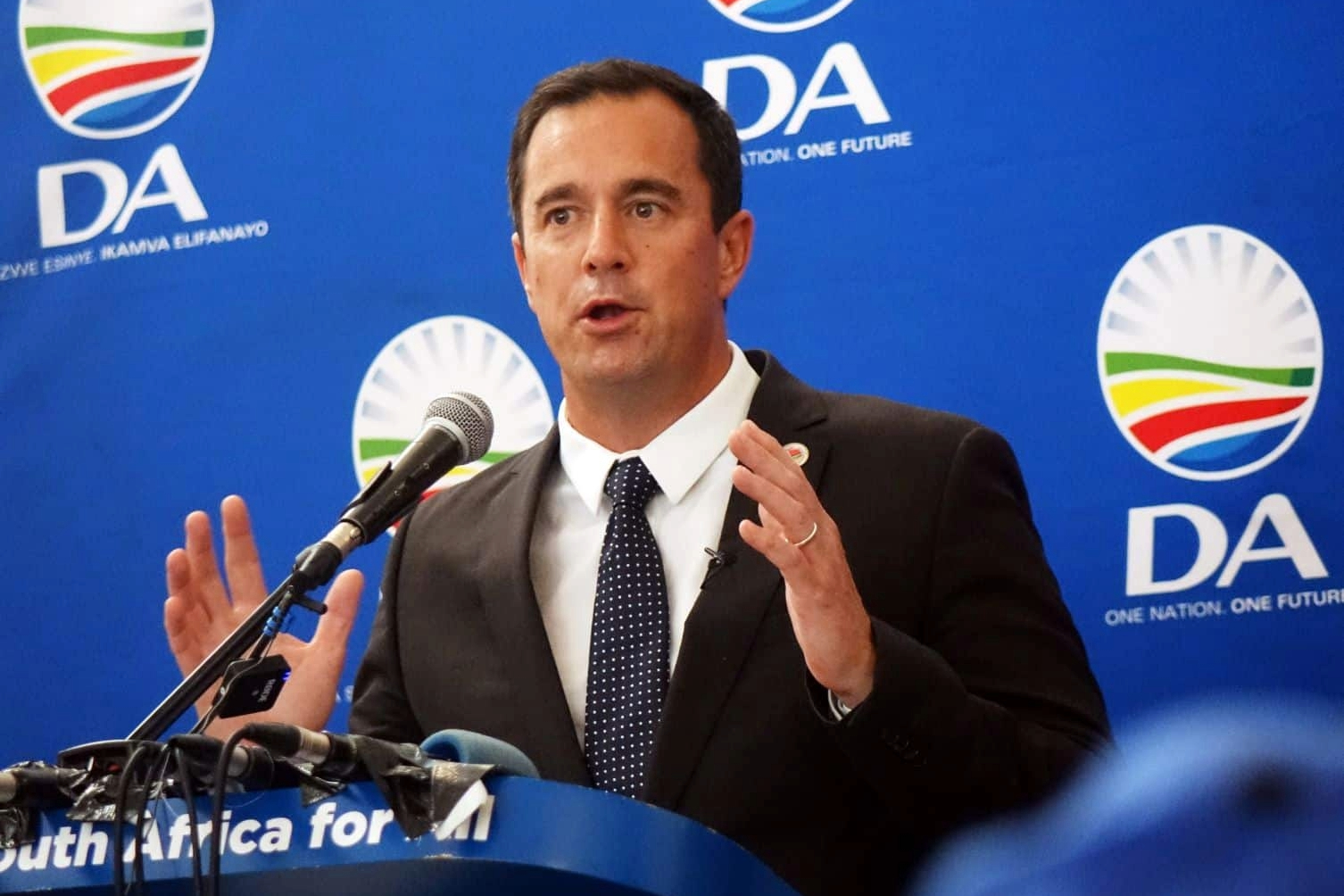
Democratic Alliance (DA) leader, John Steenhuisen says the party entered the GNU to be part of the government, and not just a mere spectator.
Steenhuisen told the media in Phoenix during the party’s campaign in KwaZulu-Natal, as the party prepares for the April 16 By-Elections.
It comes after the removal of the party’s former councillor, Aamir Abdul who had been petitioned against after residents were dissatisfied with his leadership.
Steenhuisen confirmed that the DA held an initial meeting of its Federal Executive over Thursday and Friday, but no decision has been made.
“The FedEx will continue to meet and assess the current situation.”
Steenhuisen also mentioned that he received letters from business leaders expressing concern over the country’s future, citing potential instability if a minority government were to form.
“There could be a minority government that would function from parliamentary sitting to parliamentary sitting, with uncertainty about whether there is a majority,” he said.
He emphasised that the DA’s federal executive is waiting to see how events unfold before making a final decision.
The coalition government was formed less than a year ago after the ANC lost its parliamentary majority in elections for the first time since Nelson Mandela led it to power in 1994 at the end of white-minority rule.
South Africa’s business sector lobbied the two parties to enter into a coalition, seeing it as the best option to guarantee economic stability.
The Trump administration has now imposed tariffs of 30% on all South African imports, in a move that is likely to be a huge blow to its already floundering economy.
“They have got some bad things going on in South Africa. You know, we are paying them billions of dollars, and we cut the funding because a lot of bad things are happening in South Africa,” the US president said, before going on to name other countries.
President Cyril Ramaphosa’s office condemned the new tariffs as “punitive”, saying they could “serve as a barrier to trade and shared prosperity”.
But for many South Africans, the tariffs signal the need for the two biggest parties to resolve their differences and work together – or risk seeing the nation sink into a deeper economic crisis at a time when the unemployment rate is already at more than 30%.