
By Lehlohonolo Lehana.
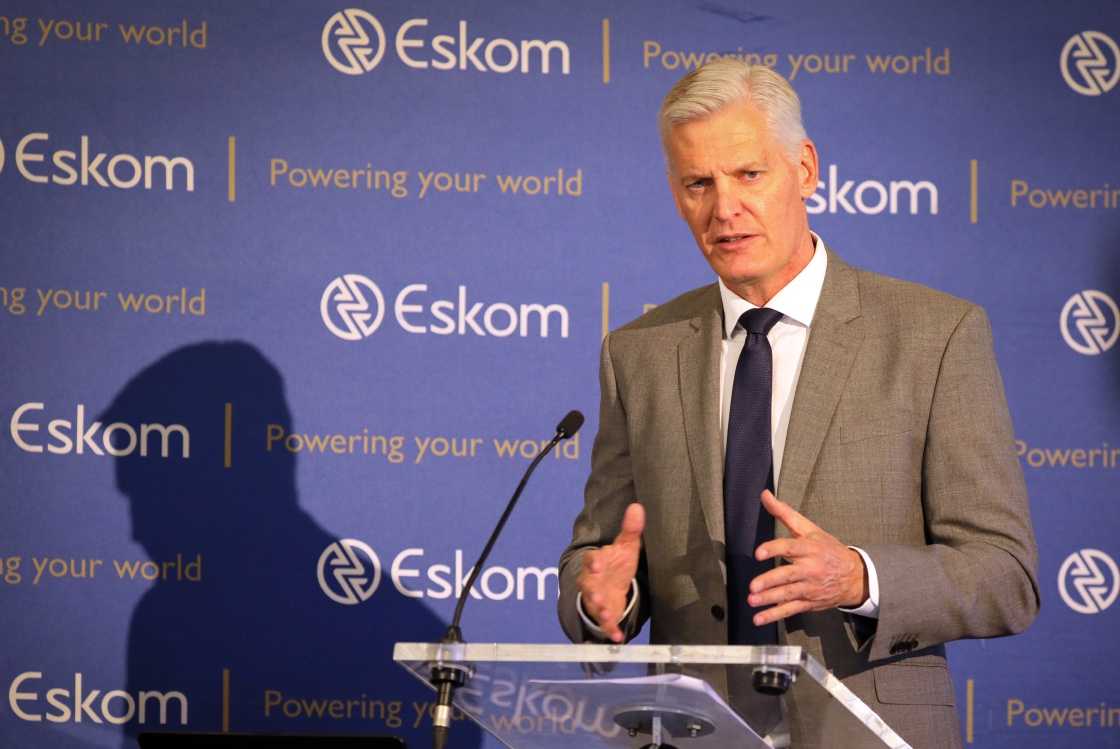
State owned power utility Eskom has defended the R500 million security contract signed with the Fidelity Services Group a few months before former Eskom CEO André De Ruyter resigned.
In a statement Eskom said, everything was above board in the procurement of the contract that cost the power utility R1.7 million a month.
This follows allegations made by The Association of Private Security Owners of South Africa (Tapsosa), demanding an inquiry into the tender processes followed by De Ruyter and Eskom.
Among their allegations is the claim that De Ruyter flouted normal tender processes to approve the deal under the guise of emergency services procurement.
Following emergency procurement processes, there was no requirement to have an open and competitive tender process. A single company, Fidelity, was hand-picked.
Thus, normal procurement processes, which are stipulated in the Public Finances Management Act (PFMA), were not followed by Eskom.
Tapsosa said it seeks transparency and clarity on what services were procured, the procurement process, and why this particular company was chosen.
Eskom said, it would like to reassure South Africans that the placement of the Fidelity Services security contract was in line with Eskom’s procurement procedure and the National Treasury directives for emergency procurement of services.
“Operationally, across Eskom sites, there was daily and monthly monitoring of activities, and the payment of the invoices over the 3 months was in line with the contracted services. A total of approximately R250 million, including VAT, was spent for the duration of the contract,” read the statement.
The utility added that given the seriousness of the corruption allegations, it will work with the relevant authorities on any investigation.
Tapsosa met with the Treasury, who said Eskom did nothing wrong in using emergency procurement processes as the PFMA outlines cases in which normal procurement processes can be ignored.
The security association alleged that the emergency tender was initiated to follow up on De Ruyter’s intelligence report conducted by George Fivaz Forensic and Risk and funded by Business Leadership South Africa (BLSA).
Tapsosa said it would escalate its demands to the relevant Parliamentary oversight committees and the Electricity Minister, Kgosientsho Ramokgopa.
Meanwhile Chief executive officer of Business Leadership South Africa (BLSA), Busi Mavuso who served as an Eskom board member during de Ruyter’s time as CEO, and was also privy to the controversial intelligence operation that he launched. She also confirmed previously that BLSA was one of the organisations that helped finance the operation.
Mavuso said that huge delays at key power stations in South Africa – Kusile and Medupi – have been driven by crime and corruption. As a former Eskom board member, she also reflected on how difficult it was to get anything done with high levels of political interference at the company.
De Ruyter alleged that the ruling African National Congress (ANC) was using Eskom as a “feeding trough” – an allegation that landed him in hot water with the party’s National Executive Committee, which has since launched legal against him to get the comments withdrawn.
Mavuso, meanwhile, argued that while South Africa bickers over Eskom, the rest of the world is moving on and leaving the country behind. She said that investment interest is growing in Eastern Africa as the business and investment environment in South Africa deteriorates.