
By Kevin Rademeyer, Sports Journalist.
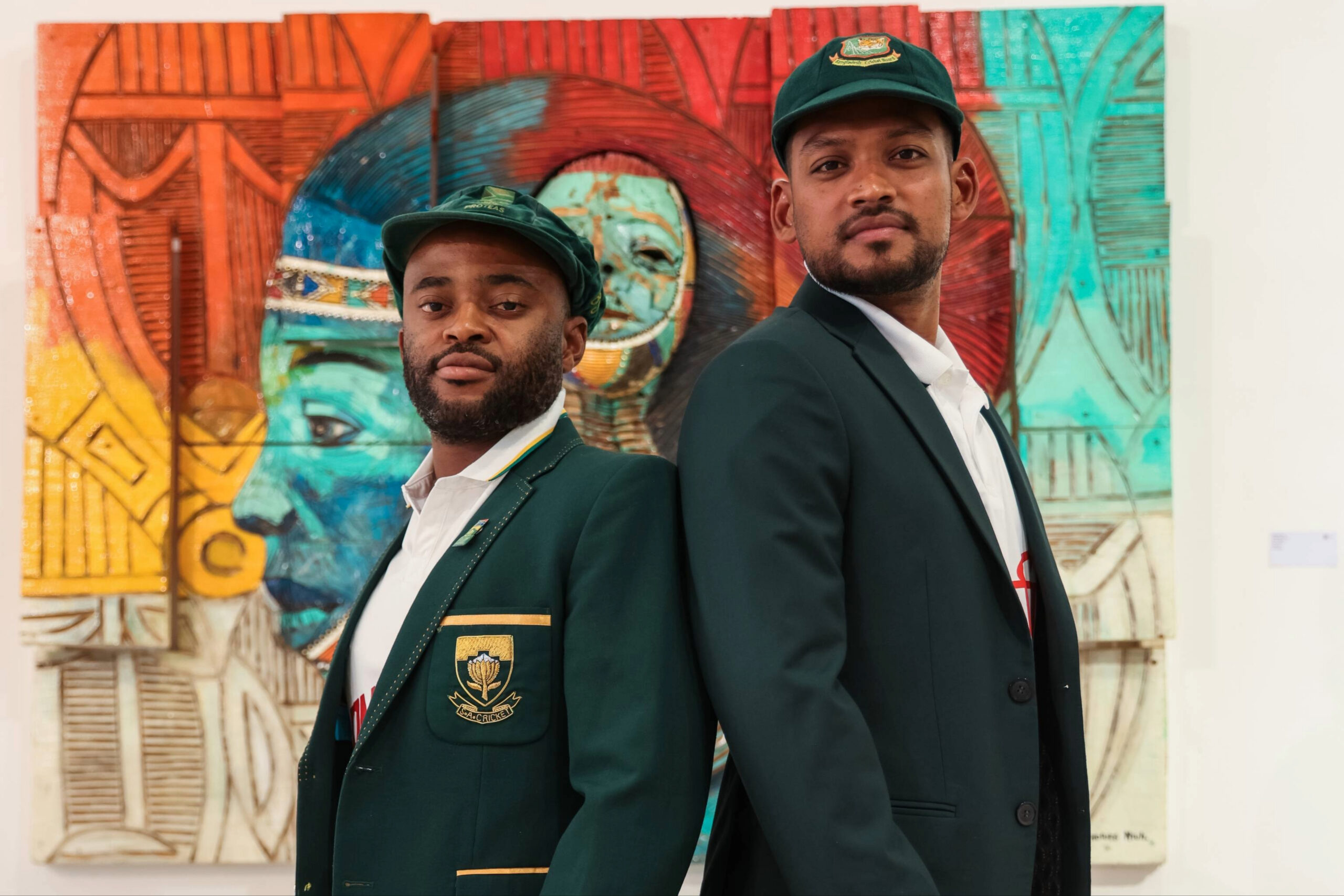
Photo Credit: CSA.
Kagiso Rabada had Bangladesh in serious trouble before lunch. By the close of play, the day belonged to Towhid Hridoy and Litton Das.
South Africa appeared to be heading towards a dominant opening day in the first Test after Rabada tore through the visitors’ top order with a five wicket haul.
Rabada broke through with the first ball of the day, and quickly Bangladesh were 22 for three inside the first nine overs.
Rabada struck twice again shortly after lunch to leave them 121 for five, the prospect of a short day in the field seemed entirely realistic.
Instead, Hridoy produced an innings of remarkable composure and authority, while Litton supplied the experience and assurance to transform the contest.
The day ended, as it started, with a wicket.
By that time, the partnership of 206 took Bangladesh to 327 for six at stumps, leaving South Africa with considerably more to consider than they could have imagined during the morning session.
The turnaround was substantial. Bangladesh had never recorded a century partnership against South Africa in a Test on South African soil.
Hridoy and Litton not only ended that sequence, they established a new record for a Bangladesh partnership against the Proteas, for any wicket. The previous highest stand had been 84, shared by Sarker and Bashar in 2002.
It was a response that required patience before it demanded ambition.
Rabada had been exceptional with the new ball. Debutant Mahfijul Islam lasted just one delivery, edging a full ball outside off stump to Marco Jansen at gully. He became only the fourth debutant in Test history to be dismissed for a first ball duck.
Mominul Haque followed for another duck, while Bangladesh captain Najmul Hossain Shanto was beaten by a delivery that moved sharply back through the gap between bat and pad to remove his off stump.
Rabada’s pace, consistently above 140km/h, and his ability to extract movement made the decision to bat first look increasingly questionable.
He had five wickets by the afternoon, taking him to 18 Test five wicket hauls and level with Makhaya Ntini in third place on South Africa’s all time list. Only Dale Steyn, with 26, and Allan Donald, with 20, have more.
But the conditions changed in character as the day progressed. Tanzid Hasan had already offered resistance with a well constructed 67 from 108 balls, including 12 fours.
His 99 run partnership with Hridoy was Bangladesh’s highest in South Africa before Rabada broke through again, bowling Tanzid in the afternoon.
The next delivery brought another wicket. Mushfiqur Rahim edged Rabada to Simon Harmer at third slip, completing the fast bowler’s five for and briefly restoring South Africa’s control.
Hridoy and Litton refused to let the innings unravel. Coming together at 121 for five, they recognised that the short ball was losing some of its threat and that the surface was no longer offering the same assistance it had in the opening exchanges. They played with increasing confidence, taking on anything too short and punishing loose deliveries.
Litton reached his half century from 71 balls and finished unbeaten on 92. Hridoy, in only his fourth Test, went further. His hundred came from a Paterson delivery that reared towards him, but he leaned back and guided it through backward point for four. He raised his arms to celebrate before performing sajda on the Wanderers turf.
There was a brief sense that he might lose his way in the nineties, but once he reached three figures he began to dictate terms. Bangladesh accelerated to around four runs an over, making full use of a pitch that appeared to have settled into a far more comfortable surface for batting.
South Africa eventually found a breakthrough with the second new ball. Hridoy missed a delivery from Jansen while attempting to work it to the leg side and was given out lbw. He reviewed, but the decision stood.
His 137 was a defining innings, not least because it came after Rabada had threatened to make the match a one sided affair.
Rabada was left to reflect on an attack that had failed to support his outstanding work. He acknowledged that South Africa had not bowled with sufficient consistency.
“If you miss your lengths, either short or full, you can get punished. And I don’t think we bowled in partnerships as well as we would have liked to,” he said. “That’s what you need to do here at the Wanderers. Perhaps just putting them off the hook here and there, and not stringing together enough dots or enough wicket taking balls, especially with the old ball.”
He also pointed to the difficulty of creating chances once the pitch slowed. “The wicket was a tad slow and the edges perhaps weren’t being enticed because of the nature of the pace of the wicket. It’s almost like you get the odd one that skips through, but generally it’s just slow off the wicket.”
The contrast between the three sessions was striking. South Africa had looked capable of dismissing Bangladesh for fewer than 200. Instead, they finished the day searching for answers, with Rabada’s five for the only real reward for an attack that included Jansen, Wiaan Mulder, Dane Paterson and Harmer.
Bangladesh, playing their first ever Test at the Wanderers, will regard 327 for six as a substantial achievement after the manner of their start. The pitch should remain at its best for batting on the second and third days, and South Africa will need early wickets to prevent the visitors from turning a recovery into a commanding position.
The morning belonged to Rabada. The evening belonged to Hridoy and Litton. South Africa’s task on day two is to make sure the latter does not become the defining story of the Test.