
By Lehlohonolo Lehana.
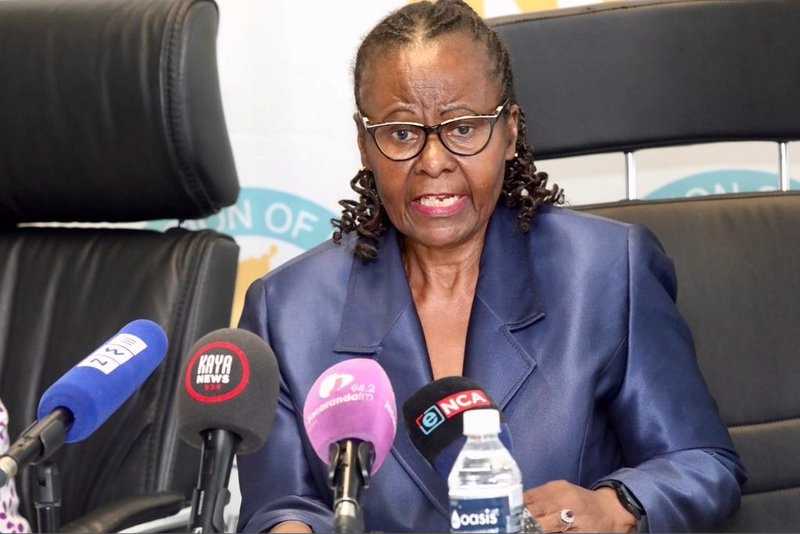
The judicial commission of inquiry into the circumstances surrounding the deaths of 76 people in a fire at the Usindiso building in August in the Johannesburg CBD commenced on Thursday in Parktown.
The commission, led by retired justice Sisi Khampepe, has been given six months to conclude its work.
In the early hours of 31 August, a raging inferno ripped through the overcrowded five-storey building, which was found to have been hijacked.
The incident sparked a debate on hijacked buildings in Joburg’s city centre, with many warning that the Marshalltown incident was a tragic culmination of poor service delivery and criminality that could repeat itself at many of the other derelict properties.
In part A, the commission will deal specifically with the fire, its causes, and who should be held accountable for the loss of life and injuries suffered by the residents of the building, which was once a home for vulnerable women and children.
City of Johannesburg EMS Chief Rapulane Monageng was the first witness.
Evidence leader Advocate Ishmael Semenya led Monageng through a series of images depicting the building before and after the fire.
Monageng confirmed the entrance into the basement of the five-storey building was sealed off – leaving only one access point.
“We learned during the fire that the eastern entrance it was closed off and not servicing the clients to access the building.”
Monageng highlighted several serious fire hazards, including barricaded fire escapes, vandalised extinguishers, rusted paraffin stoves, and non-compliant partitioning of rooms – using highly flammable material such as wooden boards and plastic.
“It was mindboggling that [residents] took a bathroom and converted it into a bedroom. When you look at the bathrooms, they don’t have normal opening windows.
“Should a fire start in that bathroom the smoke travelling pattern becomes a problem. The smoke can’t evacuate out of the building. Bathrooms add more fire load.”
He said the stairwell had also been converted into a living space, effectively blocking access from the second floor, all the way to the fourth.
“Unfortunately [residents] were forced to go to the west side of the building, and this is where they perished. This rendered off a hindrance, blocking off an emergency route using brick and mortar.”
Monageng, who has 23 years’ experience in emergency services, explained how the alarm was escalated from level one to four to mobilise all available resources across various departments in the province on the day of the incident.
Most of the deceased succumbed to smoke inhalation and severe burns, while survivors also suffered broken backs and limbs from the impact of their fall when jumping out of the building.
“When we arrived on the second floor the first arriving officer said, ‘This is where we found most of the bodies.’ There’s a [room] that has +/- 11 bodies inside. When I asked why so many bodies in one space, I was shown the cage security gates in the corridor – meaning you couldn’t walk from east to west without passing these gates.”
The acting EMS chief said the blaze, which started on the ground floor but didn’t go beyond the fourth floor, had been contained within four hours of emergency services arriving on the scene.
The inquiry also heard evidence from Thomas Chauke, a photographer attached to the Gauteng provincial government, who was called to authenticate the photographs taken during an in-loco inspection and are contained in the 71-page album that has been admitted as evidence.
The third witness, deputy director of fire and safety at Joburg EMS Fana Goodman Mnguni, also took the stand.
The list of witnesses is expected to grow from the initial three as the commission of inquiry into the blaze that claimed over 70 lives will begin hearings in the first part of the investigation.
“We may just give an indication that there will definitely be three witnesses that will be called in to give evidence with regard to part A,” Khampepe said.
The rules governing the proceedings dictate that witnesses are to be called at the discretion of the chairperson to give oral evidence.
Expanding on this, the commission’s spokesperson, Advocate Thulani Makhubele, said the evidence leaders were still consulting, and more witnesses were likely to be called to give evidence.
“I don’t think that the evidence leaders have a definitive number. But they are in consultation and taking statements, and on the basis of what they then uncover, they will have an indication on how many witnesses we are going to be looking for part A.”
Among those being consulted are the survivors who have been housed in at least three temporary shelters and non-governmental organisations that are interested in making submissions.
Makhubele stressed that the number of fatalities was revised to 76, he said the discrepancy was discovered during consultation about a week ago.
Watch Live in the video below:
Video Courtesy of Gauteng PG.