
By Lehlohonolo Lehana.
Fitch Rating Agency on Wednesday upgraded the outlook on South Africa’s long-term foreign-currency issuer default rating to “stable” from “negative”, citing a faster-than-expected economic recovery.
“A recovery is underway and GDP now seems on track to return to pre-pandemic levels during 2022” Fitch said.
The rating agency affirmed the country’s sovereign debt rating at ‘BB-‘, constrained by high and rising government debt, low trend growth, and high inequality.
Fitch said the revision reflected South Africa’s “surprisingly” strong fiscal performance this year and significant improvements to key GDP-based credit metrics following the re-basing of national accounts.
The pandemic continues to weigh on the economic performance of South Africa, the country worst affected by the pandemic on the African continent in terms of confirmed infections and deaths, Fitch said, adding that the likelihood of severe negative effects on creditworthiness has declined over the last year.
The agency expects the economy to grow 4.7% this year, 2% in 2022 and 2.4% in 2023.
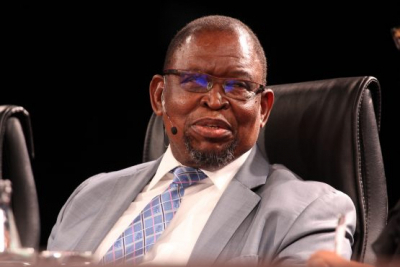
The outlook change comes a year earlier than Finance Minister Enoch Godongwana expected and signals that the downward trend in Fitch’s rating of South Africa, may be reaching a turning point.
The stable outlook follows a medium-term budget buoyed by windfall mining revenue and an upward revision to GDP that showed debt is now forecast to peak at 78.1% of GDP — almost 10 percentage points lower than the government estimated in February — in the 2026 fiscal year. The consolidated budget deficit is also expected to narrow faster than previously expected.
“Government will continue to demonstrate its commitment to fiscal sustainability and enable long-term growth by narrowing the budget deficit and sizable debt,” National Treasury said Thursday.
Still, Godongwana faces a tough task to rein in debt, reduce budget shortfalls and fast-track growth-enhancing reforms in an economy stuck in its longest downward cycle since World War II.
His proposed fiscal framework could be undermined by demands for increased social support measures, international travel bans imposed after the discovery of the omicron variant in the country, concessions on government wages, on-going electricity supply constraints and policy uncertainty.
South Africa’s debt assessments by the three major firms are at the lowest levels since the country first obtained credit ratings in 1994. Moody’s Investors Service assesses it two steps below investment grade while S&P Global Ratings ranks it on the same level as Fitch, but with a negative outlook.
Read the full report here:Fitch Rating Action Commentary.