
By Lehlohonolo Lehana.
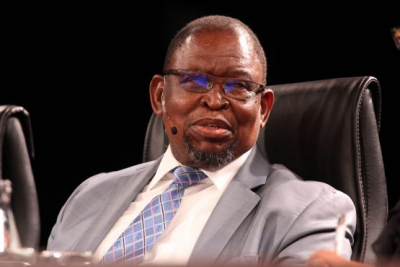
When Finance Minister Enoch Godongwana tables his maiden Budget Speech today, all the focus will be on his proposals to bolster the health of the public purse, and what that will mean to the taxpayer’s pocket.
This after Godongwana said during the Medium-Term Budget in November that gross tax revenues are expected to exceed the estimates presented at the time of the 2021 Budget by R120.3 billion in 2021/22.
What this means is that after forecasting total tax revenues of R1.365 trillion in the 2021 Budget, National Treasury made a significant upward revision to this figure in the MTBPS 2021 by R120 billion, to R1.485 trillion.
Against this background, some economists and tax analysts expect the Minister to deliver good news when he tables this year’s budget.
Sanisha Packirisamy, an economist at Momentum Investments, said she was not expecting any new tax announcements in the 2022 Budget Speech.
“We are not expecting any new tax announcements to be made at the upcoming budget, outside of fiscal drag for the higher income-earning groups and possibly additional duties on alcoholic beverages and tobacco, and a marginal increase in fuel levies (bearing in mind the current high price of fuel).
“In our view, the expected revenue overrun should accommodate any increases on the expenditure side.”
Kyle Mandy, a Tax Policy Leader at PricewaterhouseCoopers, said in the firm’s budget prediction: “We expect that National Treasury will increase its tax revenue forecast…
“Given the better-than-expected performance in revenues, we do not expect to see significant changes in taxes, similar to the position adopted in Budget 2021, where there were no changes to taxes on a net basis, with relatively small real increases in indirect taxes offset by real decreases in [personal income tax].”
SA already has high borrowing costs. As interest rates rise, this debt becomes even more expensive and high interest rates on government debt dissuade fixed investment.
The problem is the state is not always using the money it borrows particularly wisely. Borrowings are acceptable when the money is being used strategically to grow the economy’s rate of growth. Herein lies the challenge. SA’s economic growth is expected to slow materially over the next few years, back towards the 1.5% level. The country will not broaden its tax base if this is the case. If the current tax windfalls slow down, the challenge of fiscal pressure will resume.
The only way out of this spiralling debt trap is economic growth — ideally at a multiple of population growth. However, without implementing meaningful structural reforms and addressing the state’s finances, economic growth will be lacklustre at best, exacerbating the high rate of unemployment.
The International Monetary Fund (IMF) predicts growth of just 1.4% in the next few years, with growing public debt. Its recently published annual report on SA said the country could increase its growth rate to more than 3% if it put reforms in place.
The IMF has warned that government’s support for embattled state-owned enterprises (SOEs) is likely to be higher than planned, further jeopardising the state’s finances.
Acknowledging the fiscal risk SOEs pose to the economy, the IMF has recommended reforms for SOEs. Ironically, most of the recommendations are not new and have been promised by government in the past.
The IMF also doesn’t believe the state will be able to honour its commitment to rein in the public sector wage bill.
In his state of the nation address earlier this month, President Cyril Ramaphosa announced that the Covid-19 social relief grant of R350 has been extended to the end of March 2023.
Government has been under enormous pressure to introduce a basic income grant. There is, however, an acknowledgment that the country does not have the fiscal space to introduce this grant and that doing so would pose a risk to the economy.
SA spends 3.3% of its GDP on social expenditure, which is high in comparison to other emerging marketing economies.