
By Lehlohonolo Lehana.
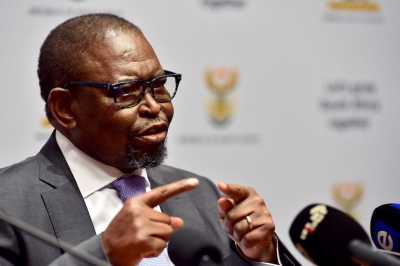
Finance Minister Enoch Godongwana said this year’s Medium-Term Budget Policy Statement was one of the hardest the National Treasury has ever had to produce.
Godongwana answered questions virtually from MPs in Parliament on Thursday after delivering the mid-term budget policy statement in Parliament on Wednesday afternoon.
The minister said that due to increased government spending, gross debt would rise from R4.8 trillion in the current financial year to R5.2 trillion in the next and exceed the R6 trillion mark by 2025/26.
Some economists are predicting that the treasury is likely to increase taxes in an attempt to mitigate the growing national debt.
“Normally, in the Mid-Term Budget Policy Statement, we don’t deal with tax issues. They are dealt with in the normal budget in February. There is an expectation that we should say something now about tax matters.
“I think it is too early to make such a commitment whether we will increase tax or not. It is too early to say that, He said.”
Godongwana said rising debt levels are not the problem but rather the crowding of social spending and a stagnant economy.
He told MPs the budget cuts have not been proportional but strategic.
On reconfiguration of government to save costs, Godongwana said they can’t finalise the conclusion before finalising the next medium-term policy statement, and ultimately, President Cyril Ramaphosa will make the final decision.
According to the MTBPS, revenue collection is expected to be R56.8 billion lower than forecast in the main budget in February.
Godongwana said the main reason for this was a sharp fall in corporate income tax, particularly from the mining sector, as the commodities boom waned.
“The result of the shortfall is a substantial worsening in the main budget deficit in the current fiscal year. We are now projecting a deficit of 4.9% of GDP compared to our previous estimate of 4%.”
Personal income tax collection was better than forecast though, the minister said.
According to the treasury, tax revenues are expected to increase to R2.1 trillion or 25.1% of GDP, by 2026-27.
“Revenue collection, however, is projected to fall short of 2023 budget estimates by R121.4 billion between 2024-25 and 2025-26, with tax buoyancies generally lower over the medium term.”
Democratic Alliance finance spokesperson Dion George had accused the minister of creating uncertainty and said tax hikes would place a heavy burden on households and hinder economic growth.
“The DA will categorically oppose the implementation of any additional taxes or increment in tax rates, as it would only serve to further impede economic growth, discourage investment and savings, and put more pressure on South African households battling to put enough food on their tables in a worsening cost of living crisis.”
A post-election government would be the opportunity to enact at least some of these reconfiguration measures.
It’s also possible the 2024 Budget would announce the compulsory norms and standards on municipal surcharges on electricity as part of a broader local government financing review.
However, the 2024 Budget will announce tax increases to raise an additional R15-billion.
That Budget also is set to announce, “a new mechanism through which private sector investors and multilateral institutions can co-invest with the government for selected infrastructure projects”, according to the MTBPS.
The takeaway from the 2023 MTBPS?
Measures to improve confidence to co-invest with the government and to reconfigure the state alongside improved rail and port logistics, and electricity reforms are central reforms to boost economic growth.