
By Lehlohonolo Lehana.
After much speculation about where and how the government was planning to raise an additional R15-billion in tax revenue, it turns out the burden falls squarely on the consumers.
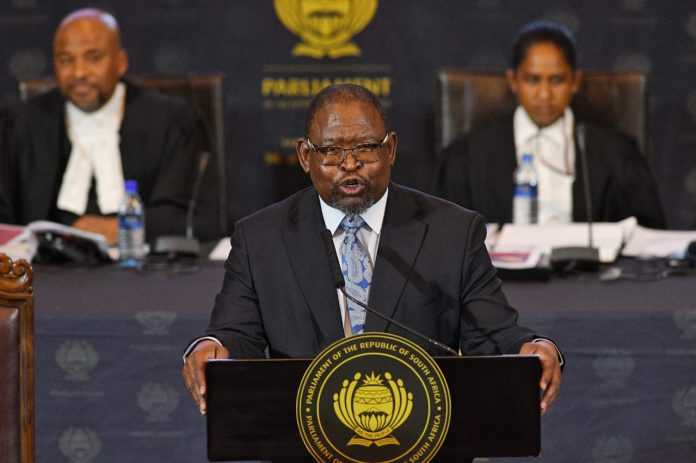
“Most of the additional R15 billion in revenue collected in the R1.73 trillion 2024-25 budget to “alleviate immediate fiscal pressures”, including costs of servicing the country’s R457.7 billion debt burden, will come out of the pockets of individual taxpayers, Finance Minster Enoch Godongwana announced during his budget speech on Wednesday.
This budget contains tax measures that will raise R15 billion in 2024-25 to alleviate immediate fiscal pressure and support faster debt stabilisation. Revenue is mostly raised through personal income tax by not adjusting the tax brackets, rebates and medical tax credit for inflation,” Godongwana said.
According to the 2024 budget review document, out of the R1.73 trillion SARS expects to collect in taxes, R738.7 billion will be from personal income tax; R476.7 billion from VAT; R302.7 billion from corporate income tax; R141.8 billion from customs and excise duties; R95.8 billion from fuel levies and R102 billion from other forms of taxation.
PwC’s South Africa economists in the latest Africa Economic Outlook report for 2024 released on Tuesday, said it anticipates that South Africa’s fiscal space will be constrained in 2024 due to weak revenues and rising debt-servicing costs.
“Elevated debt, tight financial conditions and tepid economic growth is putting pressure on fiscal sustainability while increasing vulnerability to external financial shocks.
“The fiscal situation is also detracting from other government work as policymakers across many countries face trade-offs between maintaining fiscal stability and other priorities. These include investment in reaching Sustainable Development Goals (SDGs).
The Medium Term Budget Policy Statement (MTBPS) in November 2023 made downward revisions to National Treasury’s expectations for tax revenue in 2023/2024.
“Our projections, based on data from the first nine months of the 2023/2024 fiscal year, indicate that total revenue collections will be broadly in line with the revised estimates in MTBPS 2023,” PwC said.
“It is understood that National Treasury was hoping that revenue collections for the current fiscal year will exceed the MTBPS 2023 forecast, that the revenue outlook for the medium term improves alongside this, and that tax increases would not be necessary in 2024/2025.”
The professional services provider’s expectations for revenues to match the MTBPS 2023 forecasts reflect a balance between the positive impact of strong job growth on taxes and the negative impact of lower imports. Personal Income Tax (PIT) collections have been performing better than anticipated on the back of higher-than-expected job creation in 2023.
Total employment increased by 6.2% y-o-y in 2023Q3 while basic salary/wages paid to employees in the formal non-agricultural sector increased by 7.2% y-o-y.
Customs duties and import Value-Added Tax (VAT) have been pressured by a drop in renewable energy investment and challenges to logistics processes at local ports. Imports declined by 9.0% y-o-y in December 2023.
PwC estimates that the 2023/2024 fiscal year will see a budget deficit equal to 5.1% of GDP.
Looking ahead at the 2024/2025 fiscal year, the MTBPS 2023 pencilled in a deficit equal to 4.6% of GDP, while PwC projects 4.9% of GDP.
Personal income tax rates
Gross tax revenue for 2023/24 is expected to be R1.73-trillion, which is R56-billion lower than expected in the 2023 Budget.
Two long-term reforms – the two-pot retirement system and the minimum corporate tax rate – will be implemented in 2024/25.
Over the next three years, tax revenue is expected to grow by R401.7-billion, reaching R2.13-trillion in 2026/27 and a tax-to-GDP ratio of 25.3%.
Corporate to be taxed more
Over the next few years, government plans to implement a global minimum corporate tax to limit the negative effects of tax competition.
“Multinational corporations with annual revenue exceeding €750 million will be subject to an effective tax rate of at least 15%, regardless of where their profits are generated. The proposed reform is expected to yield an additional R8 billion in corporate tax revenue in 2026/27,”
Godongwana encouraged interested parties to provide comments on the draft Global Minimum Tax Bill published today.
The draft Global Minimum Tax Bill aims to limit the race to the bottom of effective corporate tax rates for large multinationals, with countries competing to attract income by offering low tax rates and tax incentives.
“Implementing the minimum tax in South Africa will bolster the corporate tax base. South Africa helped develop tax rules to address base erosion and tax challenges arising from the digitalisation of the economy as a member of the Steering Group of the OECD [Organisation for Economic Co-operation and Development] /G20 Inclusive Framework on Base Erosion and Profit Shifting.
Revenue from two-pot withdrawals
The two-pot system, which will come into effect from 1 September, will require a two-thirds retirement component, which must be preserved until retirement, while the remaining one-third will be allocated to a savings component, allowing one withdrawal per year prior to retirement.
Retirement fund members will be able to access “seed capital” – or a portion of their available balance – immediately on 1 September 2024. The seed capital will be a minimum of R2,000 or 10% of your savings in the “vested component” as of 29 February 2024.
This money will not be accessible without costs – withdrawals will be taxed at your income tax rate, which immediately makes withdrawals a less attractive prospect for those in the higher income tax brackets.
“The two-pot system ensures that we strike a balance between preserving contributions to safeguard a better retirement for members, while addressing the plight of the people to access some of their retirement funds to help ease their financial burdens in times of distress,” Godongwana said.
National Treasury estimates that R5-billion is likely to be raised in 2024/25 because of tax collected as fund members access once-off withdrawals linked to the two-pot retirement reform. The seed capital transfer is a once-off event, so this revenue will not flow into the following fiscal years.
Fuel and RAF Levy (No change to levies)
Godongwana says the National Treasury will not increase the General fuel levy and Road Accident Fund (RAF) levy for 2024.
He said that the government is mindful of the already high cost of living and the impact fuel prices have on food and transport costs.
“In this regard, we are proposing no increases to the general fuel levy for 2024/25. This will result in tax relief of around R4 billion. This is money back in the pockets of consumers,” the minister said.
This means that the General Fuel Levy will remain at 18% of the retail price, and the Road Accident Fund (RAF) levy will remain at about 10%.
For a litre of inland 95 petrol, the general fuel levy is currently at R3.95, while the RAF levy is at R2.18.
Combined, they add R6.13 to the price of price of petrol, which currently stands at R23.24 for a litre of inland 95.
However, the carbon fuel levy, which is included as an add-on to the general fuel levy, will increase from increase from 10c/l to 11c/l for petrol and from 11c/l to 14c/l for diesel.
“A discussion paper outlining proposals for the second phase of the carbon tax will be published for public comment later in the year,” the minister said.
VAT increase a no-go
On the subject of Value-Added Tax (VAT), which did not increase, economist Dawie Roodt said an increase would have been a “political no-go”, particularly in an election year. “In the case of personal income taxes and company taxes, if you increase that, you’re probably going to lose more money than what you’re going to get in,” he said.
Watch Live in the video below:
Video Courtesy of Parliament.