
By Lehlohonolo Lehana.
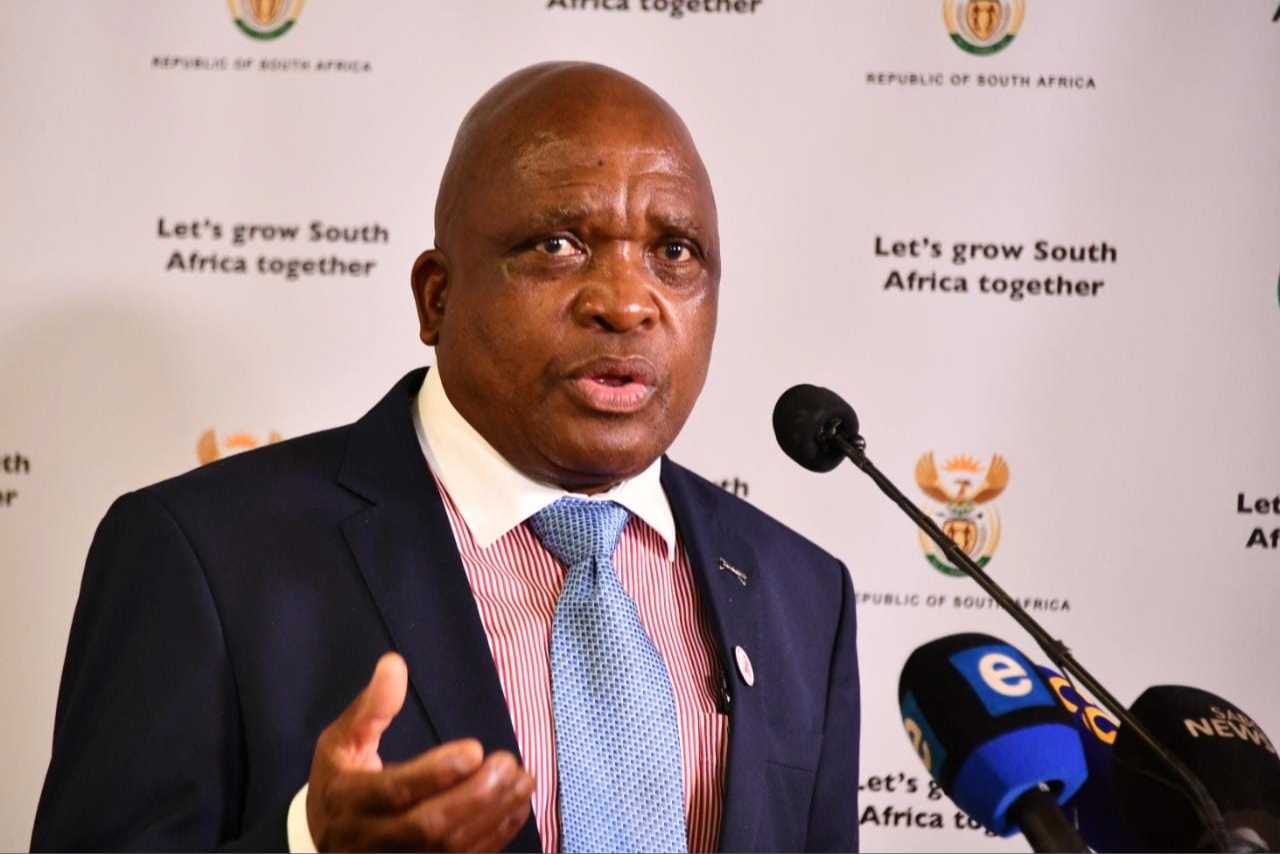
Minister of Health Dr Joe Phaahla says his department and Treasury have agreed to rework their budget to assist hundreds of unemployed doctors.
Phaahla made the announcement during the debate on the State of the Nation Address on Tuesday afternoon.
This follows the public outcry over doctors who have completed statutory community service programmes but remain unemployed.
South African doctors graduating from the country’s universities are required to do two years of internship and one year of community service overseen by the Health Department. This policy aims to improve equitable access to primary health-care services by ensuring enough medical personnel in under-serviced areas.
At the end of 2023, the Department of Health had 2,451 posts available for internships and had only 2,358 applicants.
Phaahla says the deployment of appropriate Human Resources is key to both access and quality of services provided.
“I am therefore happy to announce that working with the Minister of Finance we have a solution to address the current challenge of doctors who want to stay in the public service but could not be offered funded posts.
“The details of how we are going to fund the posts will come out from Minister of Finance Enoch Godongwana’s Budget Speech next Wednesday.
“Our national team is working with National Treasury team to thrash out the details and working with provincial health departments to speed up the process, so that by 1st April 2024 all those who will not be already in posts can be able to start.
“I am confident that with this certainty provinces will be able to start giving appointment letters even before 1st April 2024,” says Phaahla.
Phaahla said the assistance would give the health department sufficient breathing space to work on long-term solutions.
“This matter is a typical situation where the ANC-led government is a victim of its own successes. Over the last fifteen years we have ramped up the training of doctors both in the local universities and the Nelson Mandela Fidel Castro programme in Cuba.
“The number of graduates have almost doubled over the last ten years, in 2014 there were 1,338 graduates who entered internship while in 2022 there were 2 511 and this year there are 2,210 new medical interns, just around a thousand more graduates increase,” he added.
Phaahla says his department will also work with medical association SAMA and the trade union SAMATU to look at more opportunities for doctors.
“This will include in multidisciplinary group practices offering primary health services in the community as we prepare for implementation of NHI, which will contract such services.”
Shortages of doctors and nurses are not unique to South Africa. They’re worse in many other African countries, according to a World Health Organization study. In the UK, chronic staff shortages in the NHS have left some hospitals near breaking point.
Nonetheless, this adds to a litany of problems confronting Africa’s most industrialized economy, which contends with frequent power cuts and where years of mismanagement and corruption at state companies and within the government have cost South African taxpayers billions of rand.
In South Africa, the country’s poorest people have access to free treatment at 3,741 public clinics and hospitals, but these facilities are often plagued by broken equipment and shortages of medicine and beds. The ratio of practitioners to population is 0.3 per 1,000, compared with 1.75 per 1,000 at private facilities.
The government plans to introduce better universal access to health care through a state-run fund that will buy services and medicines from both public and private providers. Parliament in 2023 approved enabling legislation for the program, which will be phased in over several years, but doubts remain about whether it will solve the country’s health-care woes.