
By Lehlohonolo Lehana.
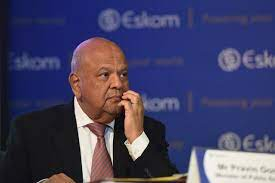
Public Enterprises Minister Pravin Gordhan said on Tuesday that he will “restructure and reconstitute” the Eskom board.
The State-owned electricity company has been facing serious and recurring challenges since June this year – reaching a nadir of Stage 6 load shedding twice over the past four months.
The department explained that the term of the board had expired in 2021 and that a review of its work has been underway.
“The Minister has been in constant engagement with the board on various matters such as procurement, recruitment of former and experienced Eskom employees, and combating fraud and corruption.
“On Tuesday, the Minister informed the board that a review has been finalised and that the board will soon be reconstituted and restructured. The board members will be informed of the outcome of the process,” the department said.
The DPE said a new board for the entity will be revealed soon.
“Government will soon deliberate on the reconstitution of a new and restructured Eskom board and an announcement will be made in due course.
Eskom, which can have a maximum of 13 non-executive directors, has only six. Seven have resigned, with the first resignation in 2018, and have not been replaced. The remaining directors, whose term began in 2018, have appealed to Gordhan for several years to fill the vacancies on the board. It is critically short of the skills it needs, particularly in engineering and the electricity supply industry.
The board, which has been chaired by Professor Malegapuru Makgoba, since the resignation of the late Jabu Mabuza in 2020 has strongly supported the leadership of Eskom CEO André de Ruyter.
Meanwhile Germany and France are in talks with National Treasury about an estimated 600 million euros ($578 million) to help it transition away from the use of coal.
The loans may form the first part of $8.5 billion in financing offered to the country during last November’s global climate summit, it noted.
But with just over two months to go until COP27, the next iteration of the climate summit, it’s uncertain if there will be a clear statement on progress by South Africa and the funding partners – Germany, France, the UK, the US and the European Union.
While the UK has offered debt guarantees, it is not clear what proportion of the funds will come in the form of concessional loans or grants, and South Africa is yet to produce a plan spelling out how it will spend the money.
Separate to the climate finance talks, Eskom is in negotiations with the World Bank over $476 million in funding to help it close and re-purpose its Komati coal-fired plant, Andre de Ruyter, Eskom’s chief executive officer, said earlier this month.
Eskom said Tuesday that it may need to spend as much as R2.4 billion a month on diesel to keep turbines running.
The “worst-case scenario” to run units that burn diesel, originally designed only for peak demand periods, would result in a fuel bill of almost R29 billion a year, the state-owned utility said in a presentation to lawmakers.
The potentially higher costs add to the company’s woes as it struggles to meet South Africa’s electricity demand and is implementing controlled blackouts.It’s already R413 billion in debt and needs funding to fix an unreliable fleet of ageing coal-fired stations.