
By Lehlohonolo Lehana.
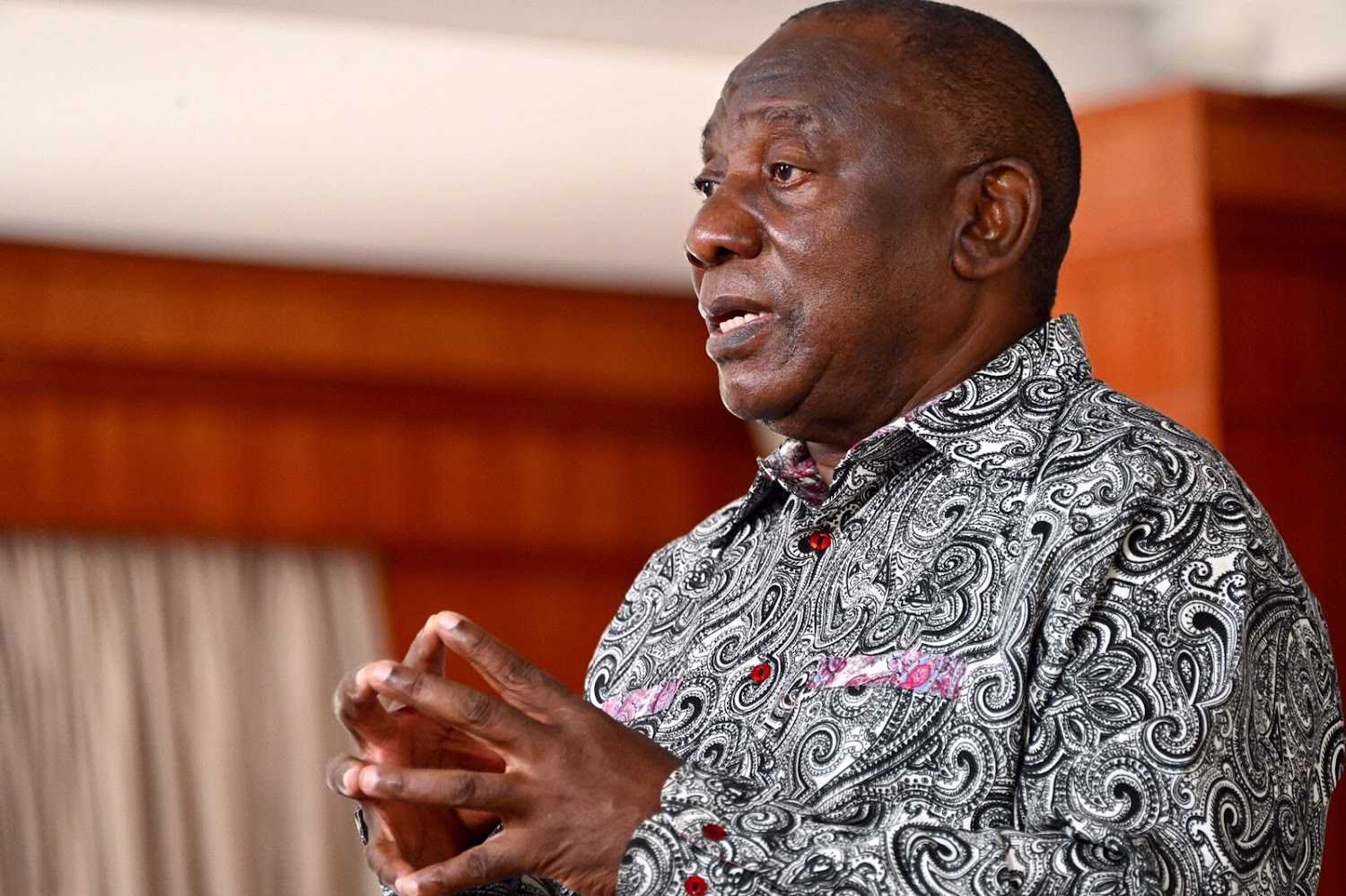
President Cyril Ramaphosa says that the government has a “cohesive” plan to resolve the national power shortage.
Ramaphosa said the government is not “sleeping on the job” with regard to the worst ever power cuts the nation has experienced and he has spoken to his ministers about the need for a uniform approach to the problem.
Ramaphosa spoke at a press event in Johannesburg on Monday.
In response to Eskom CEO André de Ruyter resignation, Ramaphosa said he resigned because “it’s a tough job.”
He did not indicate when a new CEO would be appointed or when load shedding would ease.
De Ruyter opened a case of attempted murder shortly after his his resignation after he underwent treatment for cyanide poisining.
South Africa saw 205 days of load shedding last year, which discouraged companies from expanding and adding jobs. The company’s coal-fired plants regularly break down and it doesn’t have money to buy diesel that’s needed to supplement its generation capacity.
Ramaphosa meanwhile said that South Africa would develop the productive capacity to participate in the global green energy value chains, including green hydrogen and electric vehicles.
“The ruling party recognises important work in the Hydrogen Roadmap and directs the government to implement further supportive policy measures and actions to enable South Africa to become a green hydrogen centre,” said Ramaphosa.
The process of creating hydrogen fuel through solar or wind-powered electrolysis, known as green hydrogen, has become a hot topic in South Africa in light of the fact that it could draw in a billion rand industry while decarbonising the economy.
Green hydrogen projects form a part of the country’s shift away from coal-reliant energy supplies as one of the latest Just Transition Investment Plan’s four frontiers.
The South African government has already set aside R300 billion (about $20.8 billion) for funding green hydrogen projects through Infrastructure South Africa (ISA). However, the country’s Minister of Public Works and Infrastructure, Patricia de Lille, has stated that additional funding will be needed.
Ramaphosa said that the party is also poised to direct the government to expand incentives to the electric manufacturing industry to accelerate the just transition.
He added that there are other new opportunities in the green economy in areas such as developing rare earth and platinum group minerals for green manufacturing.
Regarding electric vehicles, as part of international climate funding, the government has already made plans to spend billions of dollars creating an electric vehicle industry in the country.
One of South Africa’s largest sources of foreign cash is the country’s auto sector, but it is in jeopardy as Europe – its key market – promotes cleaner alternatives to conventional gasoline-powered cars.