
By Lehlohonolo Lehana.
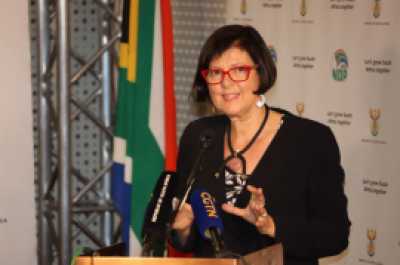
Forestry, Fisheries and the Environment Minister, Barbara Creecy says government is working around the clock to fight wildlife crime and corruption, especially in the Kruger National Park,
Citing the recent study published by ENACT Africa on corruption and criminality in the Kruger, she announced that the National Integrated Strategy to Combat Wildlife Crime was adopted by Cabinet last week.
This means the National Joint Operational and Intelligence Structure (NATJOINTS) Priority Committee on Wildlife Trafficking will now identify critical measures by all government agencies that can be implemented over the next six months.
According to reports, the probe found the internal corruption, breakdown of trust and staff cohesion plus worsening organised crime in Mpumalanga to be of greater threat to the future of the park than poaching.
“In the Kruger Park itself, we are focusing on improving the wellness and well-being of our staff so that they are not lured into the illicit trade,” Creecy said.
Creecy was speaking during the Department of Forestry, Fisheries and the Environment’s 2023/24 Budget Speech vote in Parliament.
Measures include career path development and training; ranger wellness and counselling programmes; improvements in staff housing and putting in place an anonymous tip-off line and setting up liaison committees with local communities.
In addition, she said the Tourism Business Council of South Africa has installed hi-tech surveillance equipment at the Numbi Gate.
SANParks
Creecy said South African National Parks (SANParks) remains the international benchmark for conservation management in South Africa.
As part of its commercialisation drive, SANParks aims to deliver 39 new tourism products over the next three years in partnership with the private sector, while 14 of these projects will open in this current financial year.
In addition, these programmes will provide economic opportunities to local communities by creating 2 209 direct jobs in local small and medium-sized enterprises (SMMEs) from goods and services valued at R75 million a year.
Fishing sector
Turning her attention to the fishing sector, Creecy said the sector is an important contributor to the economy and to the improvement of the lives of coastal communities.
In 2021, the department received 2 473 applications for the allocation of commercial fishing rights across nine fishing sectors, while fishing rights were allocated to 714 rights holders across nine fisheries in February 2022.
She said work was underway to complete 1 213 appeals against the decisions of the delegated authorities in the nine fishing sectors for the 2021/22 Fishing Rights Allocation Process (FRAP).