
By Lehlohonolo Lehana.
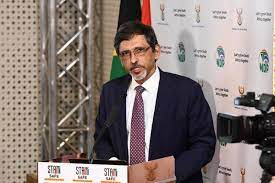
Department of Trade and Industry Minister Ebrahim Patel said on Thursday that they had set up a R3.9 billion package to assist businesses to rebuild following recent looting and destruction.
The DTIC and the Department of Small Business Development are working together to deal with damage caused by recent looting and rioting in parts of Gauteng and KwaZulu-Natal. Talks are also under way with investors and the business sector – both formal and informal, Patel said.
According to Patel, who addressed the media on behalf of his department and Small Business Development Minister Khumbudzo Ntshavheni, initial surveys suggest the losses have been extensive.
A survey by the two departments among more than a thousand businesses in affected areas showed that the overwhelming majority – some 900 – either had damage to their property or stock, had been looted, or had their supply chains disrupted.
The respondents included 255 manufacturing companies and 265 retailers.
“Significant damage totalling more than R5 billion in terms of loss of assets and loss of business are estimated by the companies surveyed. They also estimate that 10 200 jobs are potentially affected,” said Patel.
Of the businesses surveyed, 60% had insurance and the rest were uninsured for unrest of this nature.
About 43% of the respondents said it would likely take them less than a month to re-establish normal business operations, but 7% said it could take them more than a year.
“The DTIC and the Department of Small Business Development have worked closely together to deal with the challenges arising from the looting and damaging of businesses during the unrest.
A priority is to address employees’ loss of wages during the reconstruction phase, Patel said.
Teams from the two departments are also assisting businesses to fast-track their Sasria claims.
Initial responses included allowing competition regulation exemptions so that businesses can work together to supply essential goods, foods and healthcare items. Patel said other sectors might in due course be allowed to do the same.
“During the first week of violence and looting we provided support to companies under attack and whose supply chains were under pressure, or who felt they were under threat of attack,” added Patel.
Other early responses included efforts to quickly re-establish supply lines and address supply shortages, starting with opening the N3 corridor and the Durban port.
Packaging suppliers were helped to find alternatives and the auto industry was given assistance to keep the component supply chain moving, Patel said.