
By Lehlohonolo Lehana.
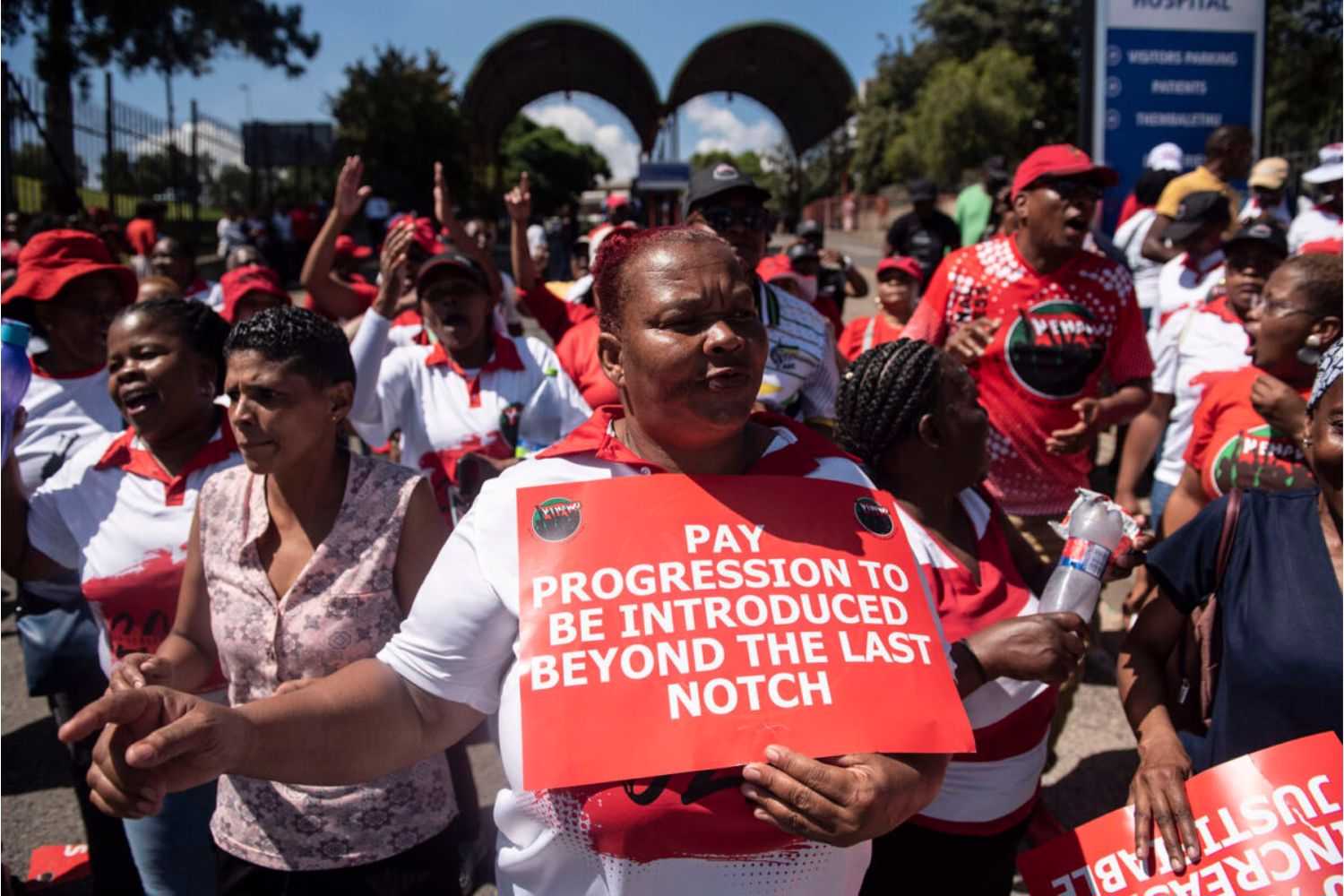
The Department of Public Service and Administration (DPSA) has confirmed the signing of a settlement agreement to end the disruptive Nehawu strike.
The strike saw public health services crippled in many areas, with patients left unattended and turned away from hospitals and clinics.
The National Education and Health Workers Union (Nehawu), the biggest public sector union involved in the strike, has called on its members to return to work.
In a statement, the Department of Public Service and Administration said: The settlement agreement paves the way for the parties to return to the 2023/24 wage negotiations. As part of managing the return of all parties to the negotiations, a Special Council has been convened for today, 15 March 2023, to receive the submission of residual matters emanating from the 2022/23 wage negotiations.
Nehawu, said that “the strike has registered significant achievements and outcomes”, among other things, the government had agreed “to augment the increment” for the 2022/23 year.
“The employer has agreed that residual and substantive matters emanating from 2022/2023 wage dispute related to the cost of living allowance shall be tabled and positively dealt with and concluded as part of 2023/2024 wage negotiations,” it said.
The government had also agreed to negotiate a minimum service level agreement for the public sector within six months. This would set out the conditions and provisions under which essential services workers can strike.
“The conclusion of the agreement will ensure a proper balance in adherence to the Constitution’s provision on the right to strike and the mandatory requirements regarding the designated essential services. This is a major step forward arising from the strike as the government has consistently refused to align itself with the requirements emanating from the declaration of essential services by the Essential Services Commission in line with the Labour Relations Act.”
Meanwhile the Public Servants Association (PSA) has rejected the government’s new 7% salary increase offer pertaining to the 2023/2024 financial year.
The union, which comprises 235 000 workers from Home Affairs, border posts and other roles, is pressing for a 10% increase, in the wake of South Africa’s rising cost of living.
The PSA remains resolute on its mandated demand for a 10% increase. Government’s offer does not consider the escalating cost of living and does not meet the needs of public servants,” the union said in a statement on Wednesday.
The government’s revised offer is an improvement from the 4.7% increase it previously proposed last month, when salary negotiations commenced with public sector unions affiliated with the Federation of Unions of South Africa (Fedusa) at a special council meeting at the Public Service Co-ordinating Bargaining Council (PSCBC).
The PSA called on government to table an improved offer, saying that it cannot allow for more delays in the negotiations.
Its rejection of the state’s new offer is a double whammy for the government, which is also facing pressure from the Police and Prisons Civil Rights Union (Popcru), SAPU and others, with which it remains locked in a dispute on the 2022/2023 pay talks.