
By Lehlohonolo Lehana.
Government has embarked on a process to ensure that transport is sufficiently accessible to all categories of passengers, including persons with disabilities.
President Cyril Ramaphosa said, “the goal of a universally accessible national transport system is not only within reach. It is also a vital part of our efforts to build a South Africa that truly belongs to all who live in it.”
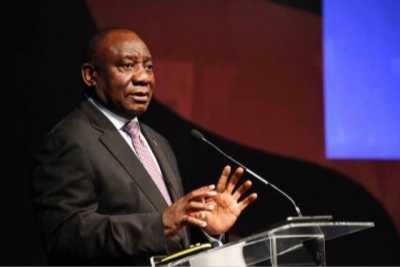
Ramaphosa delivered the keynote address at the Transport Summit on Universal Accessibility to be held at the Birchwood Hotel and OR Tambo Conference Centre in Gauteng.
Themed “Accessible Transport for All”, the Summit marks a significant step towards ensuring inclusivity and equal access to transportation services.
With the overarching objectives of fostering dialogue, identifying challenges and opportunities, and charting a roadmap for accelerated implementation of universal access, the Summit aims to cultivate a shared vision and recommendations for the future direction of transportation policy.
Ramaphosa said municipalities around the country are executing integrated public transport programs as part of revised urban planning for road users.
“The Public Transport Network Grant is one of the mechanisms being used to promote the implementation of universal design and universal access. There are now 10 integrated public transport network municipalities receiving the grant, with specific conditions on universal accessibility, “he said.
Additionally, he recognised the need to radically alter South Africa’s transport system to fully accommodate everyone.
The focal point of Ramaphosa’s address was continuing attempts to guarantee universal access in the transport system. These efforts comprise measures set to secure accessibility for people with disabilities.
“The Department of Transport has gazetted a national policy for parking discs that will enable drivers with disabilities to use a disc obtained in one part of the country everywhere in South Africa.
“The Passenger Rail Agency of South Africa (Prasa) has developed a universal access policy with norms and standards. It has committed to speed up its work to ensure that trains are accessible and station platforms are level. The Gautrain has had level boarding on its trains since its inception.”
The president encouraged the inventing of inclusive infrastructure from the get go, instead of having inventions redesigned at later stages. He said not doing it right the first time was costly.
Moreover, he highlighted the increase of awareness in the aviation industry, especially in dealing with passengers’ affairs from an objective viewpoint.
“Airports Company South Africa, working with airlines, is working to improve accessibility for persons with disabilities across its facilities. These efforts include the introduction of designated parking spaces for persons with disabilities, assisted passenger lounges, and designated private search facilities at security gates,” said Ramaphosa.
Ramaphosa emphasised the need for all transporting industries to repair existing systems with defects while preparing for emerging technologies.
According to the president state-owned companies and industry partners are considering renovations to the universal accessibility in the maritime sector. These include inland waterways, river crossings, ports, sailing and yachting clubs.
“No discussion on universal access would be complete without considering the impact of emerging technologies and new business models on transportation, including e-hailing, car sharing and the like. These new systems are rapidly transforming the sector and must be factored into planning, in collaboration with the service provider companies.”
He added that issues of the same nature should be addressed in the taxi sector. To which, he mentioned, conveys approximately 70% of South Africans.
“It is pleasing that the minibus taxi services have, where tasked, been able to demonstrate reasonable accommodation of passengers with disabilities,” he said.
Furthermore, Ramaphosa called attention to the country’s development in safeguarding and improving the dignity and rights of individuals with disabilities.