
By Lehlohonolo Lehana.
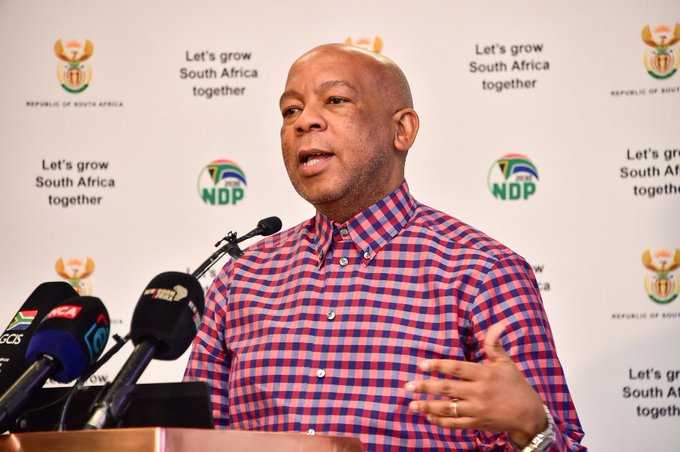
Minister in the presidency responsible for Electricity Kgosientsho Ramokgopa has announced that the Department of Mineral Resources and Energy’s (DMRE’s) plan to procure 2,500MW of new nuclear generation capacity is going ahead and will be gazetted.
Ramokgopa said the case for more nuclear power was compelling, South Africa needed additional generation capacity, and the Eskom fleet was ageing.Nuclear energy was the “cheapest and cleanest” energy and would provide the baseload power that renewable energy needs for stability.
National Energy Regulator of South Africa (Nersa) has approved the process to secure an additional generating capacity from nuclear.
Ramokgopa briefed the media on Tuesday morning on the determination for the procurement of 2,500 MW of new generation capacity from nuclear.
The briefing comes just a day after the cabinet announced that it has approved the draft Integrated Resource Plan 2023 which outlines the country’s energy plan.
The announcement also comes as the country recorded a record number of load-shedding days in 2023, leaving households in the dark for hours and putting further strain on an already struggling economy.
“We are starting the process of gazetting, so we are triggering essentially a procurement process,” he said.
“We are going out to ensure that we are able to get that additional 2,500MW of nuclear capacity to ensure that we are able to meet the issues of national security and energy sovereignty.”
The minister indicated that South Africans would start to see the benefit of the new nuclear generation capacity within three to four years.
However, DMRE deputy director-general for nuclear Zizamele Mbambo says it could take ten years.
“We found that the ideal time by which to start commissioning the first unit of this 2,500MW is around 2032/2033,” said Mbambo.
Mbambo added that the procurement would be in line with the Constitution and be “open, transparent, and cost-effective.”
The DMRE has yet to begin the design process for procuring the nuclear generation capacity. Mbambo said there was therefore no decision about whether South Africa would procure a conventional nuclear power plant, small modular reactors, or another design.
“At this stage, we cannot pronounce as to what the shape, form, and the format that the RFP [Request For Proposal] would look like or what it would call for,” said Mbambo.
Under the Zuma administration, Mbambo attempted to run a “closed tender process” which was designed to engineer an exclusive arrangement with Russian state-owned nuclear power company Rosatom. In the end, the agreement with Rosatom was set aside by a court after environmental activists litigated against it.
Meanwhile Earthlife Africa and the Southern African Faith Communities’ Environment Institute (SAFCEI) have rejected the announcement by Ramokgopa to procure nuclear energy for South Africa.
Organisations previously won a case against government after it failed to consult the public about its decision to procure 9.6 gigawatts of nuclear energy.
Earthlife Africa’s Makoma Lekalakala said it was surprising to see the announcement coming from the minister, adding that there has been a lack of communication by the National Energy Regulator of South Africa.
“We haven’t heard from NERSA whether if the have concurred with the ministerial determination and whether the minister has satisfied the suspense conditions that they had given to him.”
Lekalakala added the organisation was concerned that the minister might be flouting regulations.
“What is also surprising is that the Integrated Resource Plan is still under review, and how do they have this concurrence without the new Integrated Resource Plan?”
Watch Live in the video below:
Video Courtesy of GCIS.