
By Lehlohonolo Lehana.
The National Assembly held an urgent debate on Monday on how and why 14 South African soldiers died in the Democratic Republic of Congo (DRC) conflict.
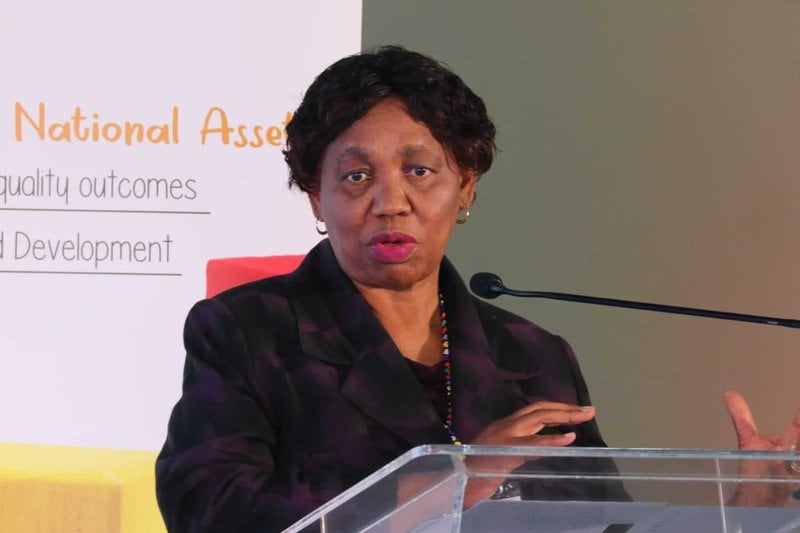
Minister of Defence and Military Veterans Angie Motshekga justified the mission of the troops, saying they were sent into eastern DRC to uphold one of the pillars of South Africa’s foreign policy, which was to contribute to the creation of peace and stability in Africa and the world.
She said that helping to create stability in eastern DRC was also in SA’s interests as it would help to stem the flow of refugees from the conflict.
She also noted that SA had been trying to bring peace and stability to the DRC since 1997 when then president Nelson Mandela hosted then president Mobutu Sese Seko, of what was still called Zaire, and rebel leader Laurent Kabila, for peace talks on the SA Navy ship SAS Outeniqua.
SA subsequently hosted the Sun City peace talks which had helped to bring peace to the country. SA had also been contributing troops to UN peacekeeping forces since 1999.
Criticism has mounted against Motshekga’s handling of the crisis and president Cyril Ramaphosa’s silence in the wake of the tragedy.
DA member of parliament Chris Hattingh called for the country to fully disengage from the region and conduct a thorough debriefing and restructuring of the SANDF after the remains were repatriated.
“Let’s be realistic, a successful offensive would require more troops and equipment, efficient logistics, air power and strategic leadership — none of which SADC or the SANDF has demonstrated the ability to provide, “said Hattingh.
Economic Freedom Fighters leader Julius Malema said the SANDF was fighting a battle it could not win and should be withdrawn.
“For over a decade, we have watched the SANDF systematically be weakened. Budget cuts have crippled our military’s ability to function effectively,” he said.
ActionSA’s Athol Trollip called on Motshekga to resign by the end of the day for sending the soldiers to the DRC without preparations, causing a food shortage and displaying “gross incompetence”.
Motshekga repeatedly struggled to provide clear answers about the decision-making process behind the deployment. She denied that the mission was anything other than peacekeeping and insisted that troops were adequately equipped, statements that have been widely challenged.
ANC MP Malusi Gigaba said the country had an obligation to show moral support to the soldiers still deployed in the DRC.
He repeated Ramaphosa’s statement in the State of the Nation address that South Africa, in line with the Freedom Charter, had a responsibility to uphold “progressive internationalism”.
Gigaba emphasised that the SANDF operated as a neutral institution serving all citizens rather than advancing specific interests.
South Africa’s standing as a key player in regional diplomacy stemmed from its commitment to good governance, dialogue, and the principle of “African solutions to African problems”, he said.
Many argue that SANDF troops have been inadequately supported, a claim that was further highlighted during an extraordinary meeting of the Joint Standing Committee on Defence (JSCD) on Tuesday, 4 February 2025.
International Relations Minister Ronald Lamola defended South Africa’s involvement in the DRC, arguing that it would be “reckless” not to resolve the ongoing conflict in the country’s volatile eastern region.
“Since the dawn of our democracy, our country has been an unwavering champion for peace and justice on the continent and the globe.”
He said the peace-keeping mission in the DRC is part of the Southern African Development Community Mission, which was endorsed by the African Union. The UN mission in the DRC was authorised to assist the SAMIDRC.
“Abrupt withdrawal, as called [for] by some in the house, is not even a tactical retreat; it is even worse than a surrender …”
He said the situation in the eastern DRC is too complex for any single country to resolve alone, which is why regional bodies such as the Southern African Development Community (SADC), AU and the UN are involved.
Lamola also argued that South Africa has a vested interest in maintaining peace and security on the continent.
“There is no part of Africa where there is no South African company,” Lamola said, pointing to major corporate players such as MultiChoice and MTN operating across the continent.