
By Lehlohonolo Lehana.
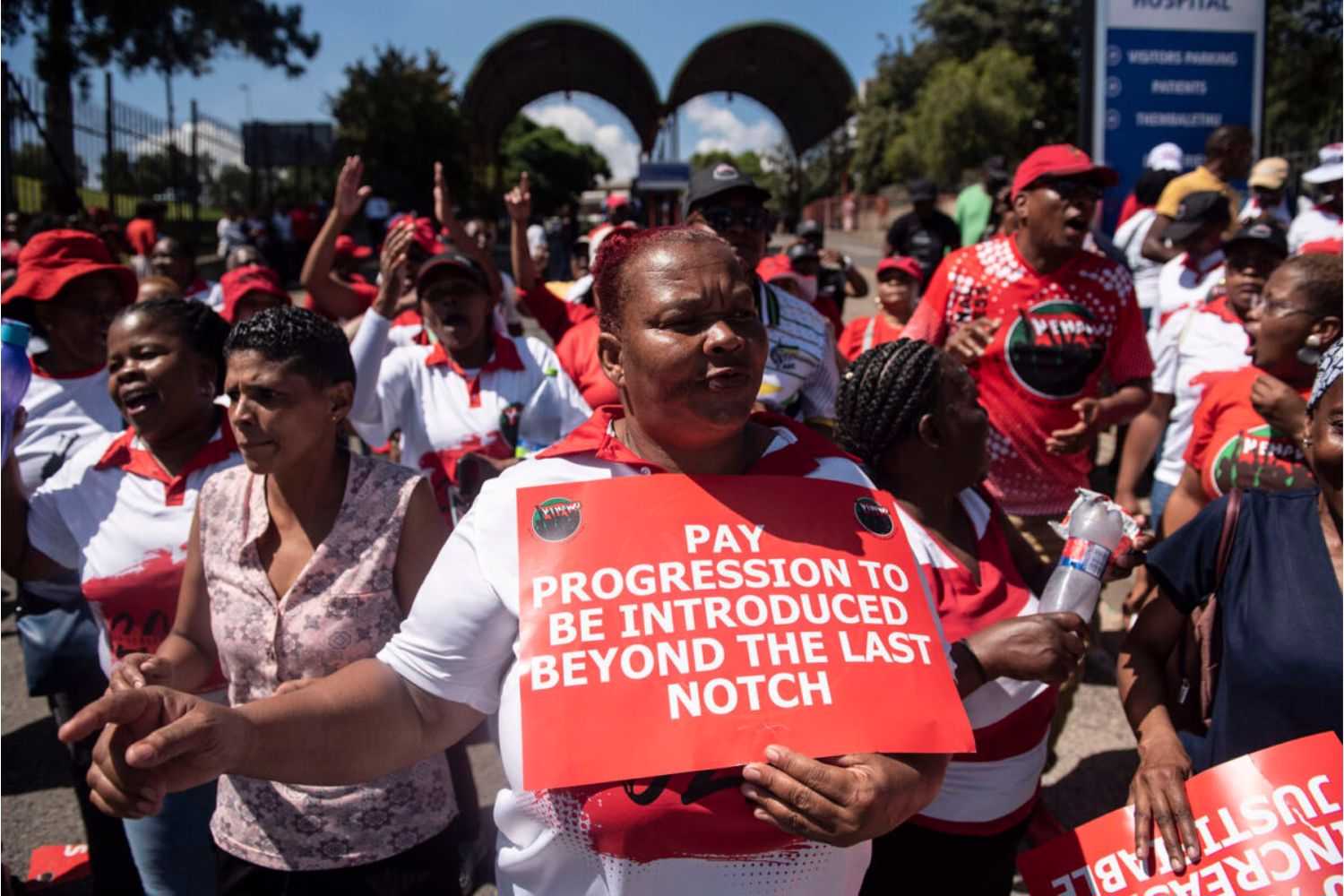
The Health and Allied Workers Indaba Trade Union (HAITU), which represents 20 000 health workers, confirmed it will be joining the strike by National Education, Health, and Allied Workers’ Union (Nehawu) workers.
The union says its members are fed up with government’s response to workers’ demands which were tabled in the Public Service Coordinating Bargaining Council.
“Government – the employer – has been showing workers the middle finger, by denying them a meaningful increase, and by disregarding and disrespecting the bargaining council. Health workers have been suffering for years and this government refuses to take any responsibility for the crisis we are facing in the healthcare sector,” says HAITU general-secretary Lerato Mthunzi.
“In the new round of wage talks, which opened in February this year, the bosses offered a pathetic 3% increase, which they unilaterally implemented.”
Mthunzi says HAITU members are also demanding a 10% wage hike.
“What we are demanding is very small when you consider how the bosses have blatantly robbed workers of their increases in the last two years.
“Health workers are working under enormous pressure – we must deliver quality healthcare in public hospitals which are literally crumbling because of poor infrastructure, caused by poor maintenance.
“We also reject the false narrative in the media that the public sector is bloated – that is not true.”
Despite a court interdict, Nehawu members kicked off a countrywide strike on Monday, with reports of intimidation preventing staff from entering or leaving health facilities, cancelled surgeries, ambulances barred from entering or leaving hospitals, and many other critical services grinding to a standstill.
The Labour Court in Johannesburg had upheld an interdict to stop the strike after the union had appealed against the interdict first filed on Saturday.
The judgment said the strike would “…cause irreparable harm to the government and affect numerous public services including education, health, police, home affairs, social development and correctional services.”
The applicant submitted that the appeal has no prospects of success given that the collective agreement that the union seeks to compel the applicant to conclude would be contrary to regulated measures in the form of public service regulations.”
However, the interdict was ignored and the violent and disruptive protests was condemned by the Department of Health, which reiterated that striking of essential services constitutes misconduct and that the “no work no pay” principle would be strictly applied.