
Staff Reporter.
The Omicron variant has thrown the spotlight on the COVID-19 vaccine shortfall in Africa, with the continent remaining the worst hit by inequitable access to safe and effective vaccines.
Poorer countries continue to scramble to get their hands on the lifesaving jabs, with less than 10% of Africa’s 54 nations projected to reach the year-end target of fully vaccinating 40% of its population.
However, this could be a thing of the past, as Africa forges ahead to develop its first vaccine manufacturing capacity, to ensure viable vaccine security.
Mid-year, the World Health Organisation (WHO), together with the South African and French governments announced that the country would host Africa’s COVID-19 vaccine production facility, paving the way for African companies to begin manufacturing mRNA vaccines.
The WHO, a South African consortium and partners from COVAX have been working tirelessly to make this a reality.
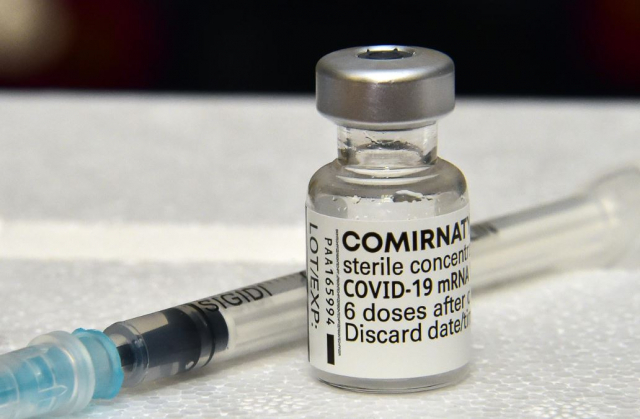
The mRNA technology instructs cells to make a protein that generates an immune response in the body, producing antibodies that protect against disease, a key ingredient in Pfizer/BioNTech and Moderna COVID-19 vaccines.
WHO’s Dr Martin Friede, speaking during an open forum hosted by the Department of Science and Technology (DSI), said one of the biggest challenges with this pandemic is inequity.
“Rich countries got vaccines and the poor countries did not,” Friede said on Thursday.
He said one of the objectives of vaccine manufacturing hubs was to increase the number of companies to access the technology, especially in regions where there is insufficient vaccine capacity.
The South African consortium has since been set up to build a technology transfer hub with Biovac being the first spoke and a local company, Afrigen, which will develop the continent’s first locally produced mRNA jab.
The other partners include the DSI, the Africa Centres for Disease Control and Prevention, the South African Medical Research Council and top local universities.
According to Friede, Afrigen will enter Phase 1 clinical trials by the end of next year, while Biovac is expected to produce material for clinical trials in 2023.
“It is really important that South Africa takes the lead on this and tries not just making copies of vaccines, but tries to make new vaccines made in Africa for Africans,” he said.
“Now we can’t do this without money,”he added.
Crunching the numbers, he said the budget is €92 billion or R1.66 billion for about five years, with €52 million already been raised so far.
“This is a lot of money by some people’s perspectives. But it’s not a lot of money when you look at how much has been spent on the pandemic.”
The initiative has backing from many donors including France, Canada, Germany, ELMA Foundation and KFW Development Bank, with some having to formally confirm.
“I’m going to quote a famous politician to say, ‘yes, we can’. It might take us a moment to get it done. But we’ll do it,” Friede added.
Afrigen Managing Director, Professor Petro Terblanche, said the support from all its partners was essential for success.
She announced that the company has since completed its vaccine facility suitable for the production of mRNA vaccines and clinical trials.
This was made possible by the company’s 26-member team consisting of scientists, engineers, technologists, technicians, pharmacists and pharmacologists.
“We did not get technology transfer from the two leading mRNA vaccine manufacturers. But we did it ourselves.”
DSI Deputy Minister, Buti Manamela said government was honoured that the vaccine hub for Africa is in Cape Town.
“This is a testament to the quality of South Africa scientific expertise and infrastructure and a vote of confidence in our country’s capability for vaccine submissions.”
Government, according to Manamela, has set aside €100 million in vaccine development over the next five years and hopes that the mRNA technology will also be used to fight TB, malaria, and HIV and AIDS.
“We do not doubt that this facility will be of considerable benefit to our country, the continent and middle-income countries and make a significant contribution to the development of essential skills and knowledge.”
Meanwhile President Cyril Ramaphosa has urged global leaders to come together to fully fund the Access to COVID-19 Tools (ACT) Accelerator’s new Strategic Plan to continue saving lives and end the pandemic.
The President was addressing the eighth meeting of the ACT Accelerator Facilitation Council, along with Director-General of the World Health Organization, Dr Tedros Ghebreyesus, on Thursday.
Since its formation, the ACT Accelerator has made remarkable progress in fulfilling its mandate to make available, to the most vulnerable countries the tools they need to fight the pandemic.
Ramaphosa said the initiative exists to fulfil the most vital purpose of all, which is to save lives.
“It is therefore necessary that global leaders come together to fully fund the ACT-Accelerator’s new Strategic Plan so that we can continue to save lives, and so that we can end this pandemic, not just for some, but for everyone, especially in the most vulnerable communities,” he said.
Ramaphosa said that they have repeatedly said that no-one will be safe “unless we protect vulnerable populations everywhere.”
“We do have a part of the solution: The Access to COVID-19 Tools Accelerator, which, if fully funded, would provide low middle-income countries and low-income countries with vaccines, treatments, testing and PPE [personal protective equipment] for frontline health care workers.”