
By Myles Illidge.
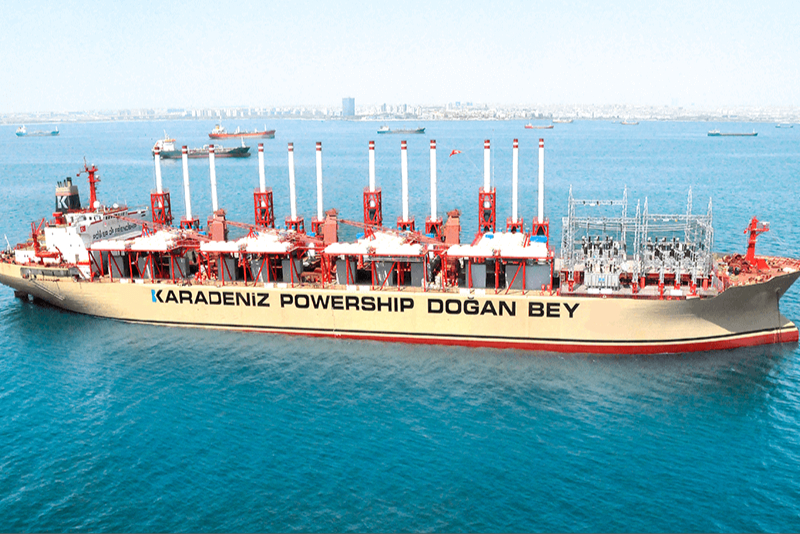
The Organisation Undoing Tax Abuse (Outa) has won its legal case against the government’s attempt to contract Karpowership, with the Pretoria High Court overturning its licences.
The civil action group applied to the High Court to review the National Energy Regulator of South Africa’s (Nersa’s) decision to award Karpowership three electricity generation licences.
“Today, Thursday, 31 July, the Pretoria High Court granted Outa an order ruling that the three Karpowership electricity generation licences issued are invalid and overturned them,” Outa said.
Outa filed its case against Nersa on 26 April 2022, and what followed was a three-year fight, including a long dispute over Nersa refusing to provide access to the record of its decision to award the licences.
“The licences were a crucial step in the government’s plan to sign 20-year deals with the floating power stations as ’emergency’ electricity,” said Outa.
“The deals were expected to have cost about R200 billion over the 20 years, an amount that would have added to the price of electricity.”
The civil action organisation believes its case against Nersa contributed significantly to the collapse of the Karpowership deals, adding that Eskom had already cancelled the ships’ grid access.
Outa said the Pretoria High Court ruling ends the South African government’s attempts to contract the Karpowerships.
“The removal of the generation licences is the final end to this deal. Outa regards this as a significant legal victory, and a huge victory for the public,” it said.
According to Outa’s executive director, Advocate Stefanie Fick, the Karpowership deals are “absolutely dead” and the additional costs will never be added to South Africans’ electricity bills.
“This ruling is a powerful affirmation that decisions involving billions in public funds must comply with the law,” she said.
The Pretoria High Court order confirmed a settlement agreement between Outa and Nersa, through which the regulator agreed to withdraw its opposition to Outa’s review application.
The court also ordered Nersa to pay the application costs on a party-and-party scale, including fees for two counsel, calculated on the highest scale.
“This reflects the seriousness of the matter and the substantial public interest involved,” said Outa.
A lengthy fight
Nersa issued Karpowership three generation licences in 2021 as part of its risk mitigation programme to urgently procure emergency power to address the country’s electricity shortfall.
Outa’s review application followed in April 2022 and cited various legal and procedural concerns, including:
- The absence of required environmental authorisations and port approvals;
- A lack of confirmed power purchase agreements with the national power utility;
- Pending criminal investigations against Karpowership entities;
- Long-term financial risks to the public exist without sufficient regulatory scrutiny.
“The case was delayed by nearly two years due to disputes over access to the administrative record,” said Outa.
The civil action organisation had demanded the full record of Nersa’s decisions, with full reasons, as part of the review process. However, both Nersa and Karpowership objected to Outa’s demands.
In June 2024, Nersa agreed to pay the civil action organisation’s costs just minutes before the Pretoria High Court was set to hear Outa’s application.
Nersa’s counsel said it had received instructions to present Outa with a settlement agreement. Outa partially accepted the agreement but requested that the record be made public.
“The Karpowership entities were subsequently liquidated, and their attorneys withdrew from the matter in June 2025,” said Outa.
“Despite the lack of opposition, Outa pushed to ensure the matter was formally adjudicated and made part of the public record through an order of court.”
While the full record was eventually made available, certain parts were redacted in the public records.