
By Lehlohonolo Lehana.
The North Gauteng High Court in Pretoria has ordered that only those municipalities that have done cost-of-supply studies are entitled to a tariff increase on 1 July.
This follows the announcement by the National Energy Regulator of South Africa (Nersa) hours earlier, stating that it has approved the tariff applications for 178 municipal distributors.
In its consideration of the applications, Nersa reviewed comments from affected parties after submitting all the applications on its website.
Distributors were required to submit their tariff applications for the year in question based on their cost of supply studies. Those distributors without the cost of supply studies were required to provide Nersa with a breakdown of their electricity distributed-related costs.
City Power, is one of the applicants, will start implementing its new tariff increase, as approved by Nersa, from July 1.
Power utility requested an increase of 12.7%.
City Power, as the City of Johannesburg’s power supplier, submitted a cost-of-supply study based on factors affecting its operations and customers, including industry inflation driven by increases in bulk purchases cost, operational costs and overall cost structure.
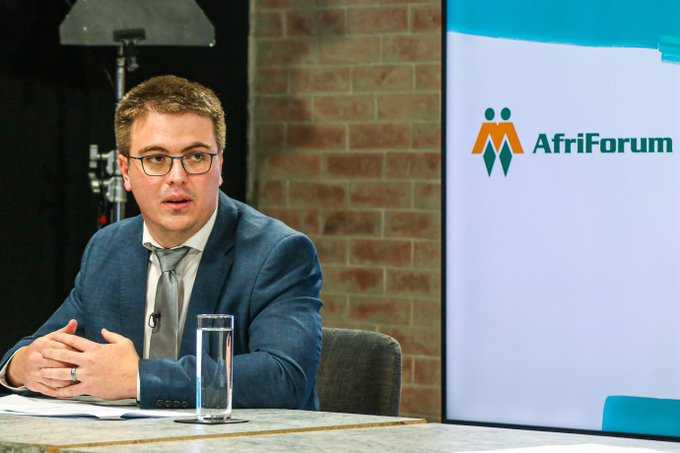
The order comes after Afriforum challenged Nersa’s methodology used when considering the applications.
“This is a great victory for civil rights – something AfriForum is fighting for. The court has now acknowledged anew that NERSA failed to protect consumers against unlawful applications for electricity tariff increases – something the law compels the regulator to do,” says Morné Mostert, Manager of Local Government Affairs at AfriForum.
According to Mostert the use of a cost study for electricity tariff increases is critical because it gives a clear outline of what municipalities’ tariffs must be to deliver the service properly and maintain networks. “The applications of municipalities that do not have cost studies are at this stage simply based on an estimate of what it costs to provide the service. However, applications for tariff increases must be made on accurately calculated figures that will ensure that fair tariff increases are passed on to consumers,” explains Mostert.
A 2022 court order set aside the guideline and benchmark method used by Nersa to approve municipal tariffs.
According to legislation, distributors can recover their efficient cost plus a reasonable margin. The court gave Nersa a year to switch to this method and expressly forbade it from using the unlawful method again in determining the tariffs for 2024/’25.
This required municipalities to do cost-of-supply studies, but only 66 did so.
The court set aside a methodology Nersa hastily put together to accommodate the non-compliant municipalities. It gives the municipalities 60 days to submit compliant applications to Nersa, which the regulator must consider within 30 days.
However, chances are that this ‘be of assistance since such a study can take a year to complete, including the tender process to appoint service providers, the study itself, and the consultation process before it is approved by the council.
Meanwhile South Africa reaches 3-month mark with no load shedding for the first time in 3 years.
“The last instance of such an extended suspension dates back to the period between 23 July 2021 and 06 October 2021,” Eskom said on Friday evening.
“Our operational efficiency continues to exceed expectations, with current unplanned outages still averaging 12 000MW, and today’s recorded at 10 839MW, well below the winter forecast.”
The Unplanned Capacity Loss Factor (UCLF) has seen a decrease to 27.1% for the financial year to date (1 April 2024 to 27 June 2024), improving from 35.1% in the corresponding period last year, Eskom said.