
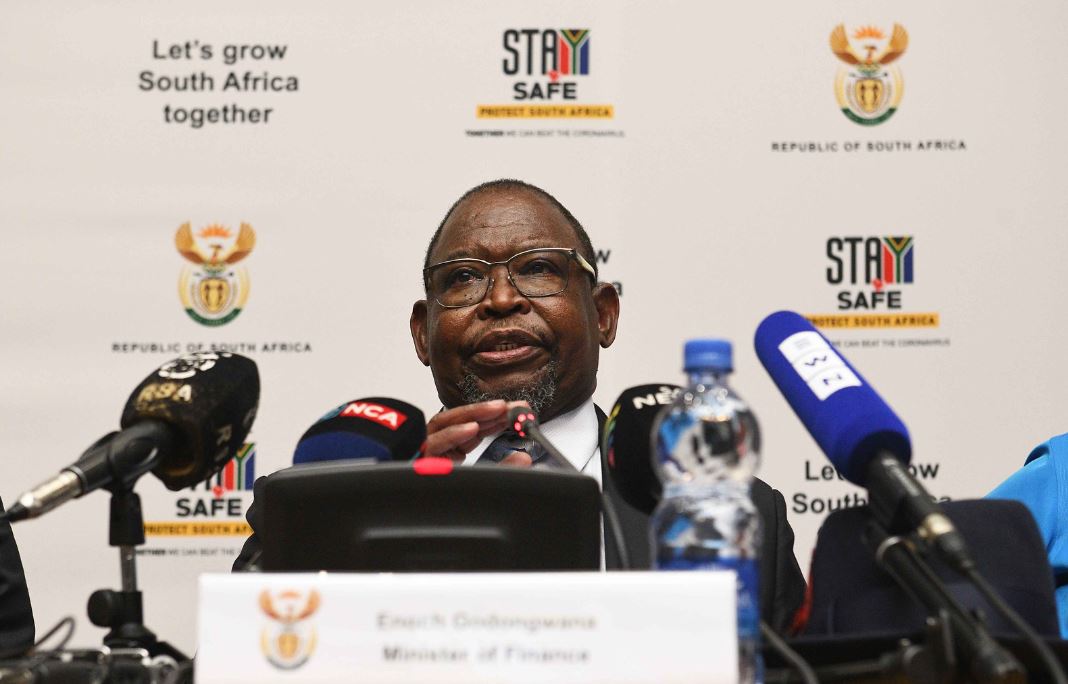
By Lehlohonolo Lehana
The Western Cape High Court ruled that only Parliament can change the Value-Added Tax (VAT) rate — stripping the finance minister Enoch Godongwana powers.
On 3 April 2025, the Democratic Alliance (DA) filed an urgent application in the Western Cape Division of the High Court, challenging the legality of the process in Parliament to adopt the fiscal framework, and Godongwana’s powers under section 7(4) of the VAT Act.
In Part A of its application, the party was seeking orders, first, setting aside the “fundamentally flawed” decisions of both Houses of Parliament to adopt the fiscal framework and sending the framework back to the standing committee on finance and select committee on finance for reconsideration.
In Part B of its application, the DA asked the court to declare the finance minister’s authority under section 7(4) of the VAT Act unconstitutional, as it permits the executive to raise taxes without Parliament’s approval.
A full bench of judges, consisting of Western Cape Judge President Nolwazi Mabindla-Boqwana and judges Kate Savage and Andre le Grange, presided over the matter.
In its ruling the High Court has found a section of the Value-Added Tax Act, which empowers finance minister Godongwana to amend the VAT rate, unconstitutional.
“It is declated that section 7(4) of the Value Added Tax Act 89 of 1991 is inconsistent with the constitution and it is invalid,” the court judgment reads.
The full bench suspended the order for 24 months to afford parliament an opportunity to correct the defect.
The VAT increase on the 2025/26 Budget was based on the assumption that the 0.5 percentage point VAT increase would generate about R13.5-billion additional revenue for the financial year.