
By Lehlohonolo Lehana.
The Development Programme (UNDP) and South Africa National Human Development (SANHDR) warned that continued youth employment threatens the social and political stability of South Africa.
The report titled, “Harnessing the Employability of South Africa’s Youth”, looked at youth unemployment in South Africa through a human development lens.
“Youth unemployment in South Africa is a multipronged challenge that limits the earning potential of youth, stymies business growth, threatens social cohesion, and puts pressure on public resources,” the report said.
“There is no doubt that the high unemployment rate is a ticking time bomb.”
The report, in a nutshell, lays bare the various scenarios that currently describe the worrisome trend of increasing youth unemployment in South Africa.
For instance, unemployment among the youth is currently estimated at 59.6% and 40.5% for those aged 14-24 years and 25-34 years, respectively.
What’s more worrying is that it has become increasingly more difficult to find work in the country, no matter how qualified job seekers are.
According to Stats SA, graduate unemployment has grown from 5.5% in 2013 to 10.6% in 2023. The same trend has emerged for those with other tertiary qualifications – increasing from 11.9% in 2013 to 23.5% in 2023.
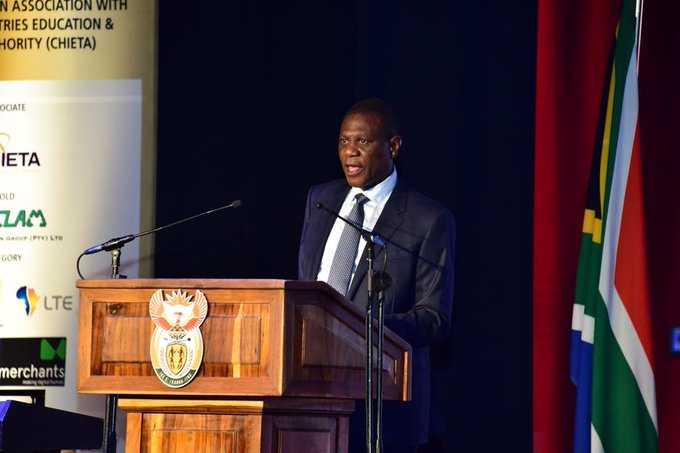
Deputy President Paul Mashatile said, he hoped this report would shine the light on the blind spots in the work government was doing to fight youth unemployment.
According to Stats SA, there are more than 10 million young people between the ages of 15 and 24 in the country. However, only 2.5 million of them are currently part of the labour force, meaning they are either employed or actively seeking employment.
Concerningly, out of these 10 million, the majority – 7.7 million or 75.1% – are not employed and are not seeking employment.
The main reason for this is many people become inactive in their job search due to discouragement, which often comes from losing hope of finding a job that matches their skills or is located in their area.
The agency further noted that 37.% of this 7.7 million were disengaged from the labour market in South Africa – meaning they are not in employment, education or training, a number that has increased substantially over the years.
The SANHDR proposed a comprehensive strategy to tackle youth unemployment in the country including,Developing strategic approaches for youth to transition into sustainable livelihoods, Generating and taking advantage of job opportunities and the demographic dividend, Harnessing the potential of the evolving job market, Reviving the National Youth Service Scheme and Forming partnerships with various stakeholders to address the issue.
Minister of Employment and Labour Thulas Nxesi said government remains concerned about South Africa’s unemployment which currently stands at 32.9%.
Government is very mindful of the unacceptably high rate of unemployment in South Africa and the terrible waste of human talent this represents, both for the individual concerned and for the society as a whole.
“Government takes the view that whilst ultimately, we need economic growth to impact unemployment, government is also an economic actor and a major employer and has a duty to mitigate the high unemployment rate,” he said.