
By Liesl Payper.
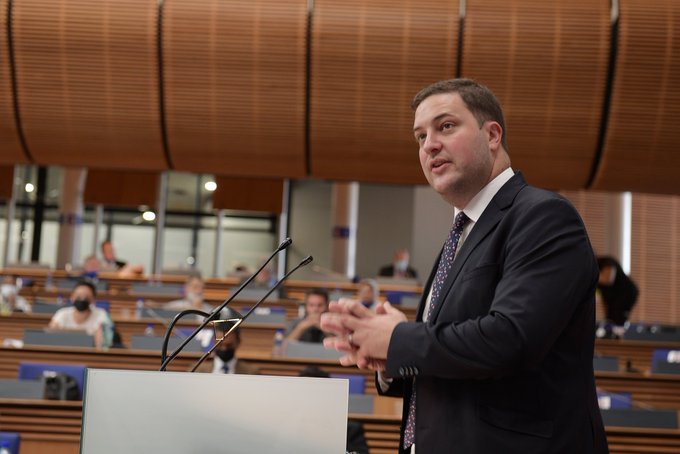
Cape Town Mayor Geordin Hill-Lewis, at a special full council meeting on Wednesday, tabled an amended 2025/26 municipal budget with revised relief measures, expected to result in lower total monthly bills for households compared to the March budget.
The decision to amend the budget follows widespread public pushback, with the city receiving over 14 000 submissions during the initial consultation process.
“Following the relief measures we are tabling today, 97% of ratepayers won’t experience the often-repeated +20% increase in monthly bills,” Hill-Lewis noted.
“And virtually no one will experience a 30% increase on any reasonable household consumption scenario, let alone the fabled 40% of a recent click-bait report,” Hill-Lewis said.
The city’s March budget proposed tariff reforms that entailed fixed charges for water, sanitation, and a new city-wide cleaning tariff, all based on property value. Presently, the fixed charges for water and electricity connections are uniform across all households.
The proposed tariff reforms stipulated in the original budget would have led to substantial increases in monthly municipal bills, with some ratepayers experiencing increases of 20% to 30%.
Hill-Lewis has tabled tariff reductions, which, according to him, will “meaningfully” reduce monthly bills compared to the March budget.
The measures are:
- A reduction in city-wide cleaning charges for all residential properties under R20 million compared to the tabled March 2025/26 budget. A pensioner rebate for city-wide cleaning has also been included, which will offer up to 100% off the cleaning charge;
- Lower fixed water charges for property value bands between R1 million and R25 million compared to the March tabled budget draft;
- An extension of the “first R450 000 rates-free” benefit to all homes up to R7 million property valuation (up from R5 million); and
- Raising the qualifying threshold for pensioners to R27 000 monthly income per household (up from R22 000), regardless of property value.
Hill-Lewis says these relief measures will lead to lower monthly bills, based on average consumption patterns, compared to the March budget.
In the various property value categories, the reductions in monthly bills are:
- Up to 15% lower for a R1.2 million home;
- Up to 24% lower for a R2 million home;
- Up to 33% lower for homes between R3 million and R4 million; and
- Up to 40% lower for homes valued between R5 million and R7 million.
Hill-Lewis emphasised that the revisions were made without compromising the city’s “record R40 billion” infrastructure budget.
“We cannot cut or re-phase this city’s infrastructure budget, “he said, citing urgent upgrades to wastewater systems, electricity grids, water security projects, and Cape Town’s expanding MyCiti public transport network.
Fixed charges here to stay
Responding to criticism over new fixed charges – particularly for water and sanitation – the mayor defended the application of fixed contributions as necessary for maintaining infrastructure, regardless of individual consumption.
“Many costs are fixed in nature – pipelines, trucks, chemicals, cables, staff to service it all. These costs remain no matter how much people consume, and so fixed costs must be met with a portion of fixed revenue.”
According to the mayor, it is a “well-established principle” in infrastructure finance the world over. In fact, globally cities are increasingly collecting more and more of their revenue from fixed charges. In Sydney, for example, fixed charges make up the majority of city revenue.”
He stressed, however, that in Cape Town, consumption charges will still make up by far the largest portion of revenue, and only a relatively small portion will be fixed.
Hill-Lewis was firm that the city would not backtrack on tariff reforms intended to ensure financial sustainability.
He also emphasised the need for cross-subsidisation, where higher-income residents help fund services for lower-income households.
“We cannot sustainably run a city where a R50 million household makes the same fixed contribution to water and sanitation infrastructure as a R500 000 household. Let’s call that what it is – regressive taxation – and we oppose it and we oppose it for the same reason the DA recently opposed the VAT hike, because it hits the poor hardest.”
Commercial customers
Hill-Lewis noted the city also “heard” the points raised by commercial property organisations, such as the South African Property Owners Association (Sapoa).
“The city will allow commercial customers more time to adapt to the phased-introduction of the city-wide cleaning tariff,” he said.
In the 2025/26 financial year, commercial customers will continue to contribute to funding the city-wide cleaning service through a percentage of their electricity price, which is currently the case.
Reacting to the amended budget, Sapoa noted that notwithstanding the concessions it remains concerned about the legality of the city-wide cleaning tariff.
In addition, the balance of issues Sapoa has raised in its engagements with the city has not been fully addressed in the amended budget, it adds.
“Of specific concern is the above-inflation property rates increases, as well as a basic water and basic sanitary charge linked to property value.
The revised budget will now go out for a second round of public participation, open from 28 May to 13 June.