
By Lehlohonolo Lehana.
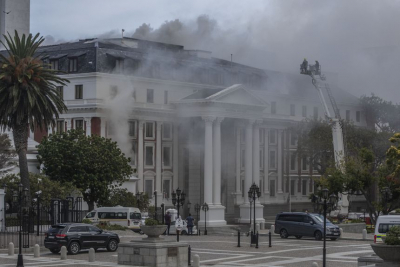
The South African Heritage Resources Agency (Sahra) says some of the damaged material following a fire that gutted the National Assembly (NA) building, would not be replaced, as it was no longer available.
This arises out of the fact that Parliament is a national heritage site and as such is protected by various laws against any damage or destruction.
The history of Parliament dates back to the 1600s and then to the 1800s and the 1900s when various upgrades were made over the years.
On Friday, the department, police management and the SA Heritage Resources Agency briefed Parliament’s Joint Standing Committee on Financial Management on efforts to rebuild the NA after the devastating 2 January fire.
Sahra’s Ben Mwasinga said Parliament holds significant value.
He said after the fire there was a loss of historical value in the precinct.
“The materials that have been destroyed cannot and will not ever be replaced. What we can do with our best efforts is to try and restore it to a state in which it was before. Where we can’t restore we can consult with members of Parliament and greater members of the public as to what should be replaced there. The structural damage to the buildings is quite extensive, the entire roof of the Old Assembly has been destroyed and the structure of the National Assembly has been damaged. What has been damaged now cannot and will not be replaced as these are historical items and the materials that were used to construct these buildings at that time will not be found in this day and age, “said Mwasinga.
He said the law would now have to take its course.
The Hawks and the NPA have been working on the case for several months.
Christo Beukes, programme manager at Coega Development Corporation (CDC), told MPs they requested an extension for the submission of the report due to the extent of water damage identified in the Old Assembly building.
This, he said, required further detailed assessments of the entire building.
The CDC was appointed to conduct an independent assessment of the fire damage at Parliament.
“[The] CDC team drafted the detailed preliminary report and planned to be presented to DPWI on 12 May 2022 by all professional disciplines. The CDC team [would] then review and effect final changes to the preliminary detailed report for the official issue of the final detailed report by 20 May. It is anticipated that the final signed report by Coega and DPWI will be available before the 27 May,” he said.
Beukes said the second phase of the report would provide indicative timelines for the planning and construction stages for the restoration work for each building.
“The above durations will be informed by the full extent of construction works required, construction methodologies and complexities, and DPWI implementation processes to be expedited for earliest construction commencement on the damaged buildings,” he said.
The full extent of the damage, whether the building should be repaired or taken down and rebuilt, and what it will cost, will form part of the second phase report.