
By Lehlohonolo Lehana.
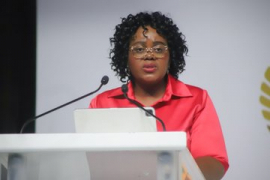
The Minister of Human Settlements Mmamoloko Tryphosa Kubayi has outlined the steps to assist families affected by the flooding and emphasised a need for a more proactive approach when dealing with disasters.
Kubayi was speaking on the sidelines of a two-day Cabinet lekgotla at the Sefako Makgatho Presidential Guest House.
In the Western Cape, the heavy rains, strong winds, and flooding have forced many to seek shelter in community halls and temporary accommodations.
“We have managed to brief the lekgotla on what we are doing regarding disasters across the country. We have wildfires in KZN and the floods in the Western Cape,” Kubayi said.
“We have been able to relocate families into temporary accommodation that we have leased from the government for 30 days.
“This is while we are finding a solution for the informal settlements because they have submerged, whether the rain will come down and we move them back or we have to find alternative land where we relocate them, as we did in other areas.
Kubayi added, “The challenge in the City of Cape Town is land availability and the requirements we have to follow in terms of approval processes for land use.”
She said the National Home Builders Registration Council has assessed houses that need to be fixed.
“We have received the initial report. Several houses were later added. We are hoping that by Monday, we will have intervention and start to fix those houses.
“The material for informal settlements has been delivered, and the service providers should start work,” she said.
In KZN, Kubayi said members of the provincial executive council are on the ground ensuring effective disaster relief efforts.
The provincial disaster management has confirmed that five more people have been killed in wildfires that ravaged parts of the province this week. It brings the death toll to 12.
However Kubayi emphasised a need for a more proactive approach when dealing with disasters. “We need to put preventative measures in place, and this work is ongoing.”
As part of disaster intervention and mitigation measures, the Department of Human Settlements also provides the Informal Settlement Upgrading grant to Provinces and Municipalities, which entails the upgrading of informal settlements in-situ (developing the area where an informal settlement is located) by providing bulk infrastructure like storm water drainage to avert flooding.
“In some areas we visit we find that there is no proper stormwater drainage system to absorb water during heavy rains, so we need to put in place the bulk infrastructure to mitigate against a situation where people are locked in water”, said the Minister.
The Minister appealed for greater coordination amongst all spheres of government whenever disaster strikes, “as communities cared more about how soon government responds to their plight, and less about competition or blame games amongst leaders”.
“My appeal to those we work with in human settlements, is that we are not here to compete or throw stones at each other, but we must complement each other to work as a family and as a team in responding to communities”, said Kubayi.
The Minister emphasized that the response to disasters requires all the affected government departments to play their part in ensuring that the victims are attended to. This is because beyond the provision of shelter for the victims there are other needs such as transport, protection of their properties which in some cases get stolen, and food and other necessities.