
By Lehlohonolo Lehana.
The latest Ipos Poll shows on how South Africans plan to vote finding that the embattled ruling African National Congress (ANC) could fall under the 40% mark in the upcoming national and provincial elections.
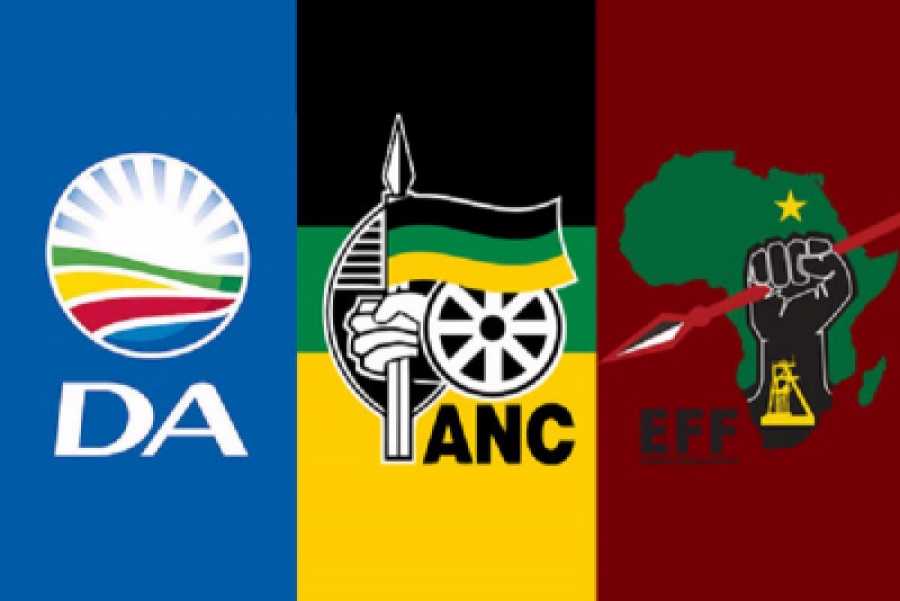
Additionally, the polling shows that the current official opposition, the Democratic Alliance (DA), has the Economic Freedom Fighters (EFF) hot on its heels – making the 2024 elections hotly contested.
Ipsos conducted 3,600 face-to-face interviews across South Africa from 23 October to 1 December, 2023. One of the anchoring questions asked was: “If there were National [or Provincial] elections tomorrow, which political party would you vote for?”
Respondents were requested to select their choice on an imitation ballot paper on a computer, before handing the computer back to the interviewer. “This approach replicates a real ballot paper process and ensures the confidentiality of the vote,” said Ipsos.
The firm noted that this research does not necessarily constitute an election prediction, but rather captures sentiment at the given period of time.
“Credible election predictions can only be made in the final stages leading up to the election [as] various factors, including campaign dynamics, political and economic changes, as well as the state of essential services…can influence the election outcome in the final months.”
Utilising a mock ballot paper process to ensure voter confidentiality, the survey offers insights into the electorate’s preferences, although it excludes parties not significant by past electoral metrics.
One of the key questions posed was: “If there were National [or Provincial] elections tomorrow, which political party would you vote for?”
One of the scenarios of the findings suggest a marginal lead for the Economic Freedom Fighters (18.6%) over the Democratic Alliance (17.3%), hinting at a potential shift in the official opposition status. Under this scenario, the African National Congress receives 38.5% of the vote, the Inkatha Freedom Party, 3.6% and Action SA 3.4% of the vote.
However, a critical analysis reveals that 10.1% of respondents remain undecided, refusing to vote or to disclose their preference.
This “undecided vote” Ispos warns, poses a significant challenge in predicting the election’s outcome, emphasising the need for a deeper understanding of voter sentiment.
Another scenario indicates that the ANC’s support has dipped below 50% with 40.5% of the vote, with the DA regaining ground with 20.5% of the vote as the official opposition and the EFF continuing to challenge this position with 19.6% of the vote.
Regional support varies, with the IFP drawing strength from KwaZulu-Natal and Action SA making inroads in Gauteng.
The Multi-party Charter for South Africa also emerges as a potential contender, drawing approximately 33% of the vote in this early stage.
However, Ispos has cautioned against viewing these results as definitive election predictions.
The final outcome will likely be influenced by a myriad of factors, including campaign dynamics, socio-economic shifts, and the state of essential services.
Voter turnout, especially, is a critical variable, with current models suggesting varying scenarios that could significantly impact the election’s dynamics.
The possibility of a national-level coalition government looms, with the ANC potentially needing a minor party to secure a majority.
The Electoral Commission of South Africa reported that over a million people had been added to the voters’ roll following the conclusion of the voter registration weekend.
This brings the total number of eligible voters to 27.4 million.
More than 77% of people who registered over the past two weekends are under 29.
President Cyril Ramaphosa is expected to announce the election date during the State of the Nation Address on Thursday.