
By Lehlohonolo Lehana.
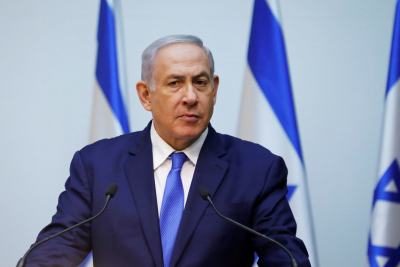
Israel’s parliament has voted to end Benjamin Netanyahu’s 12-year-long tenure as prime minister, approving in his stead a coalition government that has pledged to heal a nation bitterly divided over the departure of the country’s longest-serving leader.
Naftali Bennett, the head of an ultranationalist party that controls six seats in the 120-seat Knesset, was sworn in as prime minister after the parliament backed the new coalition government by a razor thin margin of 60 votes to 59.
Bennett takes office leading an unlikely alliance of left-wing, centrist and right-wing parties, as well as a party that represents the 21-percent minority comprising Palestinian citizens of Israel. They have little in common except for a desire to unseat Netanyahu. Under a rotational agreement, Bennett will serve as prime minister for two years, when he will be replaced by the centrist leader Yair Lapid.
They plan largely to avoid sweeping moves on issues such as policy towards the Palestinians in the occupied territories while they focus on domestic reforms. But with little to no prospect of resuming any sort of fair peace negotiations, many Palestinians are unmoved by the change of administration, saying Bennett will likely pursue the same right-wing agenda as Netanyahu.
Netanyahu sat silently during the vote. After the government was approved, he stood up to leave the chamber, before turning around and shaking Bennett’s hand. A dejected Netanyahu, wearing a black medical mask, briefly sat in the opposition leader’s chair before walking out.
Netanyahu, the most dominant Israeli politician of his generation, failed to form a government after Israel’s March 23 election, its fourth in two years.
The 71-year-old is loved by his hard-core supporters and loathed by critics. His ongoing corruption trial, on charges he denies, has only deepened the chasm.
He remains the head of the largest party in parliament and is expected to vigorously oppose the new government. If just one faction bolts, it could lose its majority and would be at risk of collapse, giving him an opening to return to power.
His opponents have long reviled what they see as Netanyahu’s divisive rhetoric, underhanded political tactics and subjection of state interests to his political survival.
The country’s deep divisions were on vivid display earlier on Sunday as Bennett, a former settler leader and hard-right religious nationalist who has called for the annexation of most of the occupied West Bank, addressed parliament ahead of the vote.
He was repeatedly interrupted and loudly heckled by supporters of Netanyahu, several of whom were escorted out of the chamber.
The new cabinet faces a handful of diplomatic, security and financial challenges: Iran, a fragile ceasefire with Palestinian groups in the besieged Gaza Strip, a war crimes probe by the International Criminal Court, and economic recovery following the coronavirus pandemic.
Source: Fullview and News Agencies.