
By Lehlohonolo Lehana.
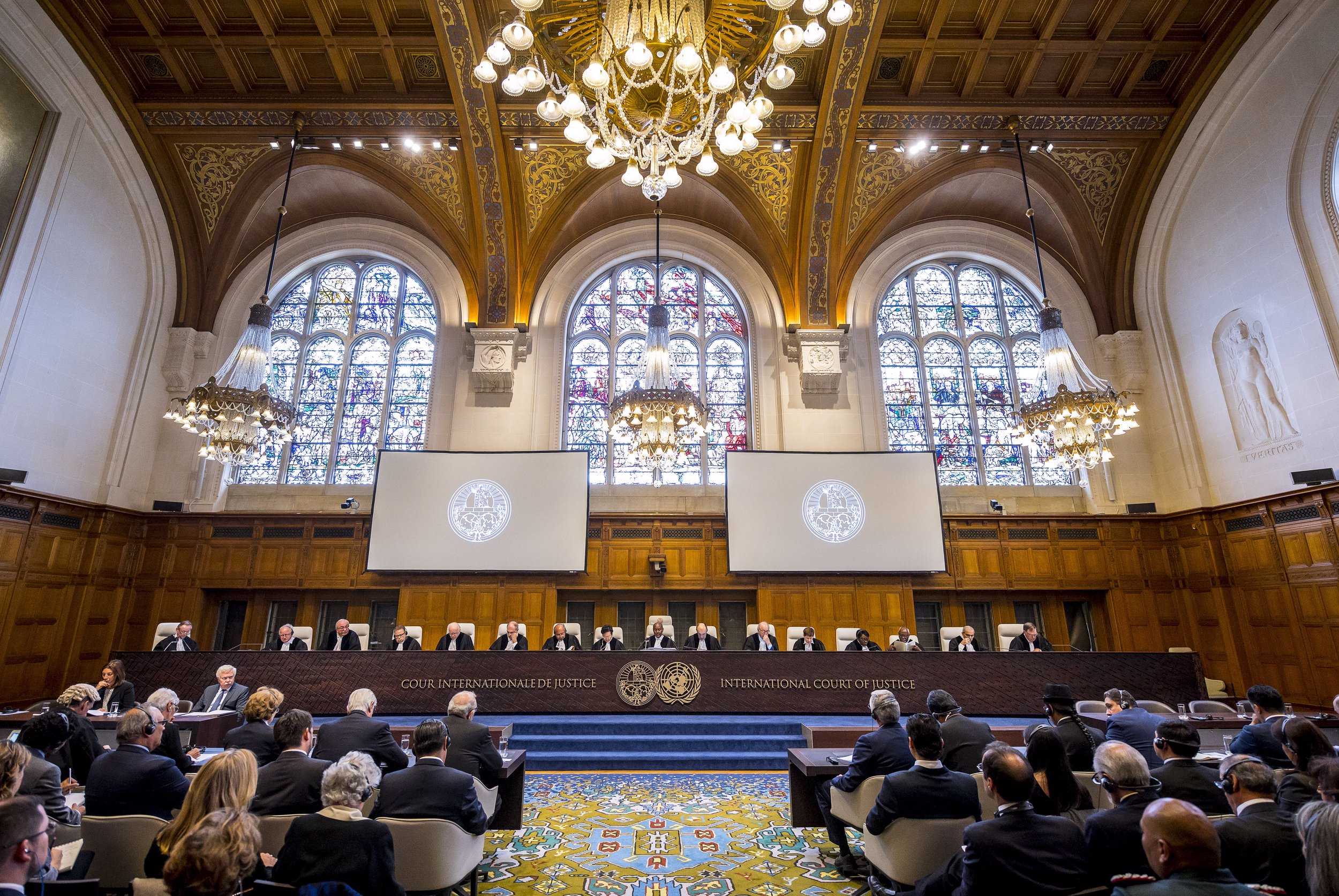
Photo Credit: International Court of Justice, Peace Palace, The Hague, Netherlands.
South Africa presented its arguments Thursday to the International Court of Justice (ICJ) at The Hague, as it opened its case accusing Israel of committing genocide in Gaza.
Lawyers representing South Africa urged the International Court of Justice to order Israel to stop the violence in Gaza, wrapping up the first of two hearings in a landmark case that could shape the course of the conflict.
The delegation, led by Justice and Correctional Services Minister Ronald Lamola, consists of South Africa’s top legal experts, comprising of Dr Adila Hassim, Advocate Tembeka Ngcukaitobi, Professor John Dugard, Advocate Blinne ni Ghrálaigh, Advocate Max du Plessis, and Professor Vaughan Lowe.
Lamola said while delivering his opening statement in the case, “In extending our hands to the people of Palestine, we do so in full knowledge that we are part of a humanity.”
“These were the words of our founding president, Nelson Mandela; this is the spirit in which South Africa acceded to the Convention on the Prevention and Punishment of the Crime of Genocide in 1998.”
“No armed attack on a state territory, no matter how serious, can provide justification for or defend breaches of the convention,” said Lamola. “Israel’s response to the October 7 attack has crossed this line and given rise to the breaches of the convention.”
Israeli Prime Minister Benjamin Netanyahu issued a video statement Wednesday night defending his country’s actions and insisted they had nothing to do with genocide.
“Israel has no intention of permanently occupying Gaza or displacing its civilian population,” he said. “Israel is fighting Hamas terrorists, not the Palestinian population, and we are doing so in full compliance with international law.”
In a roughly three-hour hearing, South Africa argued that Israel has committed genocidal acts with genocidal intent against Palestinians in Gaza, warranting provisional measures to prevent additional harm.
The South African case draws extensively on the recent precedent set in the ICJ in the case of The Gambia v Myanmar, and relies on the Genocide Convention adopted in 1948.
The application pre-empts potential objections from Israel regarding the ICJ’s jurisdiction to hear the matter, and provides a convincing paper trail of genocidal acts against the Palestinians, dating back to the Nakba 75 years ago.
Israel is facing a trial at the United Nations’ International Court of Justice (ICJ), accused of committing the crime of genocide with its ongoing military operation against Hamas in the Gaza Strip.
Advocate Adil Hassim detailed the history of Gaza. She presented a map of the Gaza strip and indicated the restrictions imposed by Israel. She says it’s not necessary for the court to come to a final view on genocide. She says the court must find that there has been breaches to some of the Genocide Convention.
Hassim says the first genocidal act by Israel is “the mass killings of Palestinians in Gaza”. She refered to findings that “nowhere is safe in Gaza” and stresses that 70% of the over 23 000 people killed are “women and children”.
The 1948 Genocide Convention defines genocide as “acts committed with intent to destroy, in whole or in part, a national, ethnical, racial or religious group”.
“Israel has a genocidal intent against the Palestinians in Gaza,” Tembeka Ngcukaitobi, advocate of the High Court of South Africa, told the court. “The intent to destroy Gaza has been nurtured at the highest level of state.”
Ngcukaitobi argued that ,”It’s systematic in its conduct and form. There is also a clear pattern of conduct. As we stand today, 1% of the Palestinian population have been decimated in Gaza.”
Ngcukaitobi refered to Netanyahu’s invocation of the Biblical story of the total destruction of Amalek by the Israelites in an address to soldiers: “You must remember what Amalek has done to you, says our Holy Bible. And we do remember.”
He repeated this reference in a 3 November letter sent to Israeli soldiers. The relevant biblical passage reads: “Now do, attack Amalek, and prescribe all that belongs to him. Spare no one, but kill all alike, men and women, infants and sucklings, oxen and sheep, camels and asses.”
South Africa became the first country to file a suit against Israel alleging that its operations in Gaza constitute genocide.
Professor John Dugard the addressed the court on its jurisdiction to hear the case. He began by saying both South Africa and Palestine has suffered.
“State parties to this convention are obliged not only to desist from genocidal acts but also to prevent them,” Dugard said. He added that South Africa tried to reach the Israeli government via the embassy before filing the case.
Advocate Max Du Plessis, another lawyer representing South Africa, said UN bodies and experts as well as human rights organisations, institutions and states “have collectively considered the acts committed by Israel to be genocidal or at the very least warned that the Palestinian people [are] at risk of genocide”.
South Africa’s legal representatives reminded the court that at this stage, it does not “have to determine whether or not Israel has or has not acted contrary to its obligations under the Genocide Convention” because this can be done only “at the merits stage”.
Advocate Blinne ni Ghrálaigh outlined how, each day, Palestinians were being “blown to pieces” and dozens of children were harrowingly being labelled WCNSFs – Wounded Child, No Surviving Family.
She said: “On the basis of the current figures, on average 247 Palestinians are being killed and are at risk of being killed each day, many of them literally blown to pieces. They include 48 mothers each day, two every hour and over 117 children each day, leaving Unicef to call Israel’s actions a war on children.
“On current rates, which show no sign of abating, each day over 3 medics, 2 teachers, more than one UN employee and more than one journalist will be killed, many while at work or in what appeared to be targeted attacks on their family homes or where they are sheltered.
Professor Vaughan Lowe has told the International Court of Justice nothing can ever justify genocide, no matter how great the threat to Israeli security may be.
Lowe said prohibition on genocide is an absolute, peremptory rule of law.
“Nothing can ever justify genocide.
“No matter what some individuals within the group of Palestinians in Gaza may have done, and no matter how great the threat to Israeli cities may be, genocidal attacks on the whole of Gaza and the whole of its population with the intent of destroying them cannot be justified.”
“No exception can be made in a provisional measures order to allow a state to engage in actions that violate its obligations undert Genecide Convention. It is unthinkable that a court would ever do such a thing That is the simple point in this case: genocide can never be justified in any circumstances.” Lowe said.
Gaza’s Hamas-run health ministry says more than 23,000 people have been killed during the Israeli offensive sparked by the Palestinian militant group’s Oct. 7 terror attack, which Israel says left about 1,400 people dead and saw Hamas kidnap more than 200 others. Hamas officials do not distinguish between civilian and combatant deaths.
Anticipating that the ICJ will take its time in ruling on the genocide case, the South African lawyers were expected to ask the court to issue an injunction ordering an immediate stop to the Israeli military’s operations in Gaza.
Watch Live in the video below:
Video Courtesy of ENCA.