
By Lehlohonolo Lehana.
Eskom chief operating officer Jan Oberholzer says load shedding is set to continue throughout the weekend as the power utility works to restore its units and reserves following prolonged strike action.
In a media briefing on Friday (1 July), Oberholzer said that weekend load shedding will take place as follows:
Friday (1 July)
Stage 4 load shedding will be implemented until 16h00
Stage 6 load shedding will be implemented from 16h00-22h00
Saturday and Sunday (2 and 3 July)
Stage 2 load shedding will be implemented from 00h00 – 07h00
Stage 4 load shedding will be implemented from 07h00 – 00h00
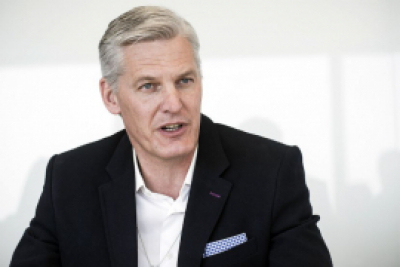
Chief executive Ande De Ruyter said the power utility was currently facing total outages of 13,609MW, with 2,709MW out due to unlawful industrial action. He added that there were still some labour issues, despite both Eskom and union leadership issuing a return-to-work call.
“Eskom is now working to source additional diesel supplies from wherever it can, but low reserves mean it has no choice but to move to stage 6 load shedding from 16h00 this afternoon.”
De Ruyter, added that the power utility will be taking action against workers who embarked on an illegal strike over the past week.
The strike hit the power utility hard, with up to 90% of workers absent from duty – plunging the country into stage six load shedding as a mitigating measure to avoid a system collapse.
De Ruyter said workers at Eskom are not permitted to engage in a strike, as it is considered an essential service.
“We will be taking disciplinary action against workers that have been away unlawfully. That may include the application of the ‘no work, no pay’ principle. Where there are acts of intimidation and violence, the Eskom disciplinary code will apply and we will be processing the various investigations accordingly. Where there are criminal acts, these will be reported to the South African Police Service for them to investigate.
“Eskom is an essential service. Therefore, workers may not go on strike. In addition to the fact that they are essential workers and may not go on strike, we obtained an interdict [against the strike], therefore there is a double breach of the law here. This is an unacceptable situation where the country is held hostage by [these] actions,” he said.
Oberholzer added that a detailed assessment is still required to identify the damage caused by the strikes, and how long it will take to address. This means South Africa can expect an even more unstable power system than usual in the coming weeks, he said.
However, Oberholzer reiterated that South Africa is not facing the possibility of a total blackout, as this was the entire point of load shedding and protecting the electricity grid.
For access to other load shedding schedules, Eskom has made them available on loadshedding.eskom.co.za.
Smartphone users can also download the app EskomSePush to receive push notifications when load shedding is implemented, as well as the times the area you are in will be off.
The economists meanwhile have warned that the continued power cuts will contribute to prolonged low-economic growth in the country.
Despite progress on some structural economic reforms in recent years, South Africa’s electricity supply situation has shown no improvement, professional services firm PwC said in a research note on Thursday (30 June).
The group said three of the goals still facing a critical challenge include:
– Improving the Energy Availability Factor (EAF) to over 70%;
– Implementing the emergency procurement of 2,000MW of generating capacity;
– Addressing institutional inefficiencies in municipal electricity distribution.
PwC’s baseline scenario assumes that little progress will be made on these three factors.
“While power purchase agreements for three projects with a capacity of 150MW were signed in early June, this power will only start to materialise in 2024. At the same time, Eskom’s EAF dropped to 61.2% in the third week of June, with three-quarters of outages due to unplanned breakdowns.
“The low EAF and unreliable supply of power is the primary constraint on faster economic growth and will limit medium-to-long-term potential growth to around 1.5% per annum.”
By comparison, prolonged load shedding will lead to a downside scenario where South Africa’s GDP growth falls to just 1.2% next year, the firm said.
That will be below the population growth rate, resulting in a decline in real GDP per capita. South Africa recorded seven straight years of declining real GDP per capita during 2014-2020.”
PwC’s upside scenario for 2022 assumes a 10% reduction in load shedding compared to the baseline. This would mean a markedly improved power situation in H1 2022. In 2023, the upside scenario assumes a 20% decline in load shedding compared to the baseline.
Other positive factors supporting our upside scenario into next year would be a slower increase in interest rates, a smaller depreciation in the rand slowing the pace of imported inflation, and an improvement in business confidence in 2023 following the finalisation of the African National Congress (ANC) leadership elections at the end of this year.
Other external factors are also assumed to be more favourable, including improved soft commodity export volumes from Ukraine.
The dire energy situation this week situation has led to business leaders sending an urgent letter to president Cyril Ramaphosa, calling on him to urgently “debottleneck regulatory processes “to assure the security of supply.
“Unfortunately, efforts to this end over many years have either failed or not gone far enough to resolve the underlying challenges: operational, financial, and structural afflicting Eskom and the broader energy ecosystem. Urgent action is now required, and we appeal to you as president of the country to act firmly and decisively to address this national crisis, ” the letter states.
Business leaders pointed to two of the biggest blockages: the time it takes to complete environmental impact assessment approvals and the difficulty of obtaining grid access from Eskom.