
By Lehlohonolo Lehana.
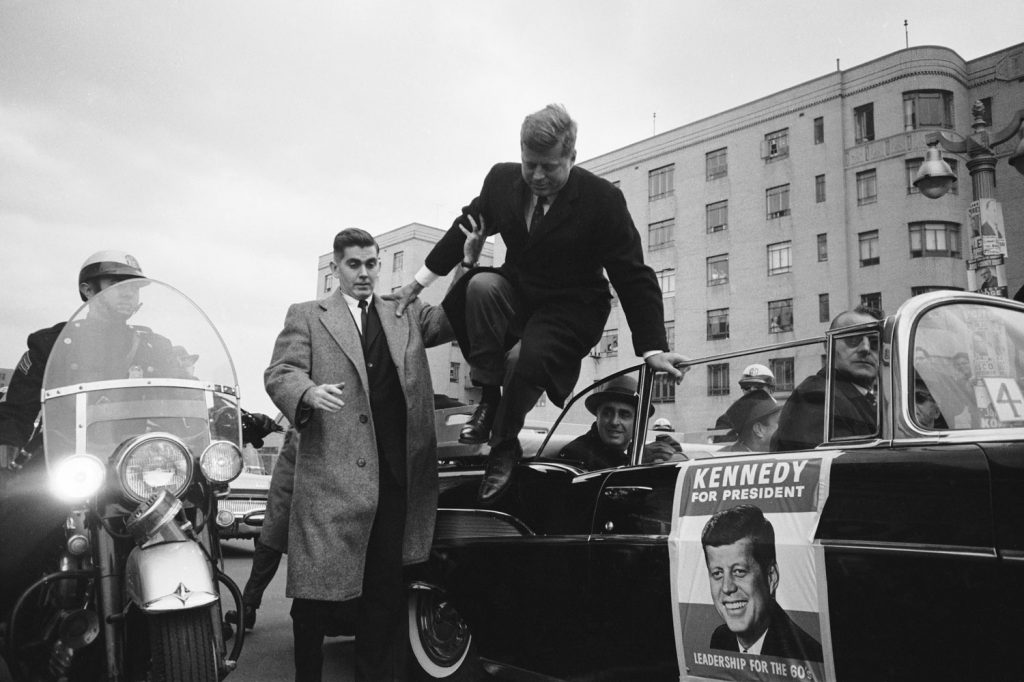
@Paul Schutzer/Life Pictures.
The recent release of the John F. Kennedy (JFK) assassination archives by United States President Donald Trump revealed that the Central Intelligence Agency (CIA) operated a secret base in Johannesburg and Pretoria.
The documents, dating back to the 1960s, confirm that the CIA sought to expand its influence across Africa during a period of widespread decolonization.
Approximately 2,200 files, comprising over 63,000 pages, were published on the U.S. National Archives and Records Administration (NARA) website on Tuesday.
The majority of the archives’ extensive collection—totalling around six million pages of documents, photographs, videos, audio recordings, and artefacts related to the assassination—had already been accessible to the public.
Trump had mentioned the impending release to reporters on Monday, though he had estimated the number of pages to be around 80,000.
His decision to release these files is expected to stir controversy, particularly for the CIA, an agency known for its secretive operations. The disclosures may prompt tough questions about its long-standing covert activities in Africa, putting U.S. intelligence under fresh scrutiny.
One document in particular stands out: a faded, typewritten page labelled “FIELD DISTRIBUTION – ED #5847,” stamped with the word “SECRET” at the top and bottom. It lists cities under various divisions, hinting at a sprawling network of intelligence operations. Under the “AF DIVISION” (Africa Division), alongside Johannesburg and Pretoria, are cities like Lagos, Nairobi, Rabat, and Salisbury (now Harare). Other sections cover the Far East, Europe, Near East, and Western Hemisphere, with cities like Bangkok, Berlin, and Buenos Aires also named.
The document’s mention of Johannesburg and Pretoria as potential CIA “secret bases” has raised eyebrows. These cities, key hubs in South Africa;s political and economic landscape, were listed alongside other African centres like Nairobi and Lagos. While the exact nature of these “secret bases” remains unclear—whether they were safe houses, listening posts, or operational hubs—their inclusion suggests a significant American presence on the continent during a tense period of global rivalry.
Historical context adds weight to these findings. During the Cold War, the CIA was deeply involved in countering Soviet influence worldwide, including in Africa. South Africa, with its strategic position and apartheid government, was a focal point in this geopolitical chess game. Pretoria, the administrative capital, and Johannesburg, the economic powerhouse, would have been prime locations for intelligence activities.
The document doesn’t stop at Africa. Under the “FE DIVISION” (Far East Division), cities like Tokyo, Saigon, and Hong Kong appear, while the “EUR DIVISION” (Europe Division) lists Berlin, London, and Paris. The “NE DIVISION” (Near East Division) includes Beirut and Tehran, and the “WH DIVISION” (Western Hemisphere Division) names Mexico City and Buenos Aires among others. This global scope underscores the CIA’s extensive reach, painting a picture of a world crisscrossed by clandestine operations.
The idea of CIA “secret bases” in Johannesburg and Pretoria sparks questions about foreign influence during apartheid. Could these operations have shaped political decisions or supported the regime? Historians suggest that the US, while publicly critical of apartheid, often prioritised anti-communist alliances, potentially turning a blind eye to—or even aiding—South Africa’s government at the time.
Beyond South Africa, the inclusion of Nairobi, Lagos, and other African cities hints at a broader strategy. Kenya and Nigeria, emerging powers in East and West Africa, were also Cold War battlegrounds. The disclosures could prompt a re-examination of how foreign powers influenced Africa’s post-colonial journey.
The release has sent shockwaves through social media, with hashtags like #JFKFiles and #CIASecretBases trending.