
By Lehlohonolo Lehana.
The Constitutional Court reserved judgment in AmaBhungane’s case against President Cyril Ramaphosa on whether the Executive Ethics Code is constitutionally compliant in how it deals with the disclosure of political donations.
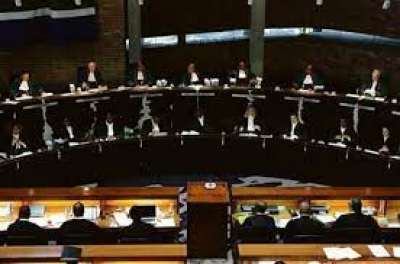
The ConCourt’s full bench heard arguments from amaBhungane’s legal team in the confirmation proceedings on Tuesday.
AmaBhungane’s challenge comes after the Executive Ethics Code was found to be unconstitutional as it did not require members of the executive to disclose “donations made to campaigns for their election to positions within political parties”.
The Pretoria High Court, in December 2021, had ordered that the Act’s declaration of invalidity “shall have no retrospective effect and shall be suspended for a period of 12 months to allow for the defect to be corrected”.
This meant that the source of Ramaphosa’s CR17 campaign would remain undisclosed.
AmaBhungane’s lawyer, advocate Steven Budlender, on Tuesday argued that the investigative journalism body was seeking confirmation from the ConCourt regarding the Pretoria High Court’s ruling.
Budlender said Ministers, Deputy Ministers, and MECs should be required to disclose publicly donations made to their internal party political campaigns because there were instances that give rise to conflict of interest.
The advocate further argued transparency was part of the solution of solving this problem in order for the public to hold the members of the executive to account.
He also said the Code did not provide the necessary specificity as required by the Executive Ethics Act – at points it merely repeats the Act’s provisions, instead of outlining what should be disclosed in some detail.
This Code did not give rise to mandatory disclosure of all such donations. We submit that’s it’s plain that there is a problem.
Budlender added that Ramphosa’s decision not to oppose amaBhungane]s challenge demonstrated that “there is no proper defence of the Code available”.
Advocate Stuart Wilson, the court-appointed amicus curiae (given that Ramaphosa did not oppose this leg), argued that it was not the code that was unconstitutional, but the Executive Members Act, which was too broad, and interfered with permissible policy decisions taken by the code.
He said: “If ministers must only disclose the donations they are aware of, and not those they are unaware of, then how does the minister go about looking for campaigns that supported their ascension to a particular party office, if the law contradicts itself?”
AmaBhungane’s case also stemmed from Ramaphosa’s successful bid to challenge Public Protector Busisiwe Mkhwebane’s report on the CR17 campaign finances.
The ConCourt in July 2021 dismissed Mkhwebane’s application for leave to appeal.