
By Lehlohonolo Lehana.
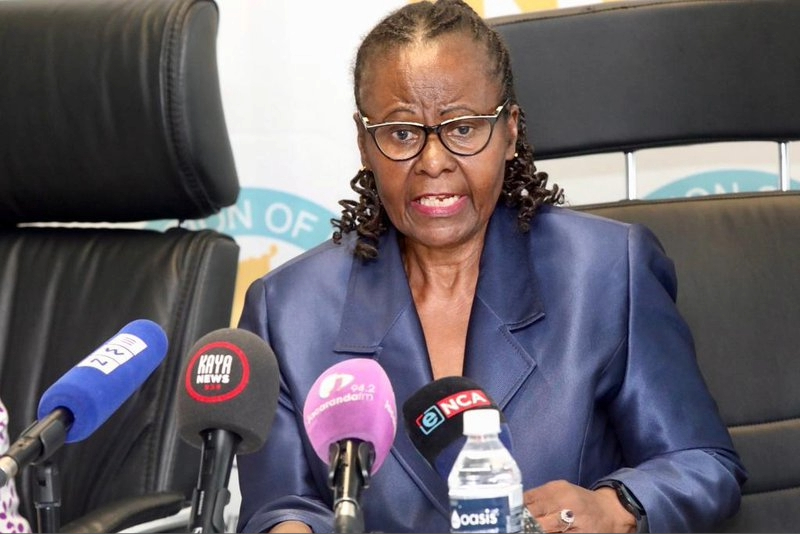
Retired Constitutional Court Justice Sisi Khampepe will lead a judicial inquiry into interference with the investigation of apartheid-era crimes.
Khampepe will be assisted by retired Northern Cape judge president Frans Diale Kgomo and advocate Andrea Gabriel SC.
The commission is part of an agreement reached in settlement discussions in a court application brought by 25 families of victims of apartheid-era crimes.
The lawsuit, filed in the Pretoria high court in January, alleged that government had failed to adequately investigate and prosecute apartheid-era political crimes after the Truth and Reconciliation Commission (TRC) process.
The court action expresses the “deeply violated” rights of the litigant 23-member group of families of victims, while also seeking the truth about apartheid atrocities and murders, and the subsequent “brazen interference” in the administration of justice.
It is being led by journalist, author and son of the Cradock Four’s Fort Calata, Lukhanyo Calata, who has filed an explosive founding affidavit that seeks a court order to declare unlawful the in/actions of the six respondents, chief of whom is President Cyril Ramaphosa. The Cradock Four were murdered by the security forces in June 1985, and despite two flawed inquests and the TRC process, the perpetrators have never been brought to justice.
The other five are the NPA, the National Director of Public Prosecutions Shamila Batohi, Minister of Police Senzo Mchunu, Minister of Justice and Constitutional Development Mmamoloko Kubayi, and the National Police Commissioner, Lieutenant-General Fannie Masemola.
The litigants seek relief to end the suppression and obstruction of the investigation and prosecution of apartheid-era cases, restore their constitutional rights, and enforce the rule of law, which they believe has been severely undermined by political interference.
In a statement by the presidency, the establishment of the commission of inquiry is part of an agreement reached in settlement discussions in a court application brought by families of victims of apartheid-era crimes.
“For many years, there have been allegations of interference in these cases. This alleged interference is seen as the cause of an unacceptable delay in the investigation and prosecution of brutal crimes committed under apartheid. This has caused the families of victims great anguish and frustration.
“All affected families – and indeed all South Africans – deserve closure and justice. A commission of inquiry with broad and comprehensive terms of reference is an opportunity to establish the truth and provide guidance on any further action that needs to be taken.”
The commission has six months to complete its work and must submit its report within 60 days thereafter.
Other apartheid-era murders include Dr Rick Turner, assassinated on 8 January 1978 at his Durban home, dying in his daughters’ arms.
The Pebco Three (Champion Galela, Sipho Hashe and Qaqawuli Godolozi were members of the Port Elizabeth Black Civic Organisation) were kidnapped by the PE SB and the Vlakplaas assassination unit on 8 May 1985 and murdered days later at the remote farm at Post Chalmers northwest of Cradock.
All of these matters have been subject to long investigative delays (some as long as 40 years), missing dockets, terrible communication by the SAPS and NPA, broken promises, cancelled meetings, Stalingrad-type court delaying tactics by various accused, and an intolerable and outrageous lack of transparency by public servants and policymakers.
The TRC’s Final Report of 21 March 2003 stressed that amnesty should not promote impunity and required a “bold prosecution policy” to avoid any suggestion of impunity or South Africa contravening its international law obligations.